
Dorcus
Macleay, 1819
Stag Beetles
Species Guides
2- Dorcus brevis(Eastern American Stag Beetle)
- Dorcus parallelus(Antelope Beetle)
Dorcus is a of stag beetles in the Lucanidae, characterized by sexually dimorphic used primarily in male combat. The genus contains over 100 distributed primarily across Asia and India, with limited representation in Europe and North America. Formerly, the genus was split based on mandible , with serrated forms placed in Serrognathus, but this distinction has been abandoned and all species are now united under Dorcus.
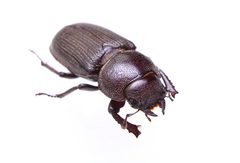
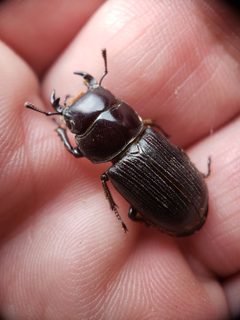
Pronunciation
How to pronounce Dorcus: //ˈdɔrkəs//
These audio files are automatically generated. While they are not always 100% accurate, they are a good starting point.
Identification
Males possess enlarged, often curved used in combat; mandible varies from serrated to bearing one or more prominent notches. Body coloration ranges from matte sable to lustrous dark brown or black. Females have smaller, functional mandibles adapted for chewing wood. The was historically split from Serrognathus based on mandible serration and body luster, but this separation is no longer recognized.
Images
Habitat
Associated with woodland and forest environments where decaying wood is present, as larvae develop in rotting wood.
Distribution
Asia and India (majority of ); southern Europe (two species); North America (two species). Specific records from Denmark, Norway, Sweden, and Vermont, USA.
Diet
Larvae feed on decaying wood; may feed on tree sap, fruit, or other sugary substances, though specific dietary habits vary by and are not well documented for the as a whole.
Life Cycle
Complete with wood-decaying larvae; development spans multiple years depending on and environmental conditions. Larval stages occur in rotting wood.
Behavior
Males use in combat for access to mates; combat involves grappling and lifting opponents rather than biting. activity patterns have been observed in some .
Ecological Role
Larvae contribute to wood decomposition and nutrient cycling in forest .
Human Relevance
Collected for the pet trade in some Asian countries, particularly Japan, where large males are valued. Some are used in fighting competitions.
Similar Taxa
More Details
Taxonomic History
The has undergone significant revision. Specimens with serriform (saw-like) teeth and matte sable pigmentation were historically classified as Serrognathus, while those with bulky mandibular notches and lustrous pigmentation were retained in Dorcus. Serrognathus has been reclassified and merged into Dorcus based on phylogenetic analysis.
Species Richness
counts vary considerably between sources: Wikipedia cites over 100 species, while iNaturalist references approximately 30 species. This discrepancy likely reflects ongoing taxonomic revision and differing acceptance of synonymies.