Tropisternus affinis
Motschulsky, 1859
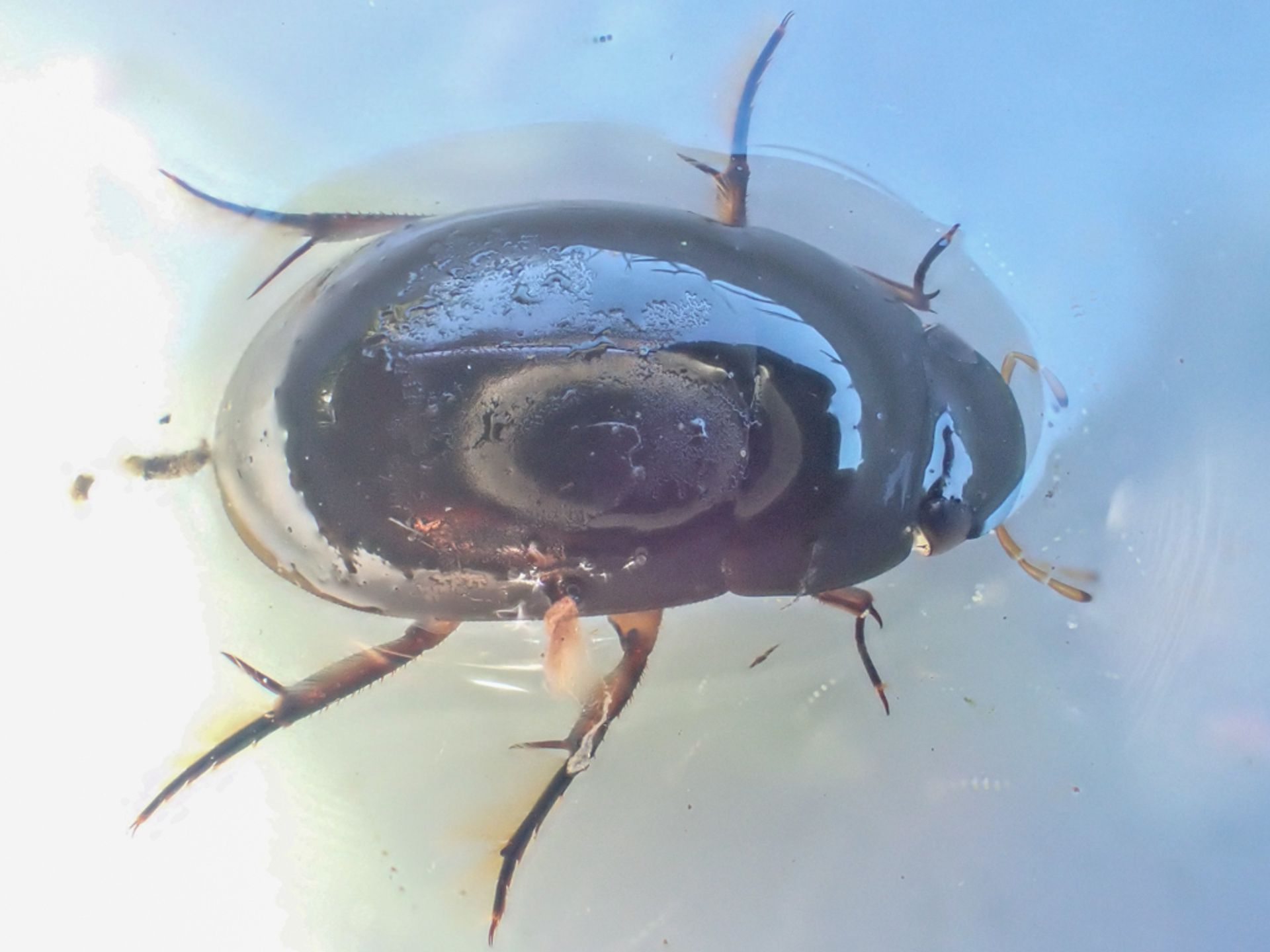
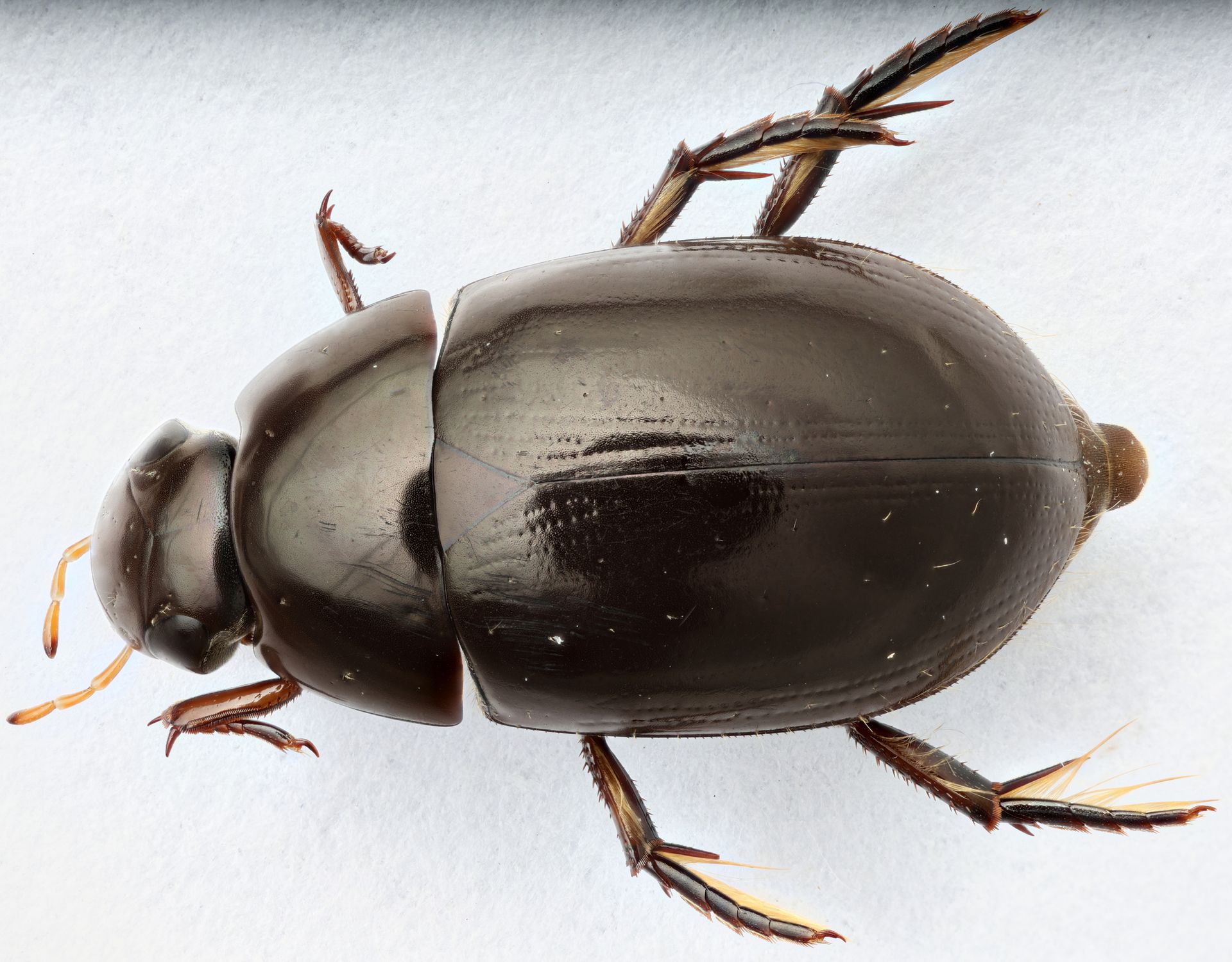
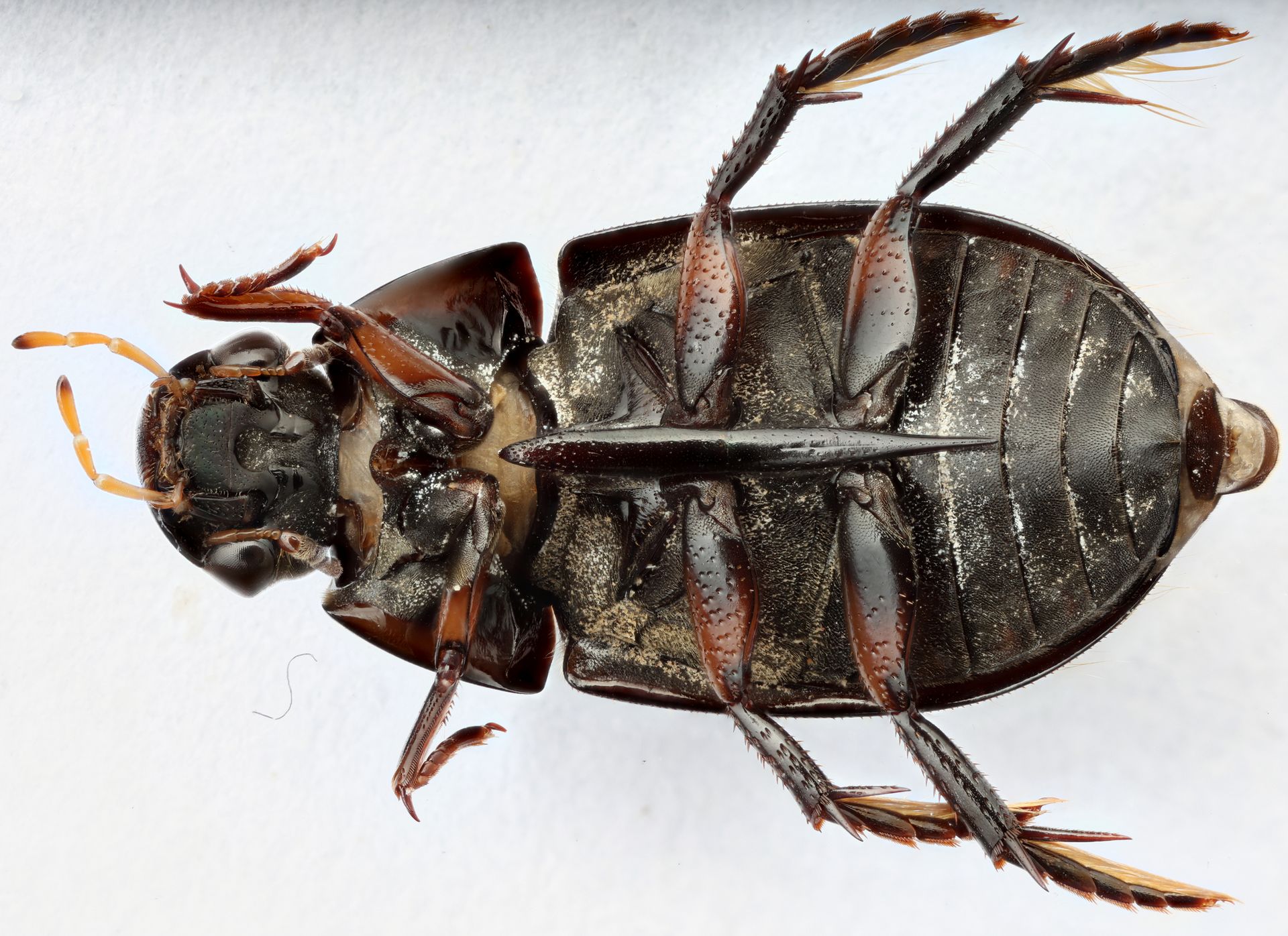
Tropisternus affinis is a of water scavenger beetle in the Hydrophilidae, described by Motschulsky in 1859. The species is distributed across western North America from Canada through the United States to Central America, with records from British Columbia to Panama. As a member of the Hydrophilidae, it is associated with aquatic or semi-aquatic . The Tropisternus contains multiple species that can be challenging to distinguish without close examination.
Pronunciation
How to pronounce Tropisternus affinis: /tɹoʊˈpaɪstɚnəs əˈfɪnɪs/
These audio files are automatically generated. While they are not always 100% accurate, they are a good starting point.
Identification
-level identification within Tropisternus requires examination of genitalia and other subtle morphological characters. Tropisternus affinis can be distinguished from by specific features of the male genitalia, though these characters are not detailed in the available sources. The is characterized by oval to elongate-oval body shape, clubbed with the terminal segments forming a loose club, and surfaces with hydrofuge adapted for aquatic life.
Images
Habitat
Aquatic and semi-aquatic environments including ponds, lakes, streams, and other freshwater bodies. Members of the Tropisternus are typically found in association with submerged vegetation and detritus in lentic and lotic .
Distribution
Western North America: Canada (British Columbia), United States (Arizona, California, Iowa, Idaho, New Mexico, Oregon, Washington, Wisconsin), and Central America ( Rica, Guatemala, Mexico, Panama).
Similar Taxa
- Other Tropisternus speciesMultiple congeneric occur in overlapping ranges and require genitalia examination for definitive identification.
- Other Hydrophilidae generaSimilar aquatic beetles in the same share general body form and preferences, differing in antennal structure and other technical characters.
More Details
Taxonomic Note
Catalogue of Life lists Tropisternus affinis as a synonym, while GBIF and NCBI treat it as an accepted . This discrepancy suggests ongoing taxonomic evaluation.
Data Availability
Only 38 observations recorded in iNaturalist as of data retrieval, indicating the may be underreported or genuinely uncommon in collection records.
Sources and further reading
- BugGuide
- GBIF taxonomy match
- iNaturalist taxon
- NCBI Taxonomy
- Catalogue of Life
- Meet 'Mantis Master Keeper' Andrew Pfeifer | Bug Squad
- Saving the Rusty-Patched Bumble Bee | Bug Squad
- Take 2 on tropical tiger moths: Spotted oleander caterpillar moth, Empyreuma affinis — Bug of the Week
- Mason bees in peril when parasitic wasps arrive – Leucospid wasp, Leucospis affinis — Bug of the Week
- A Tick that Feeds on Birds May Increase the Range of Lyme Disease
- Genetic Analysis Guides Conservation of Endangered Bumble Bee