
Hydrochara
Berthold, 1827
water scavenger beetles
Species Guides
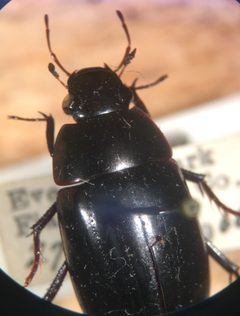
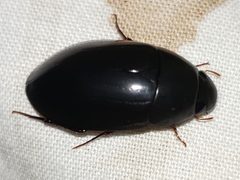
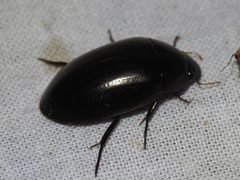
8Hydrochara is a of water scavenger beetles (Hydrophilidae) containing 23 distributed across North America, Europe, Asia, and Africa. The genus was revised taxonomically in 1980, with 21 species recognized at that time and multiple synonymies established. Species in this genus are aquatic and have been studied for their potential role in of mosquito larvae. At least one species, Hydrochara rickseckeri, is to California.
Pronunciation
How to pronounce Hydrochara: //haɪˈdrɒkərə//
These audio files are automatically generated. While they are not always 100% accurate, they are a good starting point.
Identification
Members of Hydrochara can be distinguished from similar hydrophilid by characters established in the 1980 revision, including specific diagnostic morphological features. A key to was provided in that revision. The genus is placed in the tribe Hydrophilini within the Hydrophilinae.
Images
Habitat
Aquatic environments, particularly those with emergent macrophytes, which have been identified as the main determinant of suitability for at least one (H. affinis).
Distribution
North America, Europe, Asia, and Africa. Specific distribution records include Denmark, Norway, Sweden, the United States (including Vermont), and South Korea.
Ecological Role
of mosquito larvae; at least one (H. affinis) has been identified as a natural and effective agent for biological mosquito control with high rates of mosquito larvae .
Human Relevance
Investigated as a potential biocontrol agent for mosquito . Laboratory rearing programs have been established to maintain populations for field application.
More Details
Taxonomic history
The was revised in 1980 (Memoirs of the Entomological Society of Canada), with six new described, multiple synonymies established, and neotype and lectotype designations made for several species. Hydrochara grandis was listed as species dubia.
Genetic and morphological variation
Studies of H. affinis in South Korea found high genetic diversity and morphological variation in both natural and laboratory-reared populations, indicating favorable conservation status and adaptive capacity for biocontrol applications.
Sources and further reading
- BugGuide
- Wikipedia
- GBIF taxonomy match
- iNaturalist taxon
- NCBI Taxonomy
- Catalogue of Life
- REVISION OF THE GENUSHYDROCHARABERTH. (COLEOPTERA: HYDROPHILIDAE)
- Perennial emergent macrophytes as the main determinant of Hydrochara affinis inhabitation
- Genetic and Morphologic Variation in a Potential Mosquito Biocontrol Agent, Hydrochara Affinis (Coleoptera: Hydrophilidae)
- Biology, Distribution, and Phylogenetic Placement of the California Endemic Water Scavenger Beetle Hydrochara rickseckeri (Horn) (Coleoptera: Hydrophilidae)