
Trixagus chevrolati
(Bonvouloir, 1859)
false click beetle
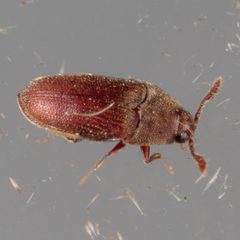
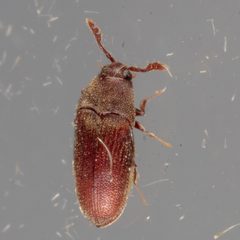
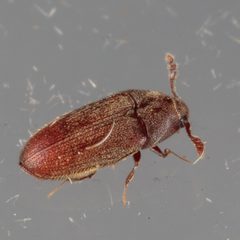
Trixagus chevrolati is a small false click beetle in the Throscidae. The is known from Central America and North America, with records extending into British Columbia, Canada. As a member of Throscidae, it belongs to a group of beetles commonly referred to as false click beetles due to their superficial resemblance to the click beetles (Elateridae), though they lack the prosternal spine and mesosternal notch that produce the characteristic clicking mechanism. The family Throscidae is relatively small and poorly studied compared to related families.
Pronunciation
How to pronounce Trixagus chevrolati: /ˈtrɪksəɡəs ˌʃɛvrəˈlɑːtiː/
These audio files are automatically generated. While they are not always 100% accurate, they are a good starting point.
Identification
Members of the Trixagus can be distinguished from true click beetles (Elateridae) by the absence of the prosternal spine and mesosternal notch that enable the clicking mechanism. Throscidae are generally small beetles with compact bodies. Specific diagnostic features for T. chevrolati are not well documented in available sources, but the genus is characterized by with serrate or pectinate clubs and relatively short, broad that expose several abdominal segments.
Images
Distribution
Central America and North America. Records include British Columbia, Canada, indicating a transcontinental distribution across temperate and tropical regions.
Similar Taxa
- TrixagusOther in the Trixagus share the general body plan and -level characteristics; specific distinguishing features for T. chevrolati require closer examination.
- ElateridaeTrue click beetles resemble Throscidae in general body form but possess the functional prosternal spine and mesosternal notch that produce the clicking sound and jumping absent in Throscidae.
More Details
Taxonomic placement
The Throscidae has undergone various taxonomic treatments, sometimes being placed as a of Eucnemidae. Current classifications recognize Throscidae as a distinct family within Elateroidea.
Collecting notes
Based on field observations from related , Taphrocerus ( Buprestidae) have been collected by sweeping grasses and sedges in similar , suggesting that thorough examination of vegetation in appropriate habitats may yield specimens of Trixagus species.