
Throscidae
Laporte, 1840
Small false click beetles
Genus Guides
3- Aulonothroscus
- Pactopus
- Trixagus(false click beetles)
is a of small elateroid beetles commonly known as false click beetles. The family contains approximately 150 in 5 extant , distributed worldwide except New Zealand. are short-lived and capable of the clicking mechanism characteristic of some elateroids. Larvae are soil-dwelling and have been observed siphoning fluids from mycorrhizae associated with tree roots.
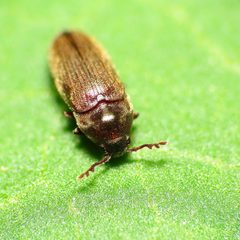
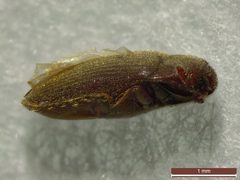
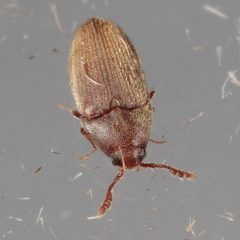
Pronunciation
How to pronounce Throscidae: /θrɒˈsiːdiː/
These audio files are automatically generated. While they are not always 100% accurate, they are a good starting point.
Images
Habitat
Saproxylic (wood-associated) ; larvae soil-dwelling in association with tree root mycorrhizae. show high habitat specificity and demanding requirements regarding their habitat.
Distribution
Worldwide distribution except New Zealand. Documented from Europe (including France, Switzerland, Norway, Sweden, Denmark, Cyprus, Greece), Colombia (Chocó), and other regions. Nine recorded from the Geneva basin (France/Switzerland border region), with one additional species potentially present but not yet recorded.
Diet
Larvae siphon fluid from mycorrhizae attached to tree roots. feeding habits not documented.
Host Associations
- Tree mycorrhizae - larval food sourceLarvae siphon fluids from mycorrhizal fungi associated with tree roots
Behavior
males perform a complex mating dance. Adults are capable of clicking, a mechanism shared with some other elateroid beetles. Adults are short-lived.
Ecological Role
Saproxylic contribute to wood decomposition and forest processes. In the Geneva basin region, saproxylic species are recognized as having high conservation value due to rarity and strict specificity.
Similar Taxa
- Elateridae (click beetles)Both possess clicking mechanisms; are distinguished as 'false click beetles' and are generally smaller with different body proportions
More Details
Extant genera
Aulonothroscus Horn, 1890; Cryptophthalma Cobos, 1982; Pactopus LeConte, 1868; Potergus Bonvouloir, 1871; Trixagus Kugelann, 1794
Fossil record
Seven fossil known from Baltic amber (Eocene) and Lebanese/Burmese amber (Early-Late Cretaceous): †Jaira, †Potergosoma, †Rhomboaspis, †Trixagosoma, †Tyrannothroscus, †Captopus, †Electrothroscus, †Pseudopactopus
Taxonomic note
Trixagus minutus Rey, previously synonymized with T. obtusus, has been validated as a distinct belonging to the T. atticus group
Sources and further reading
- BugGuide
- Wikipedia
- GBIF taxonomy match
- iNaturalist taxon
- NCBI Taxonomy
- Catalogue of Life
- Liste commentée des Cerophytidae, Elateridae, Eucnemidae et Throscidae du bassin genevois (Coleoptera)
- Trixagus atticus Reitter et T. minutas Rey, deux espèces méconnues d'Europe occidentale présentes en France (Coleoptera Throscidae)