
Lyconotus
Green, 1949
Species Guides
1- Lyconotus lateralis(net-winged beetle)
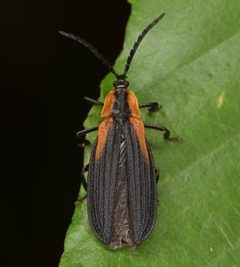
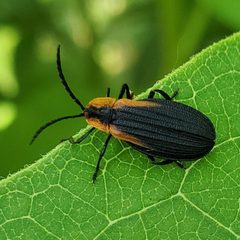
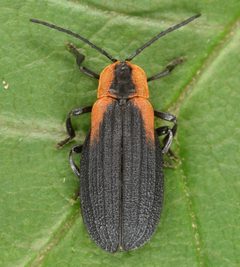
Lyconotus is a of net-winged beetles in the Lycidae. The genus contains a single described , L. lateralis. Net-winged beetles are characterized by their soft, flexible with distinct net-like venation patterns. Members of this genus are found in North America, with observations documented from Florida and other southeastern states.
Pronunciation
How to pronounce Lyconotus: /laɪkəˈnoʊtəs/
These audio files are automatically generated. While they are not always 100% accurate, they are a good starting point.
Identification
Lyconotus can be distinguished from other lycid by the combination of its North American distribution and specific wing venation patterns. The single L. lateralis has been observed on flowers of Ilex cassine (dahoon holly) in Florida. Accurate identification to species level requires examination of the distinctive coloration and elytral structure characteristic of this genus.
Images
Habitat
Based on observation records, Lyconotus lateralis has been found in wet sand forest in Florida, specifically on flowering dahoon holly (Ilex cassine) trees along roadsides. The habitat appears to be associated with wetland-adjacent woodlands in the southeastern United States.
Distribution
Documented from Florida in the southeastern United States. GBIF records and iNaturalist observations indicate presence in this region, with specific records from Richloam Wildlife Management Area in Withlacoochee State Forest.
Seasonality
Observations in Florida suggest activity in spring, with records from late March. Activity appears associated with flowering of plants such as Ilex cassine.
Host Associations
- Ilex cassine - visitation observed on flowers of dahoon holly in Florida
Behavior
have been observed in mating pairs on flowers. The beetles are likely and associated with flowering vegetation. Based on related lycid beetles, adults may be chemically defended and serve as models for mimetic such as the cerambycid Lycochoriolaus lateralis.
Ecological Role
Lyconotus likely function as when visiting flowers. As with other lycid beetles, they may serve as important models for complexes, with their aposematic coloration warning of chemical defenses. The documented co-occurrence with the cerambycid mimic Lycochoriolaus lateralis suggests participation in such a mimicry relationship.
Similar Taxa
- Lycidae (other genera)Other net-winged beetle share the characteristics of soft, net-veined , but differ in specific venation patterns, coloration, and distribution
- Lycochoriolaus lateralisA cerambycid beetle that mimics Lyconotus lateralis in appearance; distinguished by hardened typical of Cerambycidae and different antennal structure
More Details
Species diversity
The is , containing only the single described L. lateralis
Mimicry complex
The appears to participate in a mimicry complex with the longhorned beetle Lycochoriolaus lateralis, which resembles Lyconotus in coloration and pattern