Photinus knulli
Green, 1956
Fall Southwest Firefly
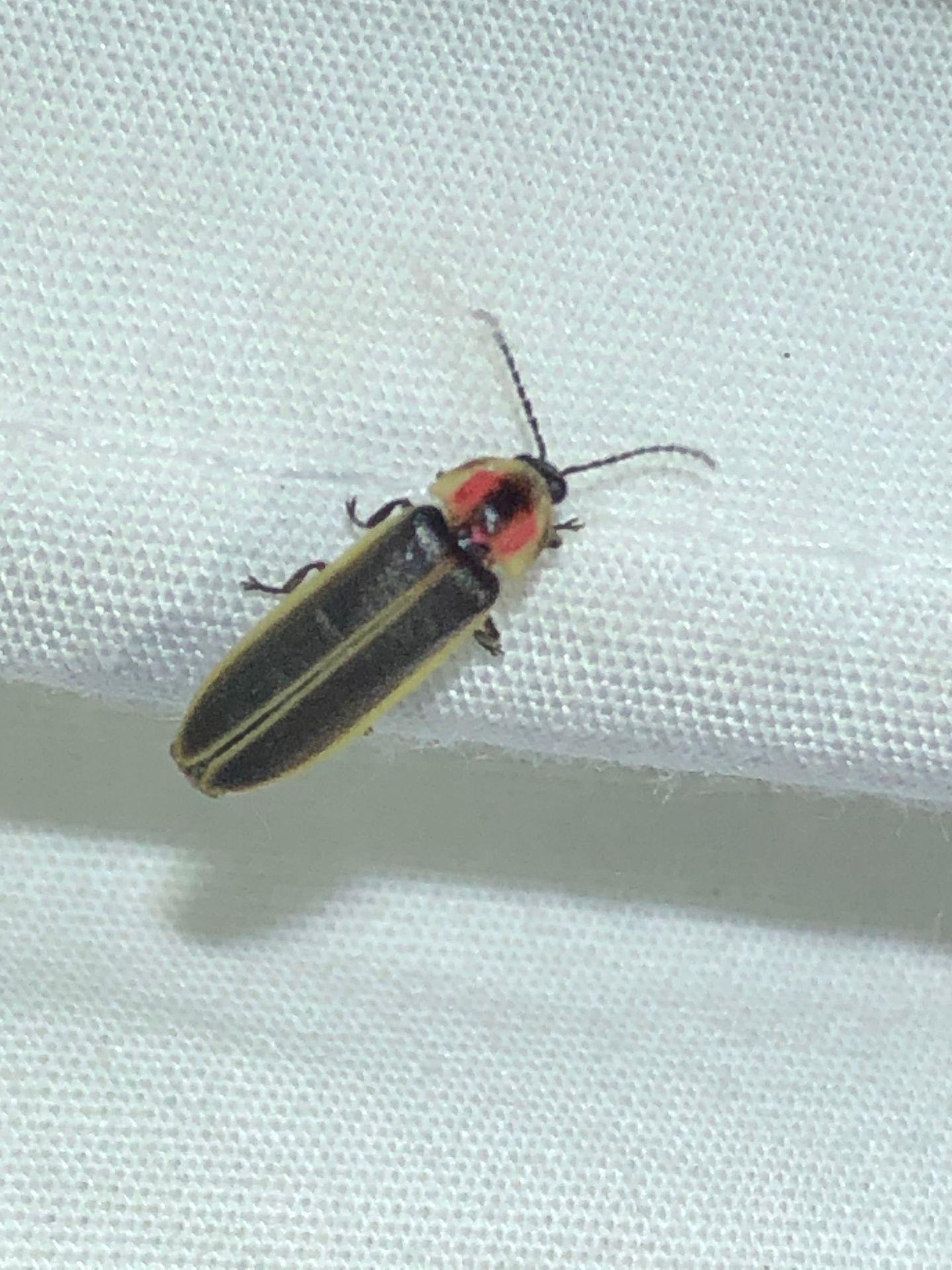
Photinus knulli is a North American firefly notable for its collective flash synchrony in sparse, low- swarms. Males produce flash triplets lasting approximately one second, with phrases separated by 3–5 seconds. Synchrony occurs in periodic bursts with rapid accretion and quick decay, a pattern similar to but faster than the eastern Photinus carolinus. The species inhabits riparian areas in the American Southwest, particularly Arizona's Sky Island regions, and is considered Vulnerable by IUCN due to decline from degradation.
Pronunciation
How to pronounce Photinus knulli: //foʊˈtaɪnəs ˈnʌlaɪ//
These audio files are automatically generated. While they are not always 100% accurate, they are a good starting point.
Identification
Distinguished from other Photinus by its synchronous flashing pattern in sparse swarms—flash triplets with 3–5 second intervals between phrases, and burst periodicity of approximately 5 seconds (faster than P. carolinus at 12–14 seconds). Males are solitary and dispersed at , with synchrony propagating at short range (1–10 m). Specific morphological characters distinguishing P. knulli from are not documented in available sources.
Images
Habitat
Intermittent river beds in canyon environments with gravel substrates, campgrounds, and dense vegetation on canyon slopes. Specifically documented from Peña Blanca Canyon in the Pajarito Mountains, Coronado National Forest, Santa Cruz County, Arizona. Associated with Arizona Sonoran Desert Sky Island during monsoon season conditions at 20–25°C temperatures.
Distribution
Pajarito Mountains, Santa Cruz County, Arizona, USA. are sparse and localized compared to eastern North American fireflies. Broader distribution within the American Southwest is implied but not well-documented.
Seasonality
active in August; first flashes observed 19:50–20:00 MST. Activity coincides with monsoon season conditions.
Life Cycle
Larvae possibly identified as Pleotomus nigripennis (based on direct rearing, not confirmed as P. knulli) observed in leaf litter and on tree trunks. Complete developmental stages and duration not documented.
Behavior
Males emit flash triplets spanning ~1 second with 3–5 seconds between phrases. Synchronous flashing occurs in periodic bursts with rapid accretion and quick decay. Synchrony propagates at short range (1–10 m) and has been statistically validated through non-Poisson distribution of concurrent flashes and spatio-temporal correlation analysis. Flash synchrony serves as courtship dialogue: advertising males flash in unison while females respond independently.
Human Relevance
Subject of scientific research on collective animal and flash synchrony mechanisms. decline attributed to degradation and changing weather patterns has led to IUCN Vulnerable status, highlighting conservation concerns for firefly populations in the American Southwest.
Similar Taxa
- Photinus carolinusShares collective flash synchrony pattern of periodic bursts with rapid accretion and quick decay, but P. knulli has faster burst periodicity (~5 s vs. 12–14 s) and occurs in sparse, low- swarms rather than dense
- Pleotomus nigripennisLarvae possibly misidentified or confused with P. knulli larvae in field observations; direct rearing required for accurate identification
Sources and further reading
- BugGuide
- Wikipedia
- GBIF taxonomy match
- iNaturalist taxon
- NCBI Taxonomy
- Catalogue of Life
- Trichinorhipis knulli | Beetles In The Bush
- Bug Eric: Firefly Tag
- Mother Nature's Fireworks - Lightning bugs, Lampyridae — Bug of the Week
- Summer nights and Lucifer’s lights – Lightning bugs, Lampyridae — Bug of the Week
- Mother Nature’s summer light show: Lightning bugs, Lampyridae — Bug of the Week
- Just in time for the 4th of July: Firefly fireworks - Lampyridae — Bug of the Week
- Statistical analysis reveals the onset of synchrony in sparse swarms of Photinus knulli fireflies
- Statistical analysis reveals the onset of synchrony in sparse swarms of Photinus knulli fireflies