
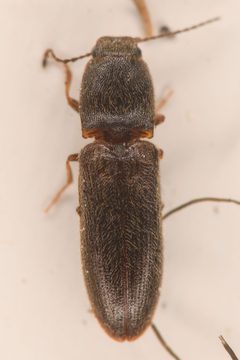
Limonius brevis
Limonius brevis is a of click beetle in the Elateridae. The Limonius includes several economically important pest species known as wireworms, the soil-dwelling larval form that damages crop roots. Research on related Limonius species has investigated -based trapping methods for monitoring and management.
Pronunciation
How to pronounce Limonius brevis: /lɪˈmoʊniəs ˈbrɛvɪs/
These audio files are automatically generated. While they are not always 100% accurate, they are a good starting point.
Images
Human Relevance
in the Limonius, including L. brevis, are recognized as agricultural pests in their larval stage. Wireworms feed on seeds, roots, and underground stems of crops, causing significant damage to cereals, potatoes, and other vegetables. Research on related Limonius species has evaluated synthetic for trap capture efficacy across North America, suggesting potential applications in programs.
Similar Taxa
- Limonius agonusAnother Limonius studied in trapping research; similar and shared pest status
- Limonius canusCongeneric with similar and agricultural impact; included in comparative trap capture studies
- Limonius infuscatusRelated Limonius with overlapping distribution and comparable
More Details
Research context
Limonius brevis has been included in studies evaluating the efficacy of synthetic Limonius on trap captures of four Limonius across various locations in North America. This research, presented at Entomology 2020, examined -based monitoring approaches for click beetle pests.
Sources and further reading
- BugGuide
- iNaturalist taxon
- Name That Bug! | Bug Squad
- Entomology 2020: Attendees Share Early Reactions to On-Demand Presentations, Posters
- Secrets of the "Subnivium": Arthropod Community Thrives Beneath Winter Snowpack
- When pearly-eye meets dragonfly: Northern pearly-eye, Enodia anthedon, and clubtail dragonflies, Gomphidae spp. — Bug of the Week
- Safeguarding Biodiversity: An Entomologist's Goal as Government Policy Analyst
- New parasitoid species named in honor of the National Geographic Society