
Lacon discoideus
(Weber, 1801)
Disk-shaped Click Beetle
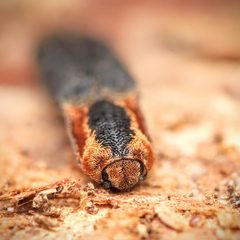
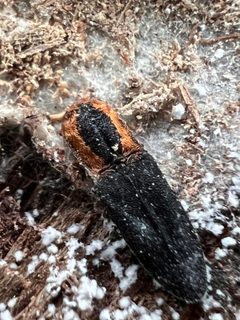
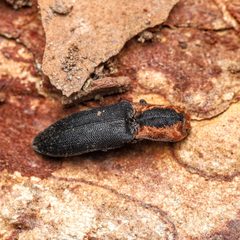
A of click beetle native to eastern North America. are known to exhibit , resembling toxic soldier beetles (Chauliognathus spp.) with a black and orange color pattern despite being harmless themselves. The species is associated with flowers where it feeds on pollen and nectar.
Pronunciation
How to pronounce Lacon discoideus: //ˈleɪ.kɒn dɪˈskɔɪ.diː.əs//
These audio files are automatically generated. While they are not always 100% accurate, they are a good starting point.
Identification
Distinguished from similar soldier beetles ( Cantharidae) by its long . The black and orange color pattern closely resembles that of Chauliognathus basalis and C. deceptus, but the elongated antennae and family characteristics (such as structure) allow separation upon close examination.
Images
Habitat
Found on flowers, particularly in areas where broom snakeweed (Gutierrezia sarothrae) and related plants occur. frequent flowering vegetation in open .
Distribution
Eastern North America. Specific records include Ontario, Canada.
Seasonality
Active in late summer and early autumn, appearing when soldier beetle peak.
Diet
feed on flower pollen and nectar.
Host Associations
- Gutierrezia sarothrae - larval Larvae bore in root crowns of this plant
Behavior
engage in , resembling toxic soldier beetles to deter . They can be found on the same flowers as the soldier beetles they mimic, making visual separation difficult without close inspection.
Ecological Role
serve as while feeding on flowers. Larvae function as root-boring insects in their plants.
Similar Taxa
- Chauliognathus basalisShares black and orange color pattern; soldier beetle is genuinely chemically defended while L. discoideus is a harmless mimic
- Chauliognathus deceptusSimilar coloration and use in foothills and mountain areas; distinguished by shorter and different characteristics
- Epicauta stuartiBlister beetle with similar warning coloration; part of the same Müllerian/ complex but distinguished by body shape and texture
More Details
Mimicry complex
Part of a documented mimicry complex in western North America involving soldier beetles (Cantharidae), blister beetles (Meloidae), net-winged beetles (Lycidae), and this click beetle . The convergence of black-and-orange patterns among chemically defended and harmless species represents a well-studied example of Müllerian and in beetles.