
Discodon
Gorham, 1881
Species Guides
5- Discodon abdominale
- Discodon bipunctatum
- Discodon flavomarginatum
- Discodon nigripes
- Discodon planicolle(Pale-shouldered Soldier Beetle)
Discodon is a of soldier beetles ( Cantharidae, Silinae) comprising approximately 400 , with more than 40 formally described. The genus is predominantly Neotropical, with greatest diversity in South America from sea level to 3000 meters elevation. Some species exhibit brachelytry (extremely reduced ), including the high-Andean species D. huancavelica which shows in wing reduction and female aptery.
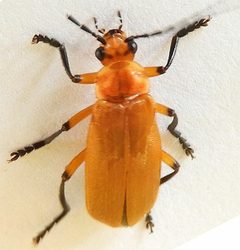
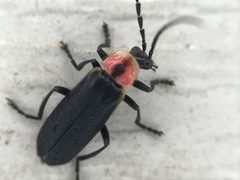
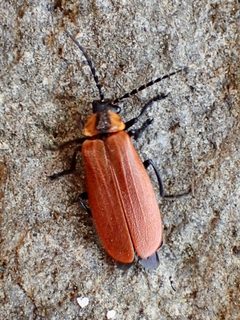
Pronunciation
How to pronounce Discodon: //ˈdɪskoʊˌdɒn//
These audio files are automatically generated. While they are not always 100% accurate, they are a good starting point.
Identification
Discodon are defined by male characters including bifid claws on the meso- and , and pronotum shape. Species in the D. tricolor complex show chromatic similarity but can be distinguished by major morphological differences in and antennal structures. Some species exhibit brachelytry with extremely shortened leaving most of the uncovered; females of brachelytrous species may be with elytra reduced to approximately pronotum length.
Images
Habitat
Predominantly found in South American ranging from sea level to 3000 meters, with some occurring in high-elevation Andean environments up to 4560 meters. The Atlantic Forest biome (Mata Atlântica) of Brazil supports multiple species including the D. tricolor complex.
Distribution
Mexico and Central America through South America; Colombia (CO) and Peru documented. The is most diverse in South America.
Behavior
Some participate in a potential Müllerian mimicry ring involving other members of Cantharidae, Lampyridae, Cerambycidae, and Belidae. Brachelytrous species have been collected using pitfall traps.
Human Relevance
in the Atlantic Forest biome have been discussed in conservation contexts due to fragmentation and degradation of this biodiversity hotspot.