
Podabrini
Gistel, 1856
Genus Guides
2- Dichelotarsus
- Podabrus(soldier beetle)
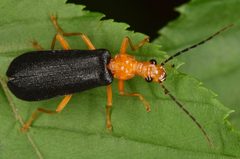
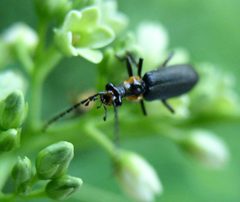
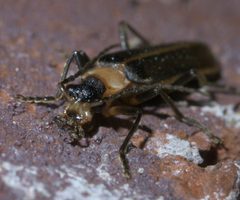
Podabrini is a tribe of soldier beetles ( Cantharidae) established by Gistel in 1856. Members of this tribe are part of the Cantharinae, one of the major lineages within the family. The tribe contains multiple of soft-bodied beetles commonly found in vegetation. The group has been documented through over 26,000 observations, indicating substantial presence in temperate regions.
Pronunciation
How to pronounce Podabrini: /pɔˈdæbrɪnaɪ/
These audio files are automatically generated. While they are not always 100% accurate, they are a good starting point.
Identification
Podabrini can be distinguished from other tribes in Cantharinae by combinations of characters including pronotal shape, elytral structure, and male genitalia. Specific diagnostic features vary by within the tribe. The tribe generally lacks the pronounced pronotal modifications found in some other cantharine tribes.
Images
Habitat
Members of Podabrini occur in diverse terrestrial including meadows, forest edges, and shrubby vegetation. They are typically found on flowers and foliage where they hunt small prey.
Distribution
The tribe has a broad distribution, with documented presence across the Holarctic region and into other temperate zones. Specific range boundaries vary by constituent .
Seasonality
activity generally peaks during spring and summer months in temperate regions, though timing varies by and latitude.
Life Cycle
Development follows the complete typical of beetles, with , larval, pupal, and stages. Larvae are generally ground-dwelling or found in soil litter.
Behavior
are and frequently observed on flowers, where they feed on pollen, nectar, and small arthropods. They exhibit characteristic soldier beetle of remaining motionless when disturbed, then moving to the opposite side of a stem or leaf.
Ecological Role
Podabrini function as in vegetation, consuming aphids, small caterpillars, and other soft-bodied insects. They contribute to of pest in agricultural and natural settings.
Human Relevance
Members of this tribe are generally considered beneficial insects due to on agricultural pests. They pose no threat to humans or crops.
Similar Taxa
- CanthariniAnother tribe in Cantharinae; Podabrini differs in pronotal and genitalic characters, though precise distinctions require examination of and detailed morphological study.
- CteniopodiniTribe within Cantharinae with which Podabrini shares membership; separation based on subtle differences in body form and male reproductive structures.
More Details
Taxonomic history
The tribal classification of Cantharinae has undergone revision, with Podabrini representing one of several lineages recognized based on morphological and molecular evidence. The precise generic composition remains subject to ongoing study.
Observation frequency
The high observation count (over 26,000 records) reflects both the abundance of some member and the relative ease of identifying these beetles to tribe level in the field.