
Dichelotarsus
Motschulsky, 1860
Species Guides
24- Dichelotarsus cavicollis
- Dichelotarsus cinctipennis
- Dichelotarsus danielsi
- Dichelotarsus excursus
- Dichelotarsus extremus(Extreme Soldier Beetle)
- Dichelotarsus fissilis
- Dichelotarsus flavimanus(Yellow-handed Soldier Beetle)
- Dichelotarsus heteronychus(Crookedjaw Soldier Beetle)
- Dichelotarsus instabilis
Dichelotarsus is a of soldier beetles ( Cantharidae) established by Motschulsky in 1860. in this genus are soft-bodied beetles with flexible , characteristic of the family. The genus has documented presence in northern Europe and North America, with over 2,600 iNaturalist observations indicating moderate observational frequency. As with other Cantharidae, members are likely associated with vegetation in wooded or open .
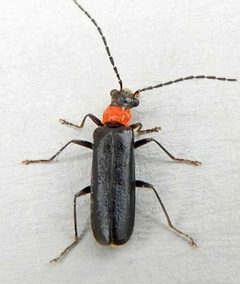
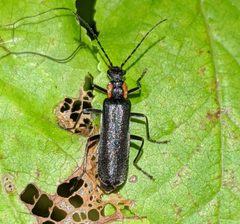
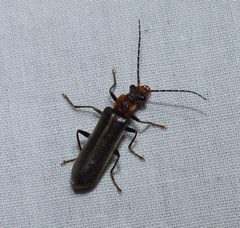
Pronunciation
How to pronounce Dichelotarsus: //ˌdaɪkɛloʊˈtɑːrsəs//
These audio files are automatically generated. While they are not always 100% accurate, they are a good starting point.
Identification
Dichelotarsus can be distinguished from related Cantharidae by a combination of antennal structure and male genitalia , though specific diagnostic features vary among species. The genus is characterized within Cantharidae by particular arrangements of tarsal segments and pronotal shape. Accurate identification to species level generally requires examination of microscopic characters.
Images
Distribution
Documented from northern Europe (Norway, Sweden) and northeastern North America (Vermont, United States). The appears to have a transatlantic distribution pattern, though precise range boundaries remain incompletely documented.
Similar Taxa
- CantharisBoth are Cantharidae with similar soft-bodied appearance; Dichelotarsus differs in antennal and genitalic characters requiring microscopic examination.
- RhagonychaOverlaps in distribution and general habitus; separation relies on detailed morphological study of tarsal and antennal features.
More Details
Taxonomic history
The was established by Russian entomologist Victor Motschulsky in 1860. Modern systematic revisions of Cantharidae have refined its circumscription relative to historically broader concepts of the group.