
Ambrosiodmus tachygraphus
Hopkins, 1915
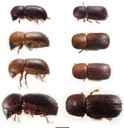
Ambrosiodmus tachygraphus is a North American ambrosia beetle described by Hopkins in 1915. Like other members of the Ambrosiodmus, it engages in obligate mutualism with fungal , specifically the wood-decaying fungus Flavodon ambrosius. This partnership enables the to colonize and reproduce in dead or dying wood by farming fungi that digest cellulose and lignin, converting wood into nutritious food for beetle larvae and . The is part of a group known for forming semi-social colonies with thousands of individuals, facilitated by their unique ability to cultivate a true wood-degrading fungus rather than merely extracting readily available nutrients from freshly dead tissues.
Pronunciation
How to pronounce Ambrosiodmus tachygraphus: //æmˌbroʊsiˈɒdməs tæˈkɪɡrəfəs//
These audio files are automatically generated. While they are not always 100% accurate, they are a good starting point.
Images
Habitat
Dead or dying wood of trees; specifically colonizes wood tissues that have been degraded by fungal decay. The 's fungal , Flavodon ambrosius, is capable of true wood decomposition, allowing of more decayed substrates than typical ambrosia beetles.
Distribution
North America
Diet
Feeds on fungal gardens cultivated within wood galleries; specifically consumes Flavodon ambrosius, a white-rot decay fungus that the farms as its sole or primary nutritional source. The fungus converts decayed wood into digestible nutrients for the beetle.
Behavior
Engages in fungus-farming : excavate tunnels in wood, inoculate them with fungal spores carried in specialized body pockets (mycangia), and maintain gardens that provide food for larvae and adults. This mutualism supports semi-social colony structure with extended parental care and multiple overlapping within established galleries.
Ecological Role
Decomposer in forest ; accelerates wood decomposition through its partnership with Flavodon ambrosius. The -fungus complex breaks down lignin and cellulose in dead wood, contributing to nutrient cycling. Unlike many ambrosia beetles that merely exploit dying tissues, this facilitates active wood decay.
Similar Taxa
- Ambrosiodmus leconteiCongeneric sharing the same -level traits of farming Flavodon ambrosius and forming large semi-social colonies; distinguished by subtle morphological differences and potentially preferences.
- Ambrosiophilus speciesRelated ambrosia beetles that also cultivate Flavodon ambrosius and exhibit complex social structures; differ in -level and geographic distribution, with Ambrosiophilus primarily documented from Asian regions.
- Other ambrosia beetles (non-Ambrosiodmus, non-Ambrosiophilus)Most other ambrosia beetles farm fungi that are poor wood degraders and merely extract nutrients from freshly dead tissues; they lack the capacity to colonize decayed wood and do not form large persistent colonies.
More Details
Fungal Symbiont
The primary is Flavodon ambrosius (Polyporales), a white-rot fungus related to bracket fungi. This fungus is metabolically unique among ambrosia fungi: it actively decomposes lignin and cellulose rather than simply scavenging available nutrients. The transports fungal in specialized mycangia (fungus pockets), typically located in the region.
Social Structure
The ability to cultivate a superior wood-degrading fungus enables Ambrosiodmus to develop complex semi-social colonies with thousands of individuals. remain in natal galleries, reproduce repeatedly, and cooperate in fungal garden maintenance—traits uncommon in most other ambrosia beetles.
Sources and further reading
- BugGuide
- Wikipedia
- GBIF taxonomy match
- iNaturalist taxon
- NCBI Taxonomy
- Catalogue of Life
- Ambrosiodmus-lecontei - Entomology Today
- Ambrosiodmus Archives - Entomology Today
- Research on Fungus-farming Beetles Reveals a New Wood-decaying Fungus
- Beetle Farmers 2.0: A Super-symbiont Fungus Supports a Complex Beetle Society