Gnathotrichus materiarius
Wood & Bright, 1992
American utilizable wood bark beetle
Gnathotrichus materiarius is an ambrosia beetle native to North America that has been introduced to Europe, where it was first detected in France in 1933. It excavates galleries in coniferous sapwood and maintains an obligate with the fungus Endomycopsis fasciculata, which inoculate into wood and which serves as the primary food source for both larvae and adults. In Central Europe, it completes two per year, with adult beginning in early May and F2 generation adults in wood. Despite nearly a century of presence in Europe and its association with economically important conifers including Picea and Pinus, it has not caused significant damage, functioning primarily as a secondary pest of decaying or previously infested trees.
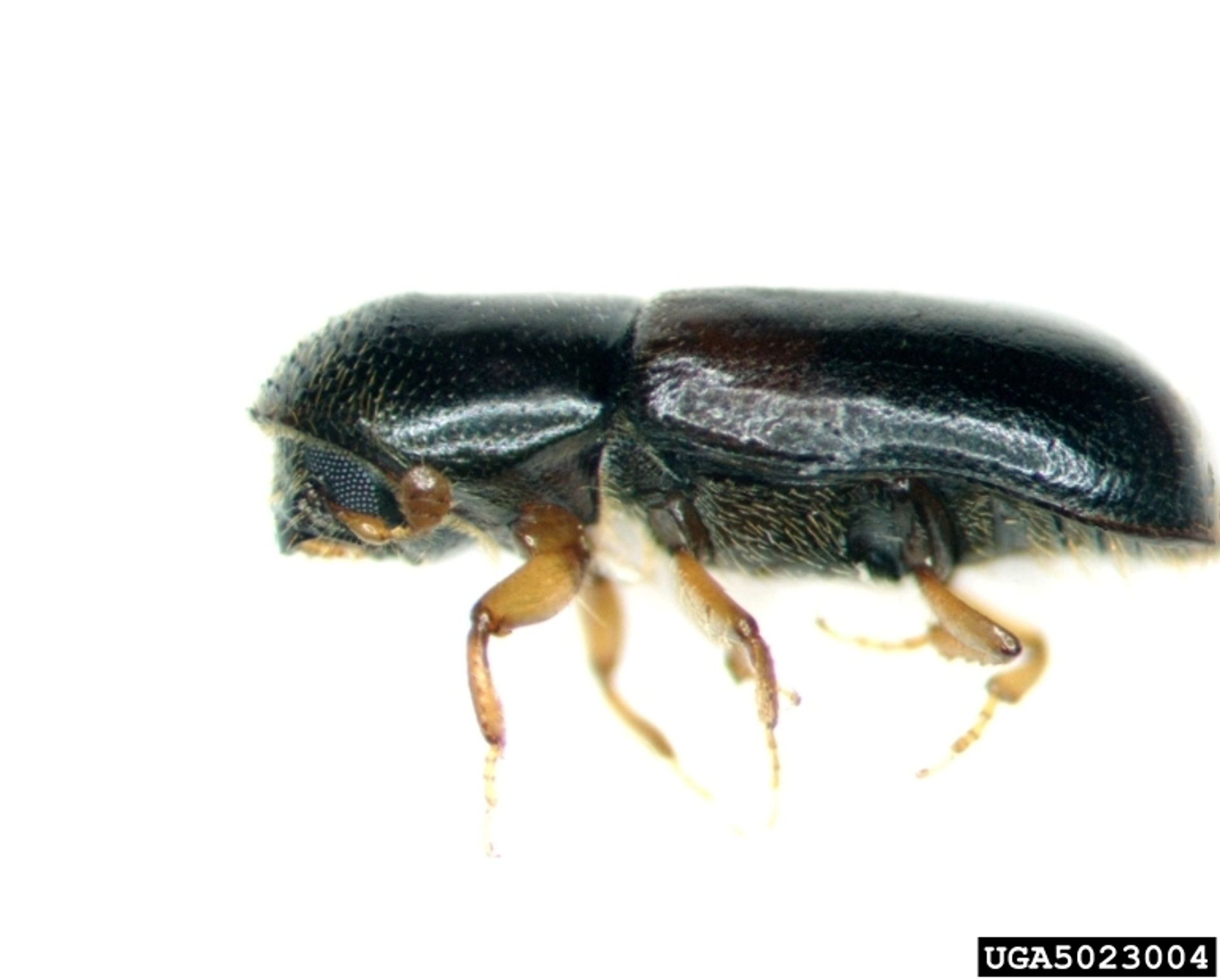
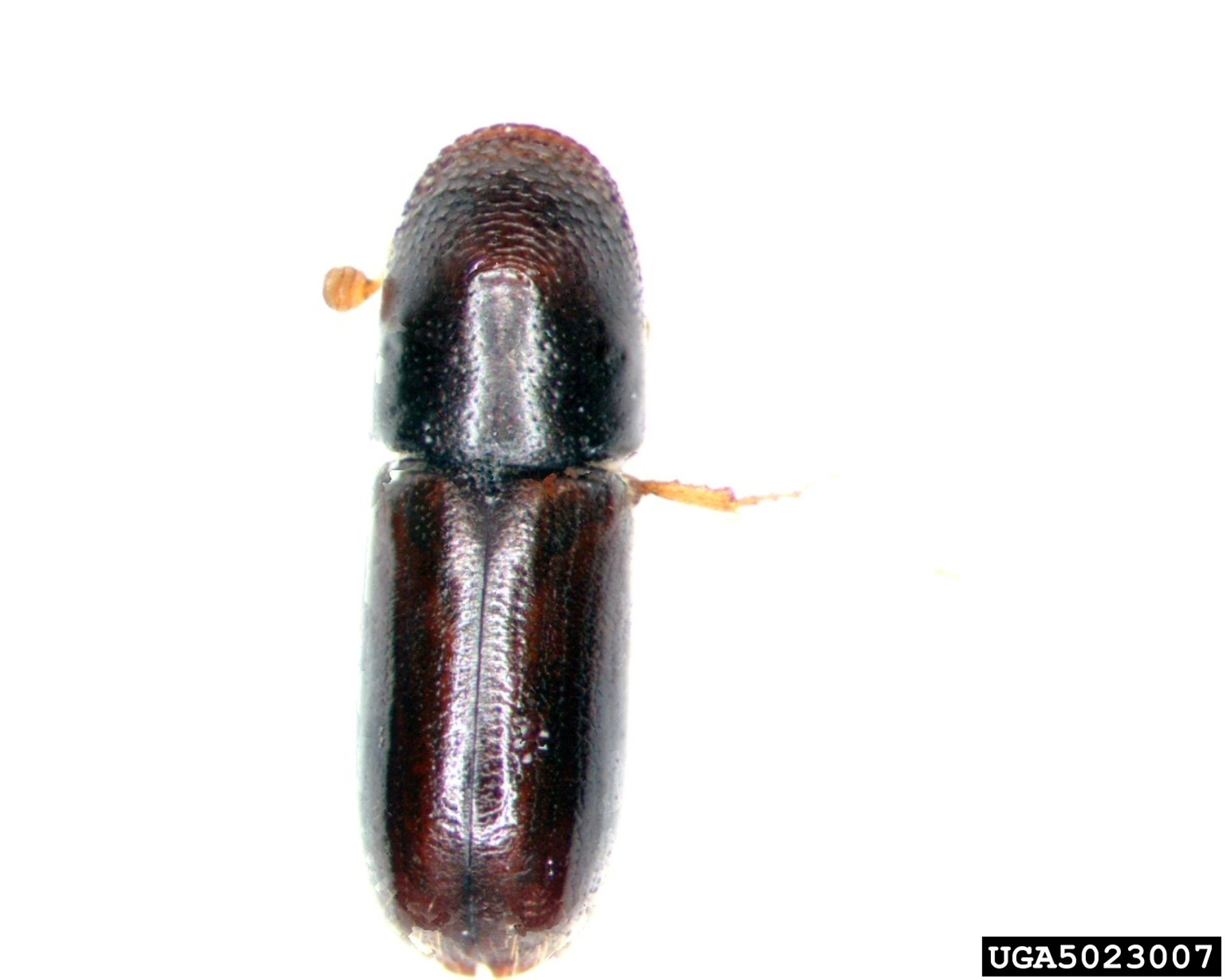
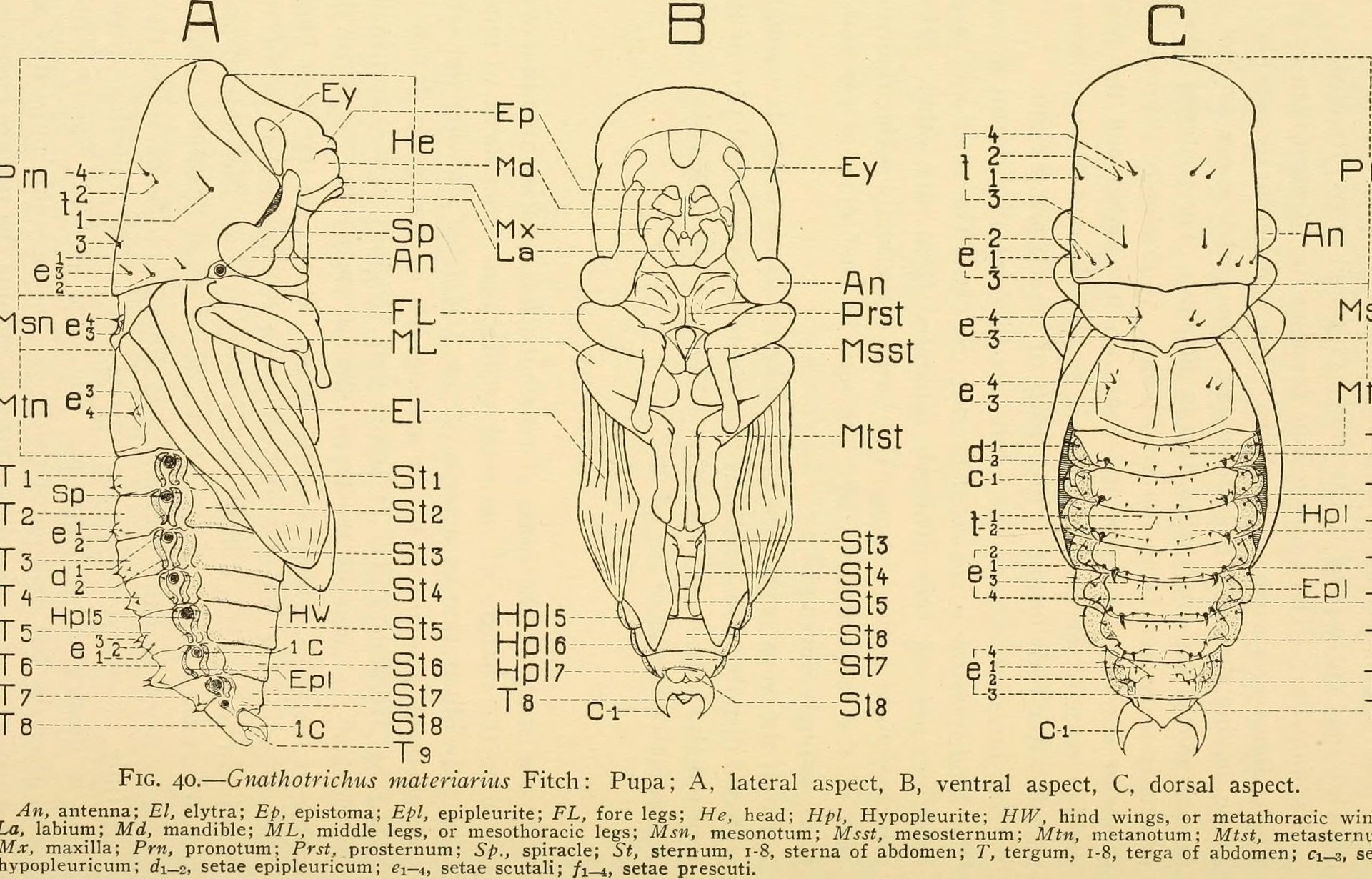
Pronunciation
How to pronounce Gnathotrichus materiarius: //næˈθoʊtrɪkəs məˌtɪəriˈeɪriəs//
These audio files are automatically generated. While they are not always 100% accurate, they are a good starting point.
Identification
Males produce sulcatol (6-methyl-5-hepten-2-ol) as a potential , with peak release occurring two days after initiating attacks; the compound is released as a 31% (S)-(+)- to 69% (R)-(−)-enantiomeric mixture. Males initiate gallery formation, while females cannot establish galleries alone. Ethanol-baited traps are the most effective monitoring method.
Images
Habitat
Coniferous wood, particularly sapwood; excavates galleries in timber of trees. Occupies decaying trees or trees previously infested and killed by other bark beetle .
Distribution
Native to North America; introduced to Europe with first detection in France in 1933. Established in Western, Northern, and Central Europe including Germany, Poland, Czech Republic, Italy, Slovenia, and Austria. Predicted to expand into the Balkans, Black Sea and Caucasus region, Baltic countries, Scandinavian Peninsula, and Ukraine under future climate conditions.
Seasonality
occur year-round. period begins early May in Central Europe. Offspring emerge mid-July. Two per year in Central Europe; F2 generation adults overwinter in wood.
Diet
Obligate mycophagy: feeds on cultivated ambrosia fungus Endomycopsis fasciculata inoculated into wood galleries by . The fungus serves as the primary food source for both larvae and adults.
Life Cycle
Larvae develop within excavated wood galleries and feed on cultivated ambrosia fungi. Two per year in Central Europe. F2 generation overwinter in wood.
Behavior
Males initiate attacks on trees and are solely responsible for gallery establishment. Males produce sulcatol as a potential , releasing it for at least 12 days but ceasing production 24 hours after pairing with females. inoculate symbiotic fungus into wood galleries.
Ecological Role
Secondary decomposer of coniferous wood; colonizes trees already compromised by decay or primary bark beetle . for its obligate fungal mutualist Endomycopsis fasciculata.
Human Relevance
Technical pest of coniferous sapwood with potential to cause timber quality degradation and financial losses; however, no significant damage has been reported despite nearly a century in Europe. Monitored with ethanol-baited traps for detection and management.
Similar Taxa
- Ips typographusBoth are bark beetles associated with spruce; G. materiarius has been observed multiplying in trees following I. typographus , but differs in being an ambrosia beetle that feeds on cultivated fungi rather than phloem, and in having smaller, more diffuse galleries.
More Details
Pheromone Biology
Sulcatol production is male-specific and ceases upon mating; unmated males release the compound for 12–20 days with peak emission at 2 days post-initiation.
Invasion History
Spread through Europe likely accelerated by timber transport and presence of spruce dieback; initial introductions to Central Europe probably occurred via imported timber to Austria, Czech Republic, and Poland.
Sources and further reading
- BugGuide
- Wikipedia
- GBIF taxonomy match
- iNaturalist taxon
- NCBI Taxonomy
- Catalogue of Life
- Gnathotrichus denticulatus Archives - Entomology Today
- Collection of Frozen Beetles Passes 20,000 Vials
- UF bark and ambrosia beetle collection vial 20k - Entomology Today
- The invasive ambrosia beetle, Gnathotrichus materiarius (Coleoptera: Curculionidae), in Central Europe
- Identification of sulcatol, a potential pheromone of the ambrosia beetle Gnathotrichus materiarius (Col., Scolytidae)
- Potential European Geographical Distribution of Gnathotrichus materiarius (Fitch, 1858) (Coleoptera: Scolytinae) under Current and Future Climate Conditions