
Corthylini
Tribe Guides
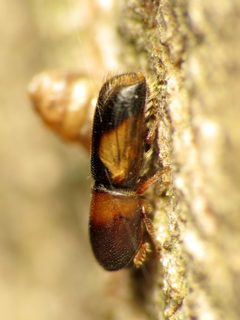
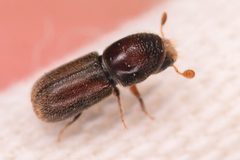
2Corthylini is a tribe of weevils within the Curculionidae. Members are small beetles associated with coniferous trees, where they develop in bark and wood tissues. The tribe includes several economically significant that damage timber and ornamental conifers. are characterized by a compact body form and clubbed typical of the family.
Pronunciation
How to pronounce Corthylini: /kɔːrˈθɪlɪnaɪ/
These audio files are automatically generated. While they are not always 100% accurate, they are a good starting point.
Identification
Corthylini are distinguished from other bark beetle tribes by a combination of characters: antennal club with two (), procoxae that are contiguous or narrowly separated, and with five visible segments on all legs. They are generally smaller and more compact than many other Curculionidae, with a rounded pronotum and short that may expose part of the . Examination of antennal structure and tarsal segmentation is required for definitive tribal assignment.
Images
Habitat
Associated with coniferous forests, particularly Pinaceae. Larvae develop under bark or in wood of living, dying, or recently dead conifers. Some colonize stressed or damaged trees; others attack healthy .
Distribution
Primarily distributed across the Northern Hemisphere, with greatest diversity in North America, Europe, and Asia. Range corresponds closely with native and cultivated conifer forests.
Seasonality
activity varies by and latitude. Many northern temperate species are active from spring through autumn, with peak periods in late spring and early summer. Some species overwinter as adults under bark.
Host Associations
- Pinaceae - larval developmentprimary ; includes pines, spruces, firs, and larches
Behavior
tunnel through bark to reach phloem tissue, where they construct galleries. Larvae feed in galleries, creating characteristic patterns in wood. Some produce that coordinate mass attacks on trees. to new hosts often occurs in response to host volatiles released by stressed or damaged trees.
Ecological Role
Act as primary decomposers of conifer wood, accelerating nutrient cycling in forest . Some function as pioneer colonizers of dead or dying trees. can alter forest composition by killing conifer species. Provide food source for woodpeckers and other .
Human Relevance
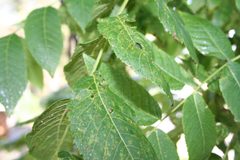
Several are significant forest pests, causing economic losses in timber production and ornamental plantings. Notable examples include species in the Conophthorus and Pityophthorus. Damage includes reduced timber quality, tree mortality, and costs associated with management and harvesting. Some species have been introduced to new regions through international trade in wood products.
Similar Taxa
- ScolytiniSimilar bark beetle and ; distinguished by antennal club with three and different procoxal structure
- IpiniOverlapping conifer use; distinguished by antennal club structure and different pronotal shape
- TomiciniSimilar gallery patterns in conifers; distinguished by antennal and tarsal characters
More Details
Taxonomic note
Corthylini is sometimes treated as a subtribe (Corthylinina) within Scolytinae in alternative classifications. The tribal limits have been revised based on molecular phylogenetic studies, with some transferred to or from the group.
Economic species
The Conophthorus (pine cone beetles) and Pityophthorus (twig beetles) contain the most economically damaging in this tribe. Conophthorus species destroy developing pine cones, reducing seed production for reforestation.