Lixus concavus
Say, 1832
rhubarb curculio
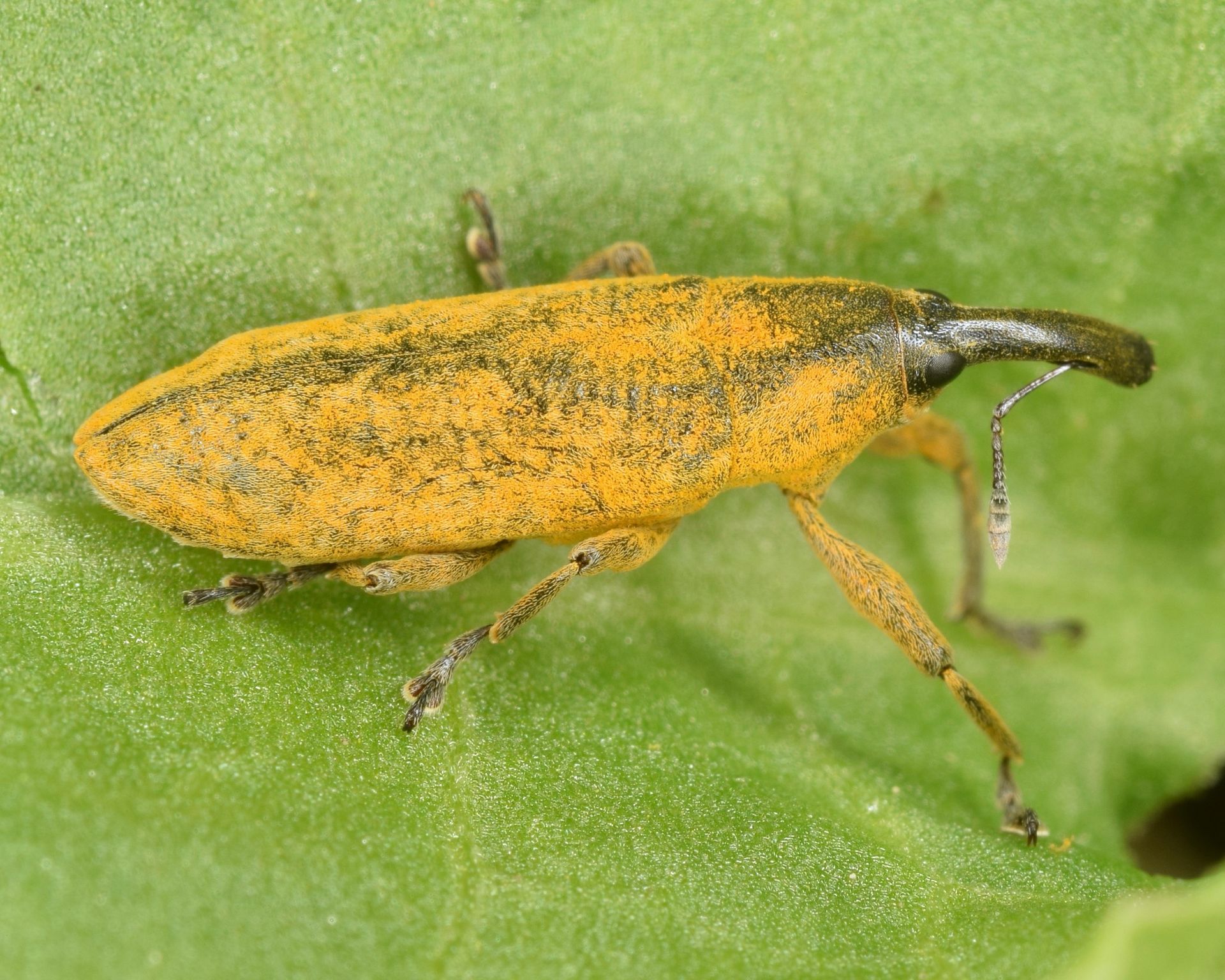
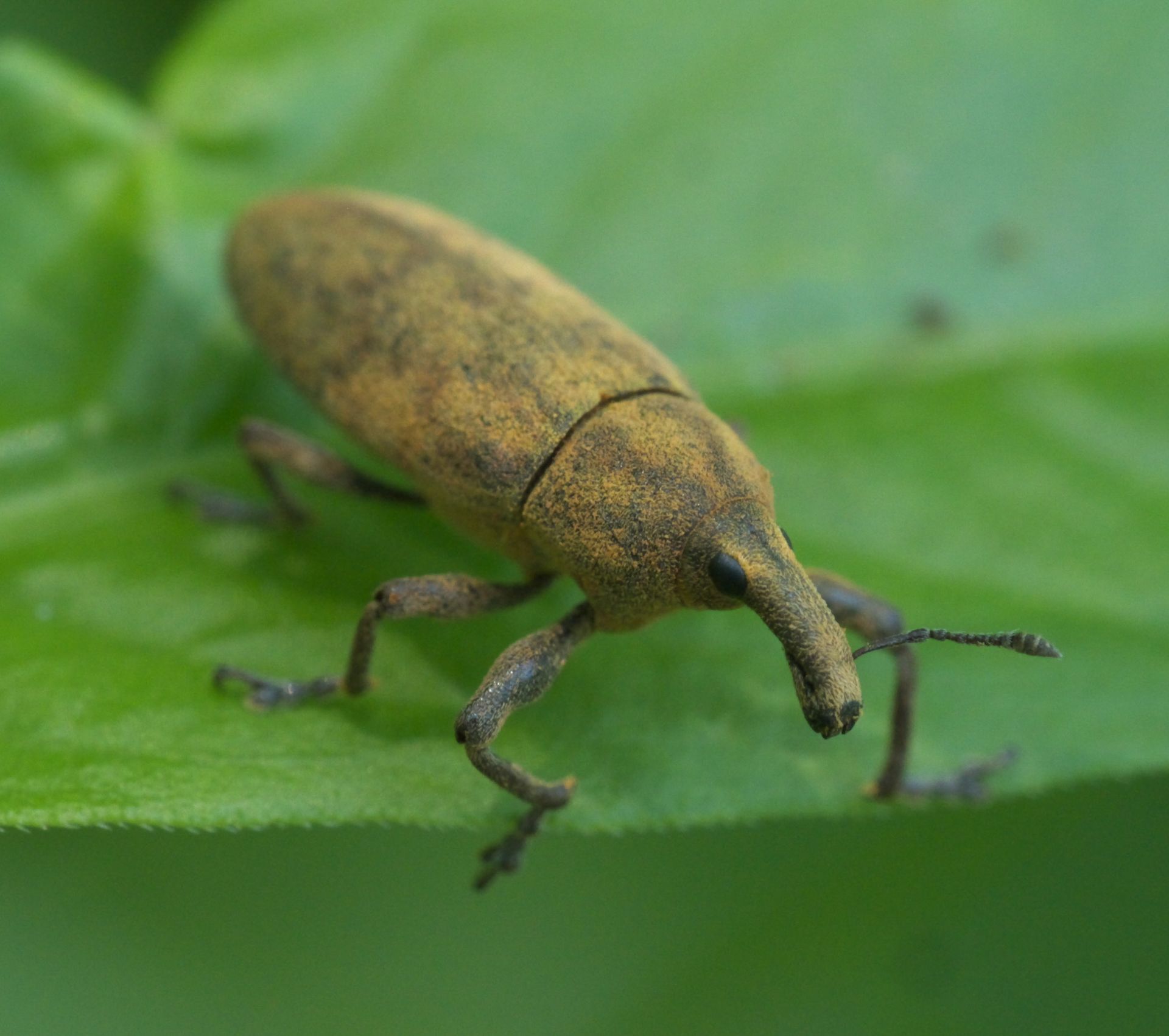
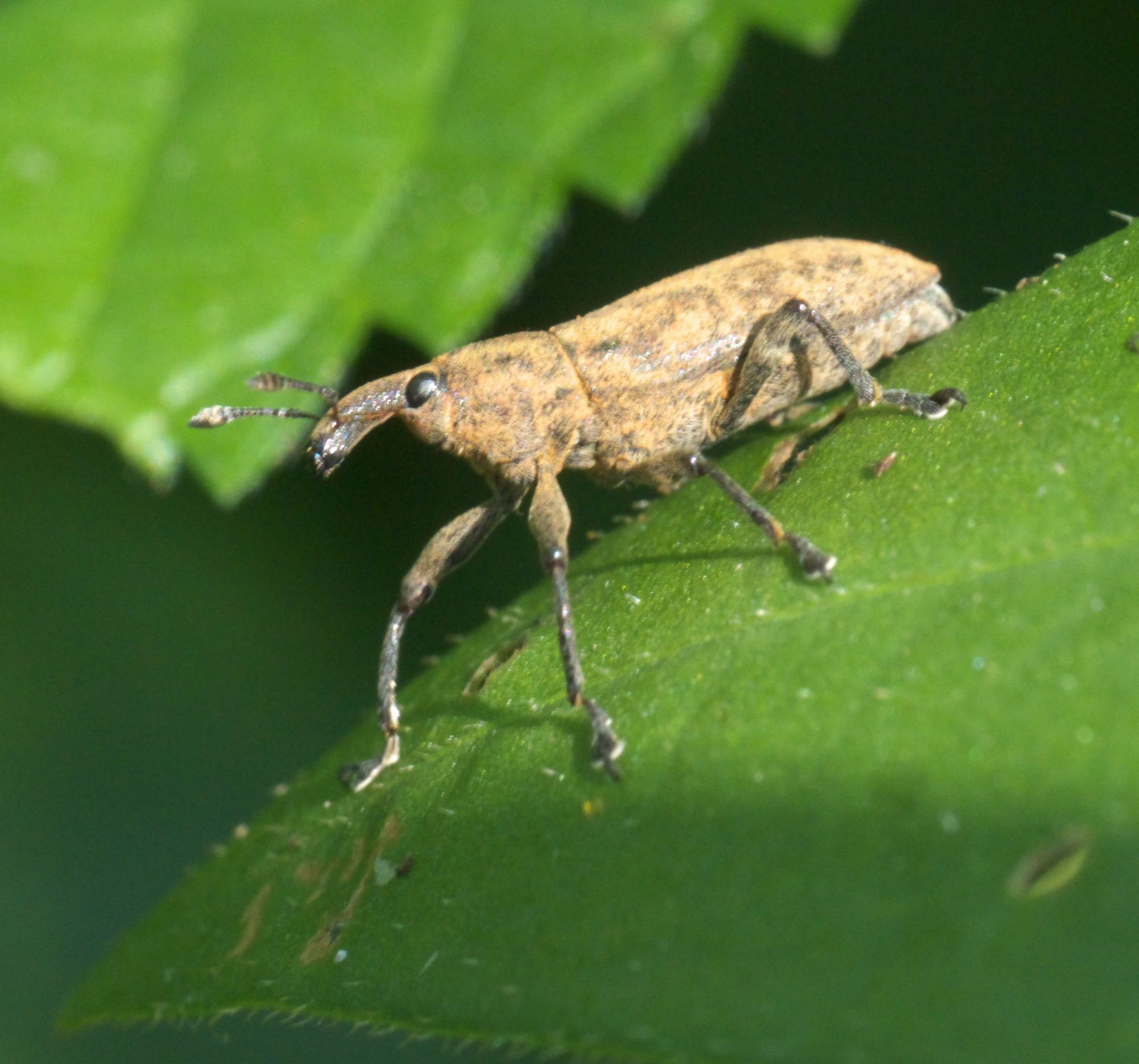
Lixus concavus, commonly known as the rhubarb curculio, is a weevil in the Curculionidae. are approximately 12 mm long, black with yellowish dusting, and possess a distinctive elongated snout with geniculate . The species is , with one per year. While rhubarb is a common , laid in rhubarb tissue fail to develop; successful occurs in curly dock, sunflower, and thistle stalks.
Pronunciation
How to pronounce Lixus concavus: /ˈliːksʊs kɒnˈkævʊs/
These audio files are automatically generated. While they are not always 100% accurate, they are a good starting point.
Identification
Distinguished from other Lixus by the combination of: black body with yellowish ; geniculate with small clubs; and association with rhubarb, dock, sunflower, or thistle . The inverted Y-shaped mark on the larval capsule is a useful diagnostic feature. Similar weevils in the may be separated by subtle differences in rostral and body proportions, though specific identification often requires host association and geographic context.
Images
Habitat
Agricultural and where plants occur. overwinter in leaf litter, debris, or other protected ground-level sites. Active in spring and early summer in areas with rhubarb , sunflower fields, or weedy margins containing dock and thistle.
Distribution
Eastern United States west to Idaho, Utah, and Texas. In Canada, recorded from Ontario and Québec.
Seasonality
emerge from sites in mid-May. Oviposition and larval development occur through summer. occurs after approximately nine weeks of larval feeding. Adults emerge, feed briefly, then seek overwintering sites. One per year.
Diet
feed on leaf margins and puncture stalks of plants, creating notched damage. Larvae feed internally within stalks of curly dock (Rumex crispus), sunflower (Helianthus spp.), and thistle (Cirsium spp.), tunneling down to ground level. laid in rhubarb (Rheum spp.) are killed by plant sap or crushed by developing tissue; rhubarb is not a viable host for larval development.
Host Associations
- Rheum spp. - non-viable laid but fail to develop; killed by sap or tissue pressure
- Rumex crispus - primary Larval development completed in stalks
- Helianthus spp. - primary Larval development completed in stalks
- Cirsium spp. - primary Larval development completed in stalks
Life Cycle
(one per year). overwinter, emerge mid-May. Mating and oviposition occur through feeding punctures in stalks. hatch in 7–10 days. Single larva (rarely multiple, with likely) tunnels through stalk to base, feeds for ~9 weeks. Prepupal larva chews exit hole for adult , then pupates. Adult emerges, feeds 2–3 weeks, then enters in protected site.
Behavior
make distinct feeding and oviposition punctures in plant crowns, roots, and stalks. Wounds exude jelly-like sap forming glistening gum drops, often with trapped debris. Larvae typically solitary per stalk; presence of multiple young larvae in single stalk suggests occurs. Adults active diurnally, readily drop from plants when disturbed.
Ecological Role
Herbivore and occasional pest of cultivated rhubarb. Serves as for the braconid Rhaconotus fasciatus, the only recorded parasitoid. Larval tunneling in weedy hosts (dock, thistle) may contribute to plant structural damage in .
Human Relevance
Minor pest of rhubarb in home gardens and commercial production. Damage appears as notched leaves and gum-exuding stalk punctures. Control primarily through hand-picking and removal of alternative (dock, thistle, sunflower) during midsummer when larvae are present. Rarely reaches economically damaging .
Similar Taxa
- Lixus scrobicollisSimilar size and coloration; distinguished by rostral and preferences
- Lixus rubellusOverlaps in eastern range; requires examination of elytral pattern and rostral proportions
- Other Curculionidae on rhubarbLixus concavus specifically associated with rhubarb feeding damage and gum exudation; other weevils may cause different damage
Misconceptions
Despite the 'rhubarb curculio' and frequent presence on rhubarb, this cannot complete its in rhubarb. laid in rhubarb are invariably killed. The misconception that rhubarb is a reproductive persists due to feeding and oviposition on the plant.
More Details
Parasitoid relationship
The braconid Rhaconotus fasciatus is the only recorded , though details of its and impact on weevil remain poorly documented.
Cannibalism
Multiple may be laid in a single stalk, but typically only one larva reaches maturity. The presence of several young larvae in one stalk suggests , though this has not been directly observed.