
Lixus
Fabricius, J.C., 1802
Species Guides
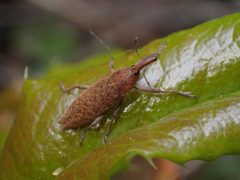
23Lixus is a of true weevils in the Curculionidae, Lixinae. in this genus are primarily herbivorous, with larvae typically developing as borers in stems, roots, or other plant tissues. Many species show plant specificity, with some appearing monophagous or oligophagous. The genus exhibits diverse oviposition , with deposited in stems, petioles, or other plant structures depending on the species.


Pronunciation
How to pronounce Lixus: /ˈlɪksus/
These audio files are automatically generated. While they are not always 100% accurate, they are a good starting point.
Images
Habitat
occupy varied including dry grasslands, sandy soils, and active pastures with sparse vegetation. Specific habitat preferences vary by species; some favor dry and sunny conditions while others are associated with particular plant .
Distribution
has broad distribution with records from Europe (Czech Republic, Slovakia, Romania, Denmark, Norway, Sweden), Asia (eastern Turkey), and Colombia. Distribution patterns vary considerably among individual .
Seasonality
activity periods vary by . Some species show bimodal activity peaks in spring and late summer; others are active across extended periods from spring through autumn. Specific timing depends on geographic location and species identity.
Diet
Herbivorous. Larvae bore in stems, roots, and other plant tissues. Documented associations include Asteraceae (Cichorium intybus), Polygonaceae (Rumex thyrsiflorus), Fabaceae (Vicia faba), and other plant . Many appear specialized to particular host plants.
Host Associations
- Cichorium intybus - Asteraceae; of L. bituberculatus
- Rumex thyrsiflorus - Polygonaceae; of L. neglectus
- Vicia faba - Fabaceae; of L. algirus
Life Cycle
Complete with , larva, pupa, and stages. Larvae are internal borers in plant tissues (stems, roots, petioles, or seed capsules). typically occurs within the plant in root tissue, root neck, or pupation . Adults emerge in summer and generally do not hibernate within host plants.
Behavior
Oviposition varies by : some deposit in main stems, others in lateral branches, petioles, or seed capsules. of some species are while others are . Activity patterns often show seasonal peaks.
Ecological Role
Stem and root borer herbivores. Larval boring activity creates internal galleries in plant tissues. Likely function as specialized herbivores with limited ranges, potentially influencing plant in their native .
Human Relevance
Some are agricultural pests. Lixus algirus causes grain yield loss and seed nutritional quality alteration in faba bean (Vicia faba). Stem boring activity can reduce crop productivity.
Sources and further reading
- BugGuide
- Wikipedia
- GBIF taxonomy match
- iNaturalist taxon
- NCBI Taxonomy
- Catalogue of Life
- Figure 27 from: Trnka F, Stejskal R, Skuhrovec J (2016) The morphology of the immature stages of two rare Lixus species (Coleoptera, Curculionidae, Lixinae) and notes on their biology. ZooKeys 604: 87-116. https://doi.org/10.3897/zookeys.604.9018
- On the distribution and ecology of some lixine species (Coleoptera, Curculionidae). V. Genus Lixus F., Subgenera Lixus F., Ortholixus Reitt., Compsolixus Reitt., and Callistolixus Reitt.
- Figure 28 from: Trnka F, Stejskal R, Skuhrovec J (2016) The morphology of the immature stages of two rare Lixus species (Coleoptera, Curculionidae, Lixinae) and notes on their biology. ZooKeys 604: 87-116. https://doi.org/10.3897/zookeys.604.9018
- Description of the preimaginal stages and biology of the weevil Lixus (Dilixellus) pulverulentus (Scopoli, 1763) (Coleoptera: Curculionidae: Lixini)
- Figure 22 from: Trnka F, Stejskal R, Skuhrovec J (2016) The morphology of the immature stages of two rare Lixus species (Coleoptera, Curculionidae, Lixinae) and notes on their biology. ZooKeys 604: 87-116. https://doi.org/10.3897/zookeys.604.9018
- Figure 1 from: Trnka F, Stejskal R, Skuhrovec J (2016) The morphology of the immature stages of two rare Lixus species (Coleoptera, Curculionidae, Lixinae) and notes on their biology. ZooKeys 604: 87-116. https://doi.org/10.3897/zookeys.604.9018
- Figure 6 from: Trnka F, Stejskal R, Skuhrovec J (2016) The morphology of the immature stages of two rare Lixus species (Coleoptera, Curculionidae, Lixinae) and notes on their biology. ZooKeys 604: 87-116. https://doi.org/10.3897/zookeys.604.9018
- Figures 11–13 from: Trnka F, Stejskal R, Skuhrovec J (2016) The morphology of the immature stages of two rare Lixus species (Coleoptera, Curculionidae, Lixinae) and notes on their biology. ZooKeys 604: 87-116. https://doi.org/10.3897/zookeys.604.9018
- Figure 7 from: Trnka F, Stejskal R, Skuhrovec J (2016) The morphology of the immature stages of two rare Lixus species (Coleoptera, Curculionidae, Lixinae) and notes on their biology. ZooKeys 604: 87-116. https://doi.org/10.3897/zookeys.604.9018
- Figures 2–3 from: Trnka F, Stejskal R, Skuhrovec J (2016) The morphology of the immature stages of two rare Lixus species (Coleoptera, Curculionidae, Lixinae) and notes on their biology. ZooKeys 604: 87-116. https://doi.org/10.3897/zookeys.604.9018
- Figures 23–24 from: Trnka F, Stejskal R, Skuhrovec J (2016) The morphology of the immature stages of two rare Lixus species (Coleoptera, Curculionidae, Lixinae) and notes on their biology. ZooKeys 604: 87-116. https://doi.org/10.3897/zookeys.604.9018
- Descriptions of immature stages of the weevil Lixus punctiventris Boheman, 1835 (Coleoptera, Curculionidae, Lixini)
- Figures 32–34 from: Trnka F, Stejskal R, Skuhrovec J (2016) The morphology of the immature stages of two rare Lixus species (Coleoptera, Curculionidae, Lixinae) and notes on their biology. ZooKeys 604: 87-116. https://doi.org/10.3897/zookeys.604.9018
- Figures 25–26 from: Trnka F, Stejskal R, Skuhrovec J (2016) The morphology of the immature stages of two rare Lixus species (Coleoptera, Curculionidae, Lixinae) and notes on their biology. ZooKeys 604: 87-116. https://doi.org/10.3897/zookeys.604.9018
- Oviposition niches and behavior of the genus <i>Lixus</i> Fabricius (Coleoptera: Curculionidae, Lixinae)
- Grain yield loss and seed nutritional quality alteration in faba bean (Vicia faba L.) caused by the stem borer Lixus algirus L. (Coleoptera: Curculionidae).