
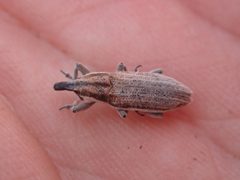
Scaphomorphus longinasus
(Anderson, 1987)
Scaphomorphus longinasus is a of weevil in the Curculionidae, Lixinae, originally described by Anderson in 1987 under the Cleonidius. It is a North American species with limited available information on its and . The genus Scaphomorphus contains species associated with various plants, though specific details for S. longinasus remain sparse. Based on GBIF records, the species has been documented as present in North America.

Pronunciation
How to pronounce Scaphomorphus longinasus: /skæfoʊˈmɔrfəs lɒŋˈɡiːnəsəs/
These audio files are automatically generated. While they are not always 100% accurate, they are a good starting point.
Images
Distribution
North America (present status per GBIF). Specific locality data beyond continental-level occurrence is not well documented in available sources.
Similar Taxa
- Scaphomorphus subcylindricusBoth are North American Scaphomorphus ; S. subcylindricus is a Florida found on Lupinis ocalensis (Ocala lupine), suggesting similar lixine weevil , though S. longinasus distribution and associations are not well documented.
More Details
Taxonomic Note
The was originally described as Cleonidius longinasus by Anderson in 1987, but has since been transferred to Scaphomorphus. GBIF currently lists it as a synonym under Cleonidius longinasus, while iNaturalist recognizes it under the current combination Scaphomorphus longinasus. The Scaphomorphus is part of the tribe Cleonini within the Lixinae, a group of weevils often associated with leguminous and other herbaceous plants.
Data Limitations
Available information on this is extremely limited. The iNaturalist platform shows only 5 observations, and no detailed biological studies, plant records, or ecological observations were found in the provided sources. Most information about the comes from better-studied like S. subcylindricus.