
Tychius meliloti
Stephens, 1831
Sweet Clover Weevil
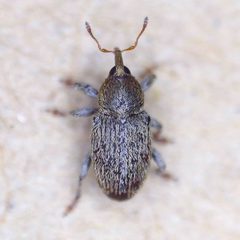
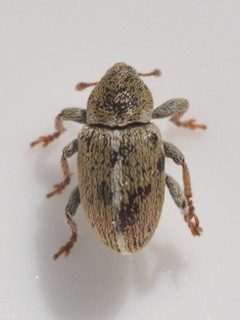
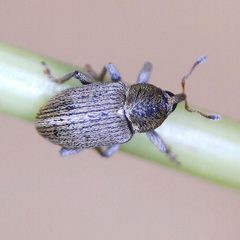
Tychius meliloti is a small weevil in the tribe Tychiini, native to Europe and introduced to North America. In Canada, it has been recorded from scattered localities in Saskatchewan, Manitoba, Ontario, and Quebec. The is associated with sweet clover (Melilotus spp.) as plants. It represents one of four European Tychius species established in North America.
Pronunciation
How to pronounce Tychius meliloti: //ˈtaɪkiəs mɛlɪˈloʊtaɪ//
These audio files are automatically generated. While they are not always 100% accurate, they are a good starting point.
Identification
Tychius meliloti can be distinguished from other introduced North American Tychius by association with Melilotus plants; other introduced species (T. picirostris, T. cuprifer, T. stephensi) are associated with Trifolium. A key to the four introduced European Tychius species in North America is available in the Canadian Entomologist source.
Images
Distribution
Native to Europe; introduced to North America with first Canadian records from scattered localities in Saskatchewan, Manitoba, Ontario, and Quebec. Also reported from China.
Host Associations
- Melilotus spp. - plantExplicitly stated as plants in Canadian Entomologist source; epithet reflects this association
Similar Taxa
- Tychius picirostrisIntroduced European in North America, but associated with Trifolium spp. rather than Melilotus
- Tychius stephensiIntroduced European in North America, but associated with Trifolium spp. rather than Melilotus
- Tychius cupriferIntroduced European in North America, but associated with Trifolium spp. and Teline monspessulana rather than Melilotus; known only from Maryland, USA
More Details
Taxonomic Authority Note
There is a discrepancy in authorship: Stephens, 1831 is cited in NCBI and primary literature, while Norman & H.Joy, 1932 appears in some databases (GBIF, Catalogue of Life). Stephens, 1831 is the accepted original description.
Introduction History
First recorded in North America in Canada; represents a more recent detection compared to other established European Tychius (T. picirostris, T. stephensi) which are widespread in North America.
Sources and further reading
- BugGuide
- GBIF taxonomy match
- iNaturalist taxon
- NCBI Taxonomy
- Catalogue of Life
- TYCHIUS MELILOTI STEPHENS NEW TO CANADA WITH A BRIEF REVIEW OF THE SPECIES OF TYCHIUS GERMAR INTRODUCED INTO NORTH AMERICA (COLEOPTERA: CURCULIONIDAE)
- The genus Tychius Germar (Coleoptera: Curculionidae: Curculioninae) in China, with description of three new species