
Tychius picirostris
(Fabricius, 1787)
Clover Seed Weevil
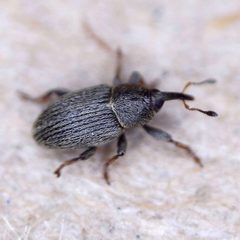
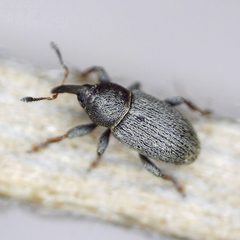
Tychius picirostris is a small weevil in the Curculionidae, native to Europe and introduced to North America where it has become widespread. The is commonly known as the Clover Seed Weevil due to its association with clover plants (Trifolium spp.). It was first described by Fabricius in 1787 and has since been recorded across the Palaearctic region, including more recent documentation in China. As a seed-feeding , it represents one of several Tychius species that have established outside their native range through human-mediated .

Pronunciation
How to pronounce Tychius picirostris: /ˈtɪkius pɪkɪˈrɒstrɪs/
These audio files are automatically generated. While they are not always 100% accurate, they are a good starting point.
Identification
Tychius picirostris can be distinguished from other introduced North American Tychius by plant association and morphological characters detailed in taxonomic keys. It differs from T. cuprifer, which is restricted to Maryland and associated with Teline monspessulana in addition to Trifolium; from T. meliloti, which feeds on Melilotus spp.; and from T. stephensi, which also uses Trifolium but has distinct morphological features. Specific diagnostic characters include details of the rostrum, , tibia, and genitalia as illustrated in taxonomic revisions.
Images
Habitat
Agricultural and natural supporting plants in the Trifolium, including clover fields, meadows, and grasslands.
Distribution
Native to Europe; introduced and widespread in North America. Recorded in China as a new Palaearctic country record. Also present on Atlantic islands including the Azores (Pico, Santa Maria, Terceira).
Diet
Seed-feeding ; larvae and develop in association with Trifolium spp. (clovers).
Host Associations
- Trifolium spp. - plantPrimary ; larvae develop in seeds
Ecological Role
Seed of clovers (Trifolium), potentially affecting plant and seed production in agricultural and natural settings.
Human Relevance
Agricultural pest of clover seed crops; introduced to North America, likely through accidental transport with agricultural materials.
Similar Taxa
- Tychius stephensiAlso introduced to North America and associated with Trifolium spp.; distinguished by morphological characters in taxonomic keys
- Tychius cupriferIntroduced to North America but restricted to Maryland; differs in range including Teline monspessulana
- Tychius melilotiIntroduced to North America; distinguished by association with Melilotus spp. rather than Trifolium
More Details
Taxonomic history
First described by J.C. Fabricius in 1787. The has been subject to multiple taxonomic revisions, most recently in comprehensive treatments of the Tychius in China and North America.
Introduction pathway
Introduced to North America from Europe, likely through transport of clover seed or hay; now established across the continent.
Sources and further reading
- BugGuide
- Wikipedia
- GBIF taxonomy match
- iNaturalist taxon
- NCBI Taxonomy
- Catalogue of Life
- TYCHIUS MELILOTI STEPHENS NEW TO CANADA WITH A BRIEF REVIEW OF THE SPECIES OF TYCHIUS GERMAR INTRODUCED INTO NORTH AMERICA (COLEOPTERA: CURCULIONIDAE)
- The genus Tychius Germar (Coleoptera: Curculionidae: Curculioninae) in China, with description of three new species