
Conoderinae
Tribe Guides
2- Lechriopini
- Zygopini(twig and stem weevils)
Conoderinae is a diverse of true weevils (Curculionidae) comprising approximately 2,400 described across more than 210 in 15 tribes. The group exhibits worldwide distribution with particular diversity in tropical regions, especially the Neotropics. Members are characterized by active, alert and frequent association with mimicry complexes. Classification within the subfamily remains chaotic with no robust phylogenetic hypotheses, and many genera are likely not monophyletic.

Pronunciation
How to pronounce Conoderinae: /ˌkoʊˈnɒdərɪniː/
These audio files are automatically generated. While they are not always 100% accurate, they are a good starting point.
Identification
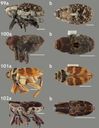
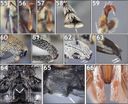
Conoderinae is distinguished from other curculionid by a combination of characters including: extraordinarily convex body shape in many groups (especially Orobitiditae); bent rostrum; meso- and metasternum; first ventrite no longer than second; and claws with appendages fused in entire process. Some groups possess unique stridulatory devices. The subfamily includes with striking aposematic coloration, including iridescent blue-green , red-eyed fly mimicry patterns, and bold pronotal striping or spotting.
Images
Habitat
Primarily tropical middle-elevation wet forests, where are commonly found on the underside of foliage and on upright or fallen tree trunks. Some lineages occupy temperate deciduous woodlands, forest edges, nutrient-poor grasslands, limestone grasslands, marshes, sand dunes, and cliffs. Saproxylic species occur in dead branches of fallen trees.
Distribution
Worldwide distribution with greatest diversity in the Neotropics. Five tribes and 62 occur in the New World, with 39 extant genera in North America, Central America, and the Caribbean. No genera are to the Caribbean. Palaearctic representatives include ranging from the Arctic Circle to the Mediterranean, with extensions into Siberia, central and east Asia, and Asia Minor. Some species have been recorded from China.
Diet
Highly variable across the and poorly documented for most . Larvae of some lineages are predispersal seed , feeding and developing within fruits (e.g., Hemicolpus in Rubiaceae; Orobitis cyanea in Violaceae). Other groups are thought to be mainly wood or stem borers as larvae. associations include Urticaceae (stems and petioles), Lecythidaceae (dead branches), Cecropia (leaves), Araceae, and Cactaceae (Opuntia).
Host Associations
- Rubiaceae - larval development in fruitsHemicolpus ; Central American species from Randia, South American species from Tocoyena formosa and Randia ferox
- Violaceae - larval development in seed capsulesOrobitis cyanea from Viola canina, with feeding holes on V. riviniana; also V. arvensis and V. tricolor
- Pinaceae - larval galleries in dead branchesEuryommatus mariae from fallen Picea abies
- Hamamelidaceae - plant associationEuryommatus berytensis with Liquidambar orientalis
- Urticaceae - stems and petioles
- Lecythidaceae - dead branches
- Cecropia - leavesfor Lissoderes and Pseudolechriops
- Araceaetwo Philenis associated
- CactaceaeCylindrocopturus associated with Opuntia
Life Cycle
stages are known only from a few of agricultural or research importance. Larvae of seed-feeding species develop within fruits or seed capsules, with occurring inside the larval feeding chamber. Wood-boring species construct galleries in dead branches. Larval varies considerably among supertribes; the mature larva and pupa of Orobitis cyanea exhibit unique characters that support the systematic isolation of Orobitiditae.
Behavior
are very active and alert, exhibiting squirrel-like ; quick to fly when threatened. Many perch motionlessly on tree trunks. Most species are thought to be . Some lineages exhibit specialized escape mechanisms: Orobitis cyanea displays seed-imitating behavior combined with a smooth, rounded, nearly spherical body shape. Multiple independent origins of mimicry complexes occur: 'red-eyed fly' mimicry (evasive mimicry of red-eyed flies), 'striped/spotted' patterns (bright pronotum with red to white elytral markings), and 'shiny blue' iridescent coloration. Timorus sarcophagoides mimics flesh-flies (Sarcophagidae). Some species have limited due to reduced or non-existent wings.
Ecological Role
Predispersal seed in some lineages, potentially influencing plant reproductive success. Saproxylic contribute to decomposition of dead wood. Members of mimicry complexes participate in multi-species defensive associations. Poorly known roles for the majority of species due to lack of biological data.
Human Relevance
Some associated with agricultural or economically important plants, including Opuntia (prickly pear cacti). Generally not considered major agricultural pests. Taxonomic interest due to complex classification and mimicry evolution. Some species extremely rare and of conservation interest in Europe (e.g., Euryommatus mariae).
Similar Taxa
- MolytinaeSome molytine weevils share similar convex body shapes and seed-feeding habits; Leiosoma cribrum is also a Viola with spherical body form, but differs in tribal and supertribal placement
- Baridinae (sensu stricto)Historical confusion in classification; Bariditae now placed within Conoderinae as a supertribe, but previously treated as separate
More Details
Classification instability
The Conoderinae has undergone substantial taxonomic revision. The supertribe Bariditae (~4,032 ), previously treated as subfamily Baridinae, is now included within Conoderinae. Other supertribes are Conoderitae/Zygopinae (~2,164 species), Ceutorhynchitae (~1,371 species), and the tiny Orobitiditae (4 species). No phylogenetic hypotheses exist for relationships among these groups or among the 15 tribes.
Undescribed diversity
The contains numerous undescribed species and . Many large genera as currently constructed are likely not monophyletic. The 2017 review of New World genera identified groups most in need of taxonomic and phylogenetic attention.
Mimicry research
Conoderinae represents one of the most distinctive Neotropical weevil groups for mimicry research, with three statistically supported mimicry complexes: 'red-eyed fly' (most -rich and phylogenetically widespread), 'striped/spotted', and 'shiny blue'. Groupings are significant but variation within complexes suggests independent convergence on phenotypically similar models.
Genus transfers
Recent taxonomic work has transferred Acoptus from Lechriopini to Othippiini, Hedycera from Lechriopini to Piazurini, and placed Philides and Philina in Conoderinae incertae sedis due to uncertain placement.
Sources and further reading
- BugGuide
- Wikipedia
- iNaturalist taxon
- NCBI Taxonomy
- Morphology of immature stages, biology, and systematic position of the Violet seed weevil, Orobitis cyanea (Linnaeus, 1758) (Curculionidae, Conoderinae, Orobitiditae, Orobitidini)
- A Review of Philenis Champion, 1906 (Coleoptera: Curculionidae: Conoderinae), with Descriptions of New Species from Central and South America
- Review of the genera of Conoderinae (Coleoptera, Curculionidae) from North America, Central America, and the Caribbean
- A remarkable new species of flesh-fly mimicking weevil (Coleoptera: Curculionidae: Conoderinae) from Southeastern Brazil
- Adult Postabdomen, Immature Stages and Biology of Euryommatus mariae Roger, 1856 (Coleoptera: Curculionidae: Conoderinae), a Legendary Weevil in Europe
- A New Eulechriopsfrom Arizona and México (Coleoptera: Curculionidae: Conoderinae) with Distributional Notes for Other Species in the Genus
- Cylindrocopturus(Coleoptera: Curculionidae: Conoderinae) Species Associated withOpuntia(Caryophyllales: Cactaceae) Species
- <h1>An annotated checklist of supertribe Bariditae Schönherr, 1833 (Coleoptera, Curculionidae, Conoderinae) in southeastern Baltic region</h1>
- Two New Species of Lissoderes Champion, 1906 (Coleoptera: Curculionidae: Conoderinae) with Comments on the Ecology of the Genus
- Figure 14 from: Gosik R, Sprick P (2022) Morphology of immature stages, biology, and systematic position of the Violet seed weevil, Orobitis cyanea (Linnaeus, 1758) (Curculionidae, Conoderinae, Orobitiditae, Orobitidini). ZooKeys 1121: 59-82. https://doi.org/10.3897/zookeys.1121.86888
- A new seed-feeding species of Hemicolpus Heller, 1895 from south Brazil and redescription of Hemicolpus abdominalis Hustache, 1938 (Coleoptera: Curculionidae: Conoderinae)
- On the occurrences of Euryommatus berytensis (Marseul, 1868) and E. mariae Roger, 1856 (Coleoptera: Curculionidae: Conoderinae) in the western Palaearctic, and further considerations on the host plant of E. berytensis
- Phenotypic analysis of aposematic conoderine weevils (Coleoptera: Curculionidae: Conoderinae) supports the existence of three large mimicry complexes
- Figure 12 from: Gosik R, Sprick P (2022) Morphology of immature stages, biology, and systematic position of the Violet seed weevil, Orobitis cyanea (Linnaeus, 1758) (Curculionidae, Conoderinae, Orobitiditae, Orobitidini). ZooKeys 1121: 59-82. https://doi.org/10.3897/zookeys.1121.86888
- Figure 6 from: Gosik R, Sprick P (2022) Morphology of immature stages, biology, and systematic position of the Violet seed weevil, Orobitis cyanea (Linnaeus, 1758) (Curculionidae, Conoderinae, Orobitiditae, Orobitidini). ZooKeys 1121: 59-82. https://doi.org/10.3897/zookeys.1121.86888