
Homorosoma
Frivaldszky, J., 1894
minute seed weevils
Species Guides
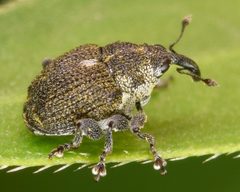
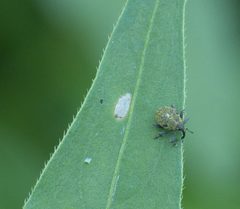
1- Homorosoma sulcipenne(minute seed weevil)
Homorosoma is a of minute seed weevils in the Curculionidae, established by Frivaldszky in 1894. The genus contains approximately nine described distributed across Europe and North America. Members are small beetles associated with seed feeding habits typical of the Ceutorhynchinae .
Pronunciation
How to pronounce Homorosoma: /ˌhoʊ.moʊˈrəʊ.sə.mə/
These audio files are automatically generated. While they are not always 100% accurate, they are a good starting point.
Identification
Distinguished from similar small weevil by combination of minute size, rostrum proportions, and genitalic characters requiring dissection. Separation from related Ceutorhynchinae genera such as Ceutorhynchus requires examination of rostral groove structure and male genitalia. The North American H. sulcipenne can be recognized by its distribution and association with particular plants.
Images
Habitat
Associated with herbaceous vegetation where plants occur; specific microhabitat preferences vary by . Found in meadows, fields, and disturbed areas where suitable seed-bearing plants grow.
Distribution
Holarctic distribution with in Europe (H. speiseri, H. validirostre and others described by Wagner 1944) and North America (H. sulcipenne, H. validirostre). Records from China (H. chinense, H. klapperichi) indicate Palearctic extension into East Asia.
Seasonality
activity likely coincides with flowering and seed set of plants; specific varies by and latitude. Spring and summer activity presumed for temperate species.
Diet
Seed feeding; larvae develop within seeds or seed pods of plants. Specific host plant associations documented for some but not comprehensively across the .
Host Associations
- Brassicaceae - larval H. sulcipenne associated with mustard plants; other likely on related
Life Cycle
Complete with , larva, pupa, and stages. Larvae are endophytic seed feeders; occurs in soil or within plant remains. Specific developmental timing undocumented.
Behavior
likely climb vegetation to oviposit into developing seeds or flower buds. capability assumed but not documented. Cryptic habits typical of small weevils.
Ecological Role
Seed affecting plant reproductive output; -level impacts on plants unknown. Part of the broader seed weevil guild in herbaceous plant .
Human Relevance
Minor agricultural significance; H. sulcipenne occasionally reported from mustard crops but not a major pest. No economic importance documented for most .
Similar Taxa
- CeutorhynchusSimilar small seed-feeding weevils in same ; distinguished by rostral groove structure and genitalia
- PseudocryptorrhynchusOverlapping size range and habits; separation requires detailed morphological examination
More Details
Taxonomic history
established by Frivaldszky in 1894 with H. speiseri as type . Multiple species described by Wagner in 1944 from European and Asian material. The spelling variation 'sulcipennis' vs. 'sulcipenne' for the North American species reflects historical nomenclatural inconsistencies.
Species diversity
Nine described recognized, though some may represent synonyms or require revision. The is not well-studied compared to larger ceutorhynchine genera.