
Cnemogonus
LeConte, J.L., 1876
minute seed weevils
Species Guides
1- Cnemogonus lecontei(minute seed weevil)
Cnemogonus is a of small weevils in the Curculionidae, established by LeConte in 1876. The genus comprises approximately five described distributed primarily in North America and Europe. These beetles are commonly referred to as minute seed weevils, reflecting their small body size and likely association with seeds as a food source. The genus includes the notable species Cnemogonus epilobii, which has been associated with willowherb plants (Epilobium).
Pronunciation
How to pronounce Cnemogonus: /nɛˈmɒɡoʊnəs/
These audio files are automatically generated. While they are not always 100% accurate, they are a good starting point.
Identification
Cnemogonus can be distinguished from other small Curculionidae by its minute size and specific leg implied by the genus name. The keeled rostrum of C. carinirostris and the cristulate surface of C. cristulatus provide -level characters. The genus is distinguished from the related genus Cidnorhinus by subtle differences in rostral and antennal structure. Accurate identification to species level requires examination of male genitalia and detailed rostral patterns.
Images
Appearance
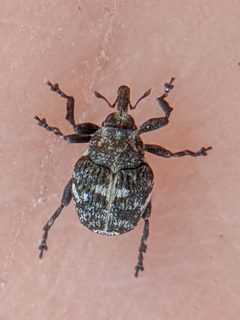
Members of Cnemogonus are minute weevils with the characteristic elongated snout (rostrum) typical of Curculionidae. The name refers to a distinctive feature: 'cnemo-' meaning leg and 'gonos' meaning angle or corner, possibly alluding to leg structure. within the genus show variation in rostral carination, with C. carinirostris possessing a keeled or ridged rostrum. Body size is small, consistent with the 'minute seed weevil' . Cnemogonus cristulatus has small crest-like structures (cristulae) on the body. Coloration ranges from ferruginous (rusty brown) in C. ferrugineus to darker tones in other species.
Distribution
The has a transatlantic distribution. Cnemogonus epilobii occurs in Europe, while C. lecontei, C. carinirostris, C. cristulatus, and C. ferrugineus are North American. The type and majority of described diversity is Nearctic.
Host Associations
- Epilobium - likely larval C. epilobii named for this association; seed-feeding implied by
Similar Taxa
- CidnorhinusSimilar small seed weevils; distinguished by rostral and antennal structure
- other minute Curculionidae generaSize overlap; Cnemogonus distinguished by leg and specific rostral features
More Details
Etymology
The name derives from Greek 'kneme' (leg) and 'gonos' (angle/progeny), possibly referring to distinctive leg structure. The epithet 'epilobii' directly references the plant genus Epilobium.
Taxonomic history
Established by John Lawrence LeConte in 1876, a prominent American entomologist. The has remained small and stable, with most described by early 20th century French entomologist Hustache (1922).
Observation rarity
The is rarely recorded, with only one observation documented in iNaturalist as of source date, suggesting either genuine rarity, cryptic habits, or under-collection of minute weevils.