
Nanophyes brevis
Boheman, 1845
Nanophyes brevis is a of in the Brentidae, Nanophyinae. The species was described by Boheman in 1845. Like other members of the Nanophyes, it is a small weevil associated with aquatic or semi-aquatic plants. The genus is known for species that develop in seeds or stems of plants, particularly in the family Lythraceae.
Pronunciation
How to pronounce Nanophyes brevis: //nəˈnɒfɪˌiːz ˈbrɛvɪs//
These audio files are automatically generated. While they are not always 100% accurate, they are a good starting point.
Identification
Distinguished from other Nanophyes by genitalia and rostral proportions; accurate identification requires examination of or literature. The species epithet "brevis" (Latin for "short") may refer to relatively shorter rostral or body proportions compared to .
Images
Appearance
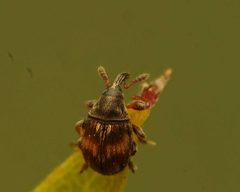
Small weevil with the characteristic elongated rostrum (snout) typical of Brentidae. Body compact, with arising from the rostrum. Specific morphological details for this are not well documented in the provided sources.
Habitat
Associated with wetland and riparian environments where plants of the Nanophyes occur. Specific microhabitat preferences for this are not documented.
Distribution
Recorded from Belgium based on GBIF distribution data. The broader range likely extends through parts of Europe, consistent with the distribution patterns of related Nanophyes , but this requires verification.
Ecological Role
As a seed-feeding or stem-boring weevil, likely contributes to of plants and serves as prey for .
Similar Taxa
- Other Nanophyes speciesShare similar body plan and associations; require careful examination of rostral length, body proportions, and genitalia for separation
- Other NanophyinaeSmall size and elongated rostrum; distinguished by antennal insertion point and other subtle morphological characters
More Details
Taxonomic notes
The Nanophyes has undergone taxonomic revision, with some formerly placed in separate genera now synonymized. The current placement in Brentidae follows modern classification, though some older literature may place these weevils in Curculionidae.
Data gaps
Basic biological information including plants, detailed , and remain undocumented for this in the available literature.
Sources and further reading
- BugGuide
- GBIF taxonomy match
- iNaturalist taxon
- NCBI Taxonomy
- Name That Bug! | Bug Squad
- Secrets of the "Subnivium": Arthropod Community Thrives Beneath Winter Snowpack
- When pearly-eye meets dragonfly: Northern pearly-eye, Enodia anthedon, and clubtail dragonflies, Gomphidae spp. — Bug of the Week
- Safeguarding Biodiversity: An Entomologist's Goal as Government Policy Analyst
- New parasitoid species named in honor of the National Geographic Society
- new family | Blog