
Nanophyinae
Genus Guides
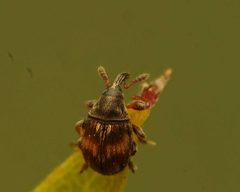
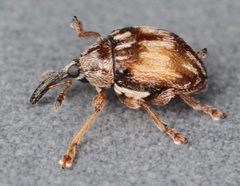
5Nanophyinae is a of weevils in the Brentidae, comprising two tribes (Corimaliini and Nanophyini) and including the Zhangius. The group was originally established as a family in 1848 but later reclassified. Members exhibit considerable morphological diversity, with some genera showing -dwelling habits and associations with specific plants in Lythraceae.
Pronunciation
How to pronounce Nanophyinae: /ˌnæn.oʊˈfaɪ.ɪ.niː/
These audio files are automatically generated. While they are not always 100% accurate, they are a good starting point.
Identification
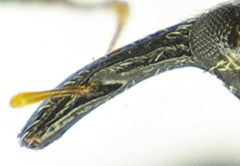
Members of Nanophyinae can be distinguished from other Brentidae by tribal and generic-level characters. Within the subfamily, the two tribes Corimaliini and Nanophyini are recognized. The Zhangius is characterized by elytral vestiture with dense setae and black fascicled , 6-desmomere , distinctive pronotum shape with elytral , unarmed male metatibiae, and male genitalia with extremely elongate . occurs in some genera, with females possessing elongate, glabrous prorostra and unarmed tibiae versus males with short prorostra and mucronate pro- and mesotibiae.
Images
Habitat
varies by and . Zhangius species inhabit the of tall trees (20–30 m height), with specimens collected from branches at least 5 m above ground. Pseudotychius watsoni has been associated with wetland habitats where its suggested plant Decodon verticillatus grows in aquatic or semi-aquatic environments. Titanomalia komaroffi occurs in steppe and forest-steppe regions of southeastern European Russia.
Distribution
Documented from China (Yunnan: Xishuangbanna), Thailand (Chiang Mai), Russia (Volgograd region and broader southeastern European range), and North America (implied for Pseudotychius watsoni, described from Indiana in 1922). The Russian Corimaliini fauna includes nine from four .
Host Associations
- Lagerstroemia tomentosa - plantType Zhangius rhymbon collected from this Lythraceae tree; explicit record from Yunnan, China
- Decodon verticillatus - suggested plantProposed for Pseudotychius watsoni based on collection association; requires confirmation
Behavior
Some are -dwelling and occur at significant heights above ground, requiring specialized collection methods such as canopy spraying and long-handled tropical nets (9 m handles) for sampling. Mating has been observed in at least one species.
Similar Taxa
- other Brentidae subfamiliesNanophyinae distinguished by its tribal structure (Corimaliini, Nanophyini) and specific morphological characters including antennal segmentation and genitalic features; other lack this combination of traits
More Details
Taxonomic history
Originally described as Nanophyeidae (also spelled Nanophyidae) in 1848, later reclassified as Nanophyinae within Brentidae. Type is Nanophyes.
Collection methods
-dwelling require specialized techniques: canopy spraying and long-handled tropical nets with 9 m extension handles have been successfully employed.
Sexual dimorphism
Present in some : females with elongate, glabrous prorostrum and all tibiae unarmed; males with short prorostrum and mucronate pro- and mesotibiae.
Sources and further reading
- BugGuide
- Wikipedia
- iNaturalist taxon
- NCBI Taxonomy
- Decodon verticillatus (L.) Elliott (Lythraceae) Suggested as a Host of Pseudotychius watsoni Blatchley, 1922 (Coleoptera: Curculionoidea: Brentidae: Nanophyinae)
- First record of Titanomalia komaroffi (Faust, 1877) (Brentidae: Nanophyinae) from Volgograd region (Russia) with a list of the Russian Corimaliini
- A new nanophyine genus, Zhangius gen. nov., with descriptions of two new species (Coleoptera, Brentidae, Nanophyinae) from China and Thailand