
Rhopalotria furfuracea
O'Brien & Tang, 2015
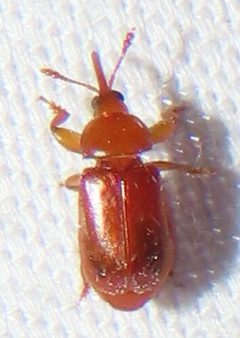
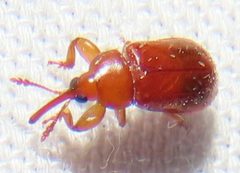
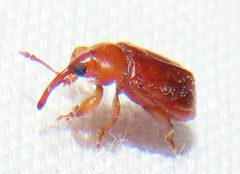
Rhopalotria furfuracea is a cycad weevil in the Belidae, described by O'Brien & Tang in 2015. This was previously referred to as Rhopalotria mollis in older literature, including the 1989 study that established its obligate pollination mutualism with Zamia furfuracea. The weevil exhibits highly specialized -specificity to this cycad species, with all life stages completed within host cones. The relationship represents one of the most specialized known insect-cycad mutualisms.
Pronunciation
How to pronounce Rhopalotria furfuracea: //ˌroʊ.pəˈlɒt.ri.ə ˌfɜr.fjʊˈreɪ.si.ə//
These audio files are automatically generated. While they are not always 100% accurate, they are a good starting point.
Images
Habitat
Male and female cones of Zamia furfuracea cycads; subtropical to tropical environments where the cycad occurs in or native range. are found specifically within cone tissues rather than general vegetation.
Distribution
Native range corresponds to that of Zamia furfuracea in Mexico (Veracruz region). The occurs wherever the host cycad is cultivated, including gardens and horticultural collections worldwide.
Seasonality
Activity synchronized with reproductive of Zamia furfuracea; and breeding coincide with cone development and thermogenic opening of male cones. Some individuals enter in pupal cases within spent male cones, remaining inactive until the next reproductive season of the .
Diet
feed on parenchyma tissues of male cone microsporophylls. Larvae feed exclusively on parenchyma of microsporophylls within male cones. Neither adults nor larvae consume pollen or damage microsporangia. Adults do not feed on female cone tissues.
Host Associations
- Zamia furfuracea - obligate and exclusive for larval developmentAll life stages confined to cones; effect pollination during visitation to female cones
Life Cycle
laid in seeds of female cones. Larvae develop within male cones, feeding on microsporophyll parenchyma. occurs within stalks of microsporophylls. emerge from outer ends of microsporophylls. Some larvae enter in thick-walled pupal cases within microsporangial stalks of pollen-spent cones, persisting until the next reproductive season.
Behavior
swarm upon male cones during thermogenic opening. Mating occurs within male cones. Adults become coated with pollen during residence in male cones and transport pollen to female cones during visitation. Oviposition occurs in seeds of female cones during pollination visits. Complex behavioral sequence tied to cone thermogenesis and developmental timing of .
Ecological Role
Obligate of Zamia furfuracea. The sole or primary pollinator of its cycad, representing a highly specialized mutualistic relationship. Larval feeding on cone tissues appears non-destructive to host reproductive function.
Human Relevance
Subject of research on and pollination . Maintains reproductive capacity of Zamia furfuracea in , including gardens where the cycad is grown as an ornamental. Taxonomic clarification (2015) resolved confusion with related .
Similar Taxa
- Rhopalotria mollisFormerly considered or confused with R. furfuracea in pre-2015 literature; 1989 pollination study used this name for what is now recognized as R. furfuracea
- Other Rhopalotria species contains approximately six , all associated with cycads; distinguished by specificity and subtle morphological differences, though most are poorly documented
Misconceptions
The was long referred to as 'Rhopalotria mollis' in scientific literature, including the seminal 1989 pollination study. The 2015 description of R. furfuracea by O'Brien & Tang established the currently accepted name. Older sources using 'R. mollis' in reference to the Zamia furfuracea should be interpreted as referring to R. furfuracea.