
Epuraea
Erichson, 1843
sap beetles
Species Guides
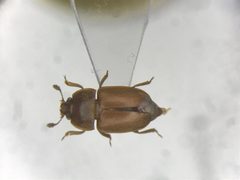
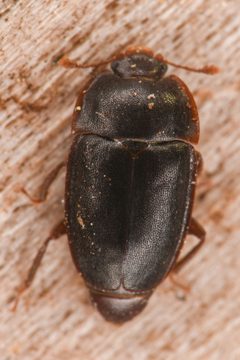
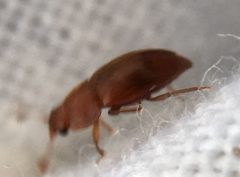
36Epuraea is a of small sap-feeding beetles in the Nitidulidae, first described by Erichson in 1843. The genus contains at least 40 described distributed across northern temperate regions. Epuraea species are primarily associated with fermenting plant materials, fungal sporulation structures, and decaying organic matter. Several species have documented relationships with specific fungal of trees, including western gall rust and fungus. The genus exhibits considerable ecological diversity, with some species occurring in bumblebee nests and others developing on agricultural crops.
Pronunciation
How to pronounce Epuraea: /ɛpjuˈriːə/
These audio files are automatically generated. While they are not always 100% accurate, they are a good starting point.
Identification
Epuraea is distinguished from other Nitidulidae by the combination of: vertical with free ; prothorax lacking basal margin; exposing only ; 5-5-5 tarsal formula with bilobed first three tarsomeres; and two rows of small marginal spines on outer edges of middle and hind tibiae. -level identification requires examination of genitalia and other fine morphological details.
Images
Habitat
Diverse including fermenting fruits, fungal sporulation structures on diseased trees, decaying plant tissue, and soil. Specific documented habitats include: galls of western gall rust (Endocronartium harknessii) on lodgepole pine; fungus mats; fermenting overripe fruits; and bumblebee nests. occurs in soil or beneath logs.
Distribution
Documented from northern United States, Canada, India (Kolkata area), Korea (Jeju), and Bangladesh. GBIF records indicate presence in Denmark, Norway, Sweden, and Vermont, USA. Distribution spans northern temperate regions with -specific localities.
Seasonality
of E. obliquus emerge from soil in spring to colonize fungal galls, with adults leaving galls in late summer to feed on inactive galls before . E. domina exhibits winter breeding in citrus groves. E. ocularis development occurs year-round under laboratory conditions.
Diet
Sap, fungal spores, fermenting fruits, flowers, fungi, decaying plant tissue, and tissue of dead animals. E. obliquus feeds specifically on spores of western gall rust. E. ocularis develops on fermenting overripe fruits.
Host Associations
- Endocronartium harknessii - feeds on sporeswestern gall rust on lodgepole pine; E. obliquus
- oak wilt fungus - reared from fungus matsE. avara, E. corticina, E. terminalis
- fermenting fruits - breeding substrateE. ocularis, E. domina
- bottle gourd - Epuraea sp., Bangladesh
Life Cycle
Complete with , larva, pupa, and stages. E. ocularis: eggs hatch in 1-2 days, four larval instars over 12-17 days, in soil, adult in 4-5 days. E. obliquus: eggs laid on gall surface under periderm, three larval instars feeding on fungus, mature larvae drop to soil to pupate. as adults in soil.
Behavior
of E. obliquus actively seek and colonize fungal galls in spring, with synchronized to rust sporulation. Larvae of some migrate to soil for . Adults commonly overwinter beneath logs or in soil. Mating and -laying observed in laboratory conditions for E. ocularis.
Ecological Role
Documented as potential natural control agent for western gall rust through spore consumption. Associated with decomposition of fermenting plant materials and fungal sporulation structures. Some occur in bumblebee nests, though ecological significance unclear.
Human Relevance
Some are agricultural pests: Epuraea sp. infests bottle gourd in Bangladesh, and E. domina breeds in citrus groves. Potential biocontrol agent for western gall rust. Generally considered minor pests or beneficial decomposers.
Similar Taxa
- other Nitidulidae generashare sap-feeding habits and small size; distinguished by tarsal formula, tibial spination, and elytral truncation pattern
More Details
Taxonomic note
Epuraea (Haptoncus) ocularis has been treated under the subgenus Haptoncus, indicating possible taxonomic complexity within the .
Research gaps
Most detailed information derives from single- studies; -wide generalizations require caution. Full text of several potentially informative sources was not accessed.
Sources and further reading
- BugGuide
- Wikipedia
- GBIF taxonomy match
- iNaturalist taxon
- NCBI Taxonomy
- Catalogue of Life
- NORTH AMERICAN NITIDULIDAE (COLEOPTERA): IV. EPURAEA ASSOCIATED WITH FUNGI OF PINE AND OAK
- Notes on the Biology of Epuraea monogama Crotch (Coleoptera: Nitidulidae)
- Life History of Epuraea (Haptoncus) ocularis Fairmaire, 1849 in Kolkata area, India and descriptions of the immature stages (Coleoptera: Nitidulidae: Epuraeinae)
- The first report on the winter breeding life history of Epuraea domina (Coleoptera: Nitidulidae) in a citrus grove in Jeju, Korea
- BIOLOGY AND LIFE HISTORY OF EPURAEA OBLIQUUS HATCH (COLEOPTERA: NITIDULIDAE) ON WESTERN GALL RUST
- Life Cycle and Phenology of Invasive Sap Beetle (Epuraea sp.) Infesting Bottle Gourd in Bangladesh