
Epuraea corticina
Erichson, 1843
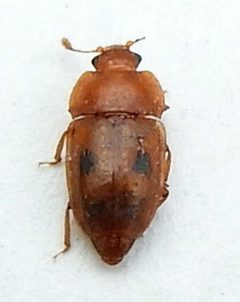
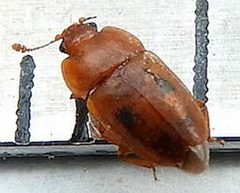
Epuraea corticina is a small sap-feeding beetle in the Nitidulidae, first described by Erichson in 1843. It has been documented in northern North America and is specifically associated with fungus mats, where it develops. The is one of several Epuraea beetles linked to fungal of hardwood trees.
Pronunciation
How to pronounce Epuraea corticina: /ɛpjʊˈreɪə kɔːrˈtɪsɪnə/
These audio files are automatically generated. While they are not always 100% accurate, they are a good starting point.
Identification
As a member of Epuraea, this is small (likely 2-4 mm), oval to elongate-oval in shape, with short bearing weakly clubbed tips. Specific distinguishing features from require examination of subtle characters such as pronotal shape, elytral punctation patterns, and genitalia. It may be separated from E. terminalis and E. avara, which share similar associations, by detailed morphological study.
Images
Habitat
Associated with fungal mats of on oak trees; occurs in forested environments where oak and the pathogenic fungus are present.
Distribution
Northern United States and Canada.
Host Associations
- oak wilt fungus - breeding/development siteHas been reared from fungus mats.
Ecological Role
May contribute to spore of fungus through association with fungal mats; specific ecological function not well documented.
Human Relevance
Associated with , a significant of oak trees with economic and ecological impacts in North American forests.
Similar Taxa
- Epuraea terminalisAlso reared from fungus mats; distinguished by morphological details requiring close examination.
- Epuraea avaraShares fungus association; separation requires study of subtle structural characters.
More Details
Taxonomic Authority
First described by Wilhelm Ferdinand Erichson in 1843.
Research Context
Documented in a 1967 Canadian Entomologist study focusing on Epuraea associated with pine and oak fungal .