Hyperaspis troglodytes
Mulsant, 1853
troglodyte lady beetle
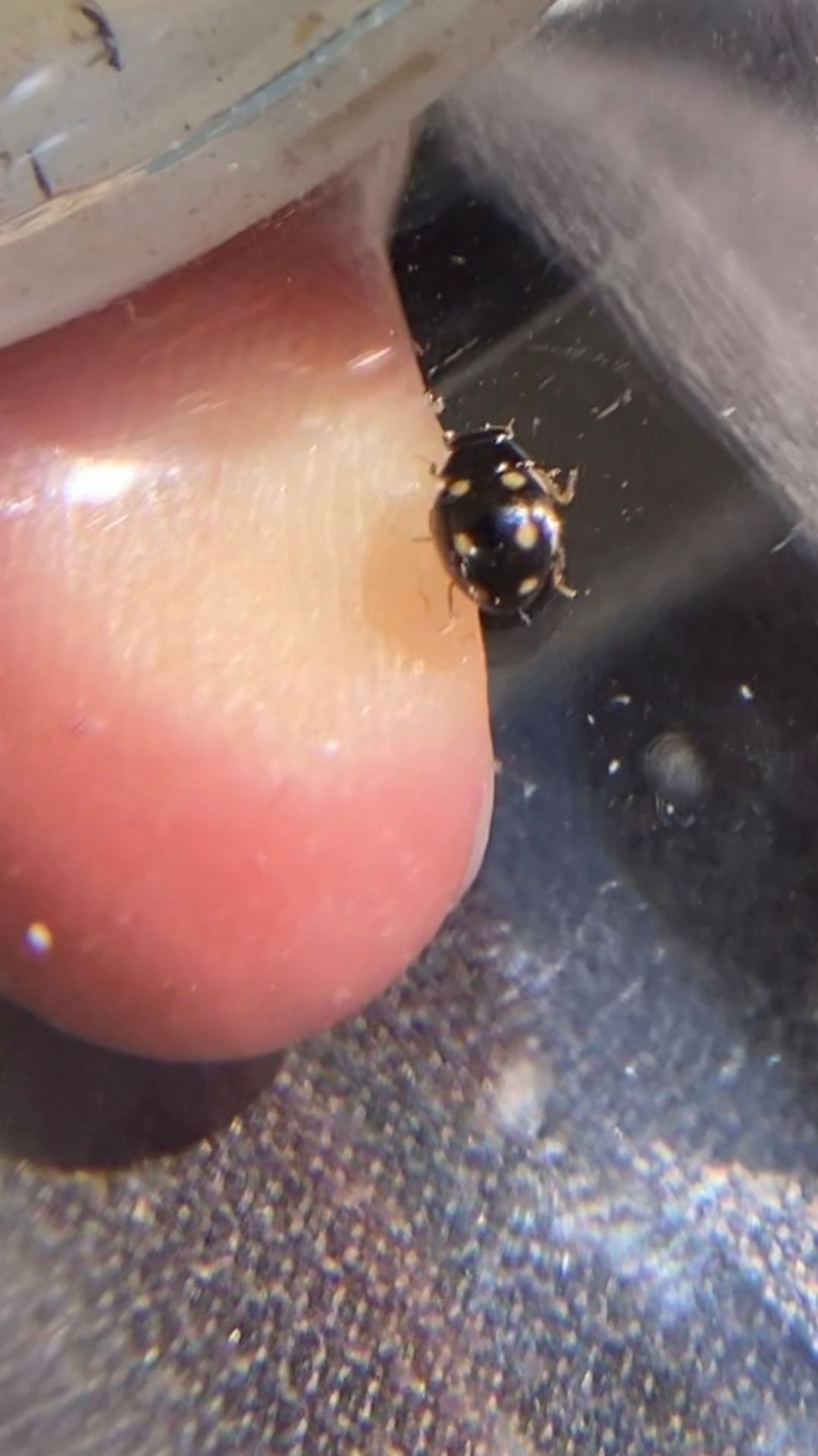
Hyperaspis troglodytes, known as the troglodyte lady , is a small North American in the Coccinellidae. measure 2.0-2.75 mm in length. The species is distinguished from similar Hyperaspis by the widely separated basal spots on the . It has been recorded from six U.S. states and three Canadian provinces.
Pronunciation
How to pronounce Hyperaspis troglodytes: /haɪˈpɛrəsˌpɪs trɒɡˈlɒdɪtiːz/
These audio files are automatically generated. While they are not always 100% accurate, they are a good starting point.
Identification
Distinguished from Hyperaspis disconotata by the widely separated basal spots on the . The small size (2.0-2.75 mm) and general Hyperaspis body form—small, somewhat elongated lady beetles with spotted patterns—aid in identification. Specific identification requires examination of elytral spot arrangement.
Images
Distribution
North America: recorded from Connecticut, Indiana, Iowa, Massachusetts, Minnesota, and Pennsylvania in the United States; also present in Manitoba, Nova Scotia, and Québec, Canada.
Similar Taxa
- Hyperaspis disconotataSimilar elytral color pattern, but H. troglodytes has widely separated basal spots while H. disconotata has closely spaced basal spots.
More Details
Etymology
The specific epithet 'troglodytes' derives from Greek roots meaning 'cave-dweller,' though the reason for this name application to this is not documented in available sources.
Sources and further reading
- BugGuide
- Wikipedia
- GBIF taxonomy match
- iNaturalist taxon
- Bembicid Holdings | Entomology Research Museum
- Waxy lady beetles come to the rescue of pest-plagued crapemyrtles, Hyperaspis spp. — Bug of the Week
- Bloodsuckers in the basement: Subterranean mosquito, Culex pipiens form molestus — Bug of the Week
- A friendlier type of drone: Common Drone Fly, Eristalis tenax — Bug of the Week