
Subcoccinella vigintiquatuorpunctata
(Linnaeus, 1758)
24-spot Ladybird, Alfalfa Lady Beetle
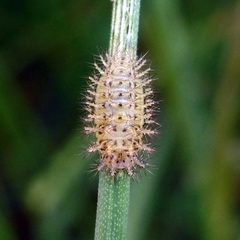
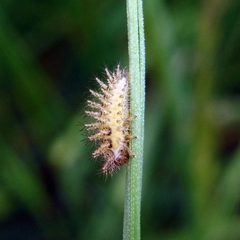
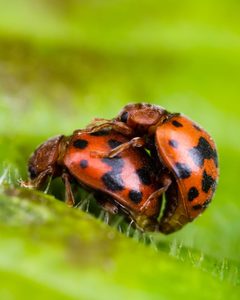
A small ladybird beetle, 3–4 mm long, with a domed shape and velvety, hair-covered wing-cases. Unlike most ladybirds, it is herbivorous, feeding on fungal mycelium rather than aphids. The shows high variability in spot patterns, typically bearing 20–24 black spots on a dark orange background, though melanic and spotless forms occur. Winglessness is common, particularly in western , with ability varying geographically.
Pronunciation
How to pronounce Subcoccinella vigintiquatuorpunctata: //sʌbˌkɒksɪˈnɛlə vɪˌdʒɪntikwætʊɔrpʌŋkˈtɑːtə//
These audio files are automatically generated. While they are not always 100% accurate, they are a good starting point.
Identification
Distinguished from other ladybirds by its small size (3–4 mm), velvety non-shiny , and herbivorous habits. The Bryony Ladybird (Henosepilachna argus) is larger (6–8 mm) with similar patterning. Cynegetis impunctata is browner, spotless, and has a black —spotless forms of S. vigintiquatuorpunctata retain an orange head. The hairy, matt elytra separate it from smooth, -feeding ladybirds.
Images
Habitat
Occurs in diverse open and semi-open including steppe, unimproved grassland, quarries, wasteland, areas, broadleaf and mixed forests, and riparian zones. Frequently found on flowers, especially Apiaceae.
Distribution
Native across the Palearctic: Europe, North Africa, Russia (European to Far East), Caucasus, Siberia, Belarus, Ukraine, Moldova, Kazakhstan, Central and Western Asia, Afghanistan, Mongolia, China, and Korea. Introduced to North America with first records from Pennsylvania in 1972. In Britain, more frequent in southern regions.
Seasonality
active from late spring through autumn. laid in May; larval development approximately six weeks. New adults present until October or November.
Diet
Larvae feed exclusively on mycelium of powdery mildews (Erysiphales), primarily Podosphaera on oak (Quercus robur) and ash (Fraxinus excelsior), and on grasses, Astragalus, and other Fabaceae and Boraginaceae. likely feed on similar fungal resources; insects carry fungal spores.
Life Cycle
deposited in May. Larval stage lasts approximately six weeks, with occurring in protected locations. Pupae bear branched spines that secrete noxious alkaloids as defense. of new emerge mid-summer and persist into autumn. stage not explicitly documented in sources.
Behavior
Often observed on flowers. Larvae and pupae possess chemical defenses via spines that exude alkaloids. frequently wingless and -incapable, particularly in western European ; winged individuals more common in eastern Europe (Hungary, Romania). Even winged individuals carry genes for wing , suggesting ongoing evolutionary trend toward flightlessness.
Ecological Role
mycophage that consumes powdery mildew fungi, potentially influencing fungal on plants. Acts as for fungal spores. Serves as prey for various despite chemical defenses.
Human Relevance
Occasionally referenced as 'Alfalfa Lady Beetle' in North America, though rarely found on alfalfa there. No significant documented economic impact; not used for due to non-predatory habits.
Similar Taxa
- Henosepilachna argus (Bryony Ladybird)Similar spot pattern but larger (6–8 mm), feeds on Bryonia and other Cucurbitaceae leaves rather than fungi.
- Cynegetis impunctataSmall size comparable, but uniformly brown, spotless, with black —S. vigintiquatuorpunctata spotless forms retain orange head.
- Aphid-feeding Coccinellidae (e.g., Coccinella septempunctata)Smooth, shiny without ; predatory on aphids rather than mycophagous.