Subcoccinella
Huber, 1842
24-spot ladybird, 24-spotted ladybird, Alfalfa Lady Beetle
Species Guides
1- Subcoccinella vigintiquatuorpunctata(24-spot Ladybird)
Subcoccinella is a of ladybird beetles ( Coccinellidae) containing a single recognized , Subcoccinella vigintiquatuorpunctata, commonly known as the 24-spot ladybird. This small (3–4 mm) is distinctive among ladybirds for its herbivorous diet and velvety, hair-covered rather than the smooth, shiny appearance typical of the family. It is native to the Palearctic region and has been introduced to North America. The genus belongs to the Epilachninae, which contains herbivorous ladybirds, unlike the majority of Coccinellidae which are predatory.
Pronunciation
How to pronounce Subcoccinella: //sʌb.kɒk.səˈnɛl.lə//
These audio files are automatically generated. While they are not always 100% accurate, they are a good starting point.
Identification
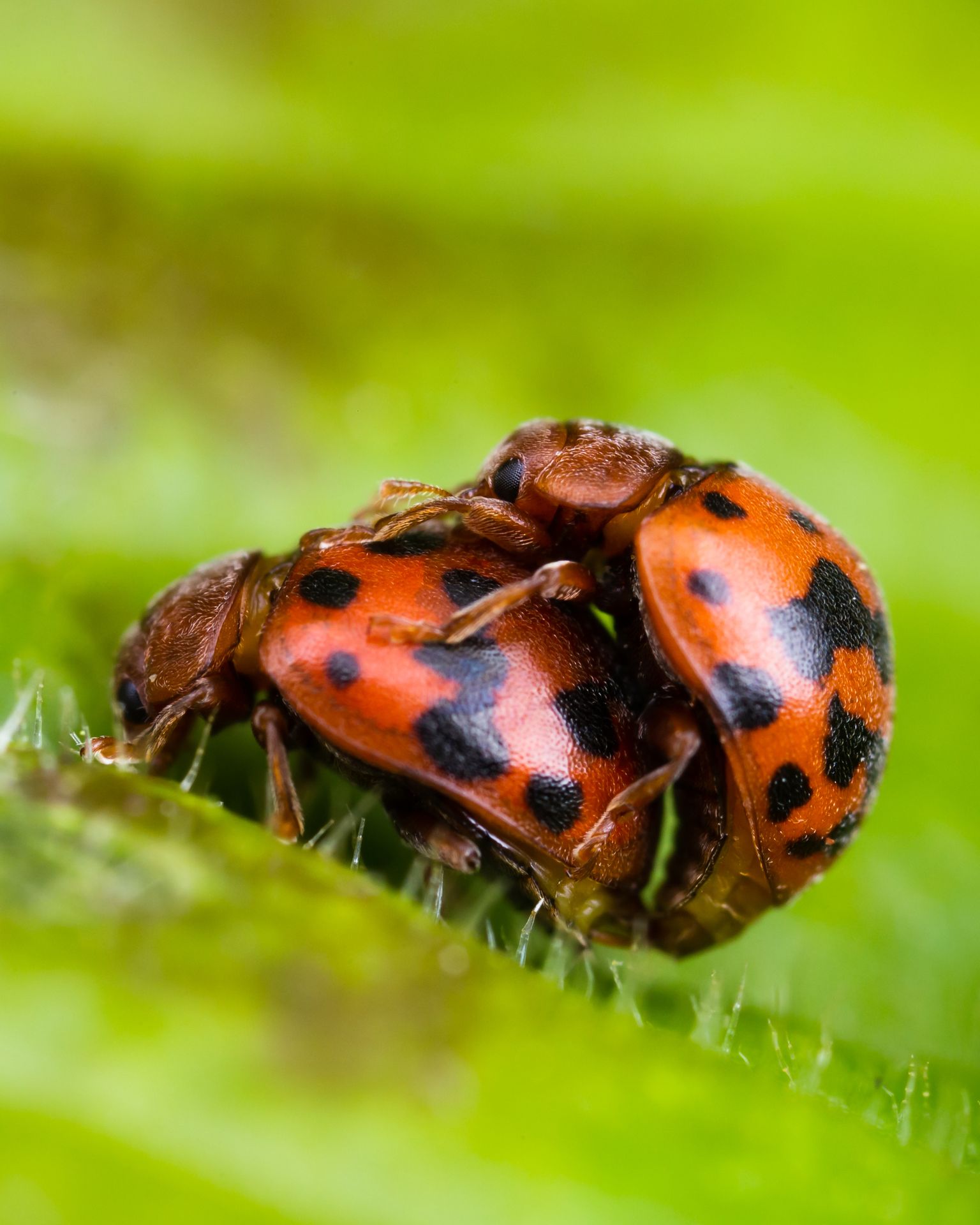
Distinguished from other small ladybirds by the combination of small size (3–4 mm), domed shape, velvety hair-covered , and orange coloration with black spots. The Bryony Ladybird (Henosepilachna argus) is larger (6–8 mm) with similar patterning. Cynegetis impunctata is browner, spotless, and has a black —unlike the spotless form of Subcoccinella, which retains an orange head. The hairy, matt elytra separate it from smooth, shiny -feeding ladybirds.
Images
Appearance
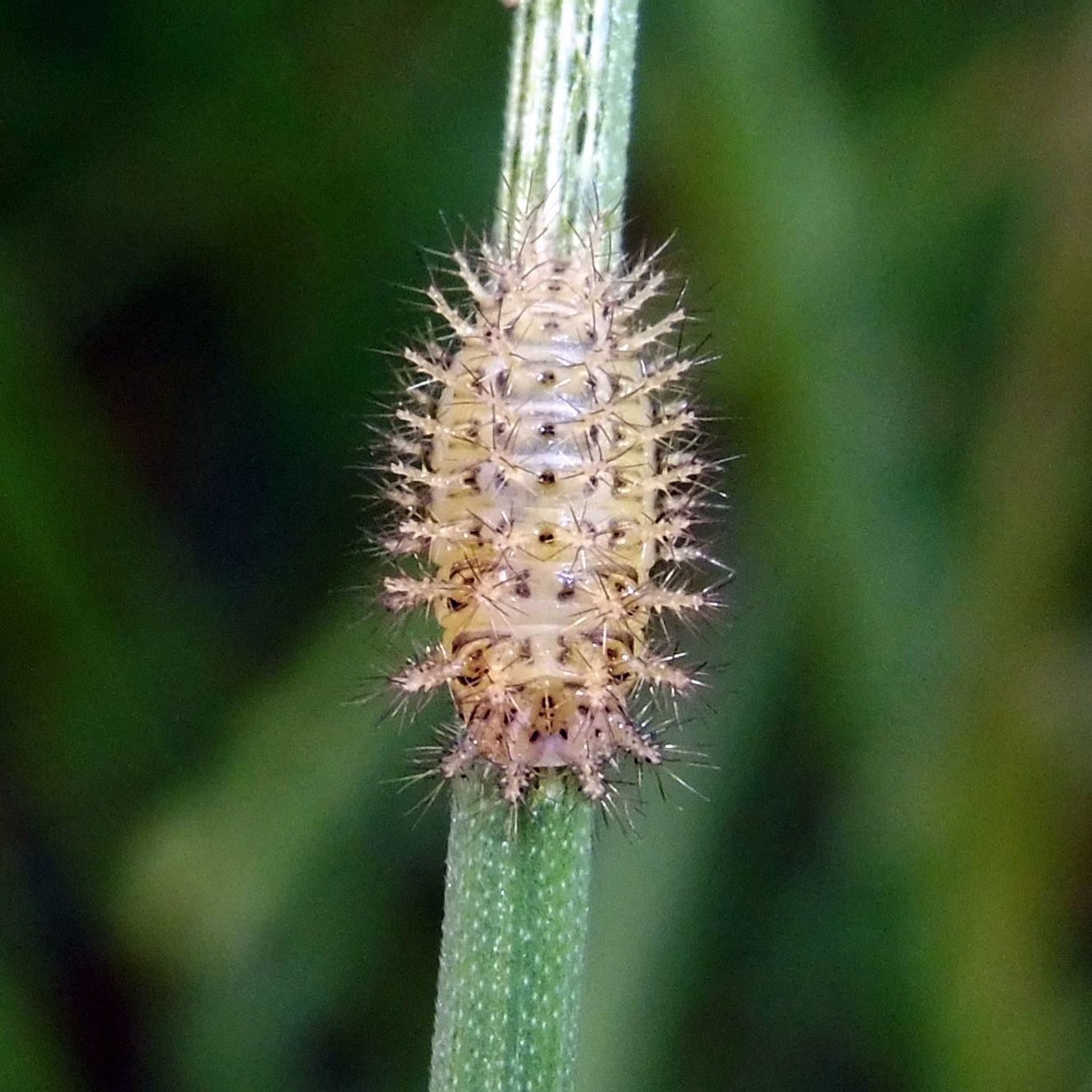
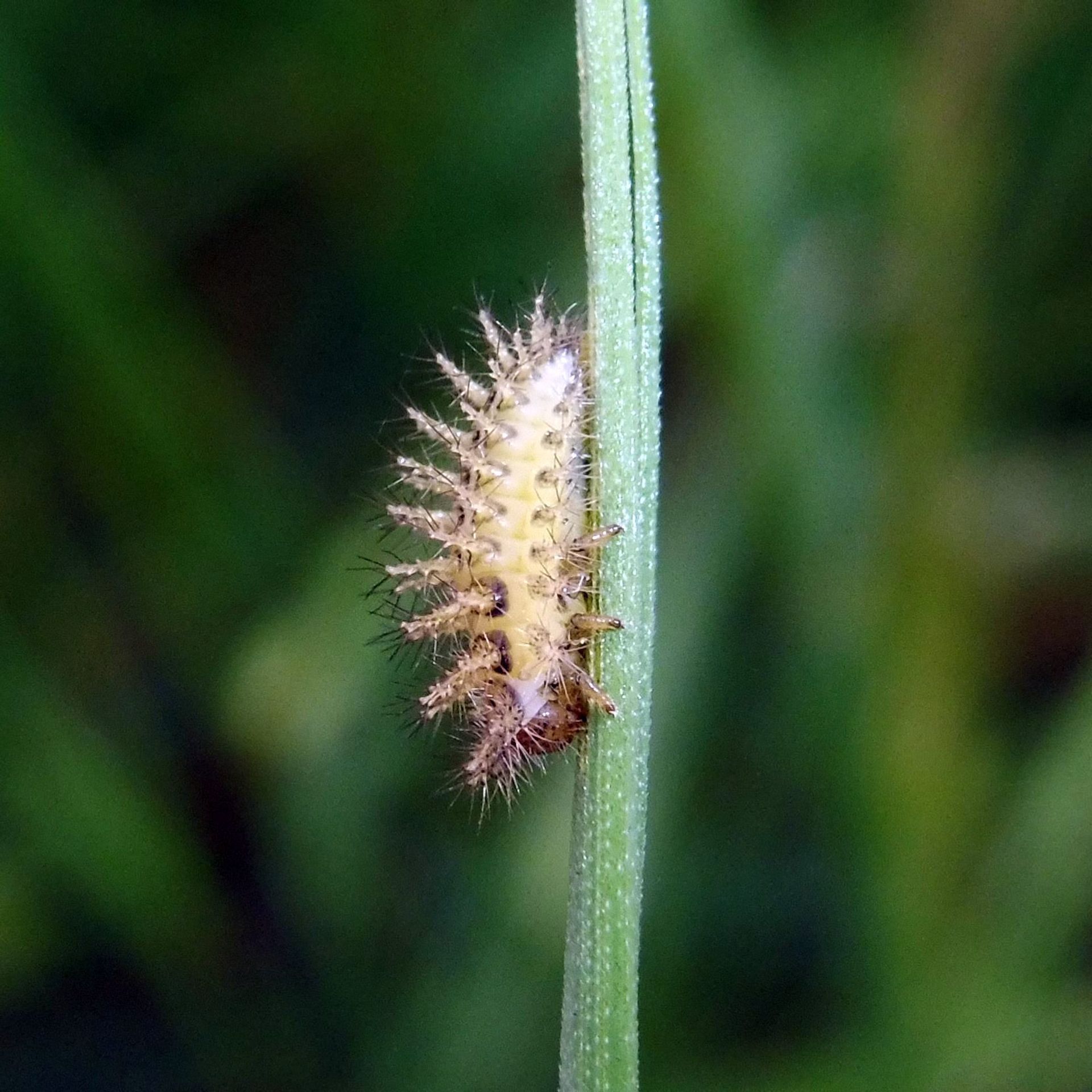
are small ladybirds, 3–4 mm in length, with a domed, semi-spherical body shape. The (wing-cases) are covered with short pale hairs, giving a distinctive matt or velvety appearance rather than the smooth, shiny surface seen in most ladybirds. Coloration is dark orange, including legs and , with variable black spots on the elytra—typically 20–24, occasionally up to 26, sometimes fewer or absent, and occasionally together. Melanic (dark) forms are very rare; an extremely rare form has yellow spots. Many adults are wingless, with no wings under the elytra. Larvae are 4–6 mm long, pale grey-green with darker speckles, and covered with branched spines. Pupae retain these spines, which are used in chemical defense.
Habitat
Occurs in diverse including Pontic–Caspian steppe, Pannonian steppe, unimproved grassland, quarries, wasteland, areas, broadleaf and mixed forests, and riparian zones. In Britain, more common in southern and coastal regions. frequently found on flowers, especially Apiaceae.
Distribution
Native to the Palearctic: Europe, North Africa, European Russia, the Caucasus, Siberia, Russian Far East, Belarus, Ukraine, Moldova, Transcaucasia, Kazakhstan, Middle Asia, Western Asia, Afghanistan, Mongolia, China, and North and South Korea. Introduced to North America, first recorded in Pennsylvania in 1972. In Britain, predominantly southern distribution.
Seasonality
active from late spring through autumn. laid in May. Larval development approximately six weeks. New adults active until October or November. Adults enter reproductive at the end of July, remaining active until late autumn. adults experience high mortality and die during May–June.
Diet
Herbivorous. Larvae feed on mycelium of powdery mildew fungi (Erysiphales), primarily Podosphaera on oak (Quercus robur) and ash (Fraxinus excelsior), as well as on grasses, Astragalus, and some Fabaceae and Boraginaceae. feed on leaves of herbaceous plants including grasses, campions, plantains, and legumes. Insects carry fungal spores.
Host Associations
- Quercus robur - fungal plantlarvae feed on Podosphaera mildew on oak
- Fraxinus excelsior - fungal plantlarvae feed on Podosphaera mildew on ash
- Poaceae - fungal plantlarvae feed on mildew fungi on grasses
- Astragalus - fungal plantlarvae feed on mildew fungi
- Fabaceae - fungal plantlarvae feed on mildew fungi on some
- Boraginaceae - fungal plantlarvae feed on mildew fungi on some
- Podosphaera - food sourcepowdery mildew fungi consumed by larvae
- Erysiphales - food sourceorder of powdery mildew fungi consumed by larvae
Life Cycle
laid in May on vegetation. Larval development through four instars, taking approximately six weeks. occurs on vegetation. emerge from late June onwards. New adults active until October or November. Reproductive induced by interaction of and temperature, beginning end of July. as adults in sheltered locations; hibernation unstable with high mortality. Overwintering adults die during May–June. Cool temperate climate limits size. Some adults may become active during mild winter periods due to year-round food availability.
Behavior
High proportion of wingless in some (no UK winged specimens found in one study; 40% winged in Hungary and Romania), limiting . Winged individuals also carry genes for wing , suggesting increasing trend toward flightlessness. Chemical defense via alkaloid secretion used as deterrent; formerly thought to lack alkaloids. Conspicuous aposematic coloration. Larvae and pupae use branched spines to secrete noxious alkaloids against .
Ecological Role
Herbivore feeding on plant leaves and fungal mycelium. Contributes to fungal spore through carrying spores. Not regarded as a significant plant pest in Britain due to climate limiting size, though capable of damaging alfalfa and other legumes in parts of its range. One of only two herbivorous ladybird resident in the UK.
Human Relevance
Known as the "Alfalfa Lady Beetle" in the United States, though rarely found on alfalfa in North America. Can cause damage to alfalfa and legume crops in some regions. Subject of sequencing as part of the Darwin Tree of Life project. variability creates search challenges—numerous spellings and formats exist for the epithet.
Similar Taxa
- Henosepilachna argusSimilar spot pattern but larger (6–8 mm vs. 3–4 mm) and smoother
- Cynegetis impunctataSimilar small size but browner, completely spotless, and has black (spotless Subcoccinella retains orange head)
Misconceptions
Widely assumed to be predatory like most ladybirds, but exclusively herbivorous. Formerly thought to lack the alkaloid chemical defenses typical of ladybirds, but now known to produce alkaloids used against ants. The name "Alfalfa Lady Beetle" in North America is misleading as the is rarely found on alfalfa there.
More Details
Taxonomic dispute
In 1991, researchers proposed that South Korean specimens represented a distinct , Subcoccinella coreae. Subsequent researchers disputed this, arguing the differences represented -level variation without sufficient evidence for species status.
Genome
sequenced as part of the Darwin Tree of Life project: 532.03 Mb assembly, 97.41% scaffolded into 15 chromosomal pseudomolecules including X , mitochondrial genome 18.91 kb.
Wing polymorphism
Winglessness varies geographically: absent in UK studied, but 40% of Hungarian and Romanian specimens had wings. Even winged individuals carry genes for wing , suggesting evolutionary trend toward flightlessness.
Sources and further reading
- BugGuide
- Wikipedia
- GBIF taxonomy match
- iNaturalist taxon
- NCBI Taxonomy
- Catalogue of Life
- Observations on the biology of Subcoccinella vigintiquattuor‐punctata (L.) in southern England
- The genome sequence of the 24-spot ladybird, Subcoccinella vigintiquattuorpunctata (Linnaeus, 1758) (Coleoptera: Coccinellidae).