
Hippodamia quinquesignata ambigua
LeConte, 1852
Pacific Five-spotted Lady Beetle
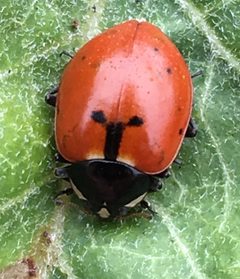
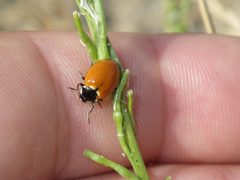
Hippodamia quinquesignata ambigua is a of lady beetle in the Coccinellidae. It occurs in western North America, with records from the Pacific region and introduced in Hawaii. The is a , feeding primarily on aphids and other small soft-bodied insects.
Pronunciation
How to pronounce Hippodamia quinquesignata ambigua: /ˌhɪpoʊˈdeɪmiə ˌkwɪŋkwiˌsɪɡˈneɪtə æmˈbɪɡjuə/
These audio files are automatically generated. While they are not always 100% accurate, they are a good starting point.
Identification
This can be distinguished from other Hippodamia by the five-spotted elytral pattern. The specific subspecific characteristics separating H. quinquesignata ambigua from the nominate subspecies H. quinquesignata quinquesignata require examination of subtle morphological features, particularly in western versus eastern North American .
Images
Distribution
Western North America; recorded from Vermont and Hawaii as introduced or vagrant . GBIF records indicate presence in North America with specific locality data for Vermont and Hawaii.
Diet
feeding on aphids and other small soft-bodied insects.
Ecological Role
of aphids and other agricultural pests; used in programs.
Human Relevance
Member of Hippodamia that includes commercially available for of aphids. The convergent lady beetle (H. convergens), a , is widely used in .
Similar Taxa
- Hippodamia convergensSimilar size and general appearance; distinguished by elytral pattern—H. convergens has converging pale markings on the pronotum forming a 'V' shape, while H. quinquesignata has five distinct spots on the .
- Hippodamia quinquesignata quinquesignataNominate ; geographic separation with H. q. ambigua occurring in western North America and H. q. quinquesignata in eastern regions.
Sources and further reading
- BugGuide
- GBIF taxonomy match
- iNaturalist taxon
- Birds, Bats or a Bloom? But No Splat! | Bug Squad
- The Big 43: The California Native Plants, Plus One, Studied in UC Davis Research | Bug Squad
- Researchers Share New Method for Detecting Insect Egg Predators
- Bacteria Can Aid Aphids Against Predation and Parasitism
- From Burglars to Bugs: Anti-Theft Dye Useful in Insect-Tracking Studies
- Hispanic Heritage Month: Publications Showcase