
Rhyzobius forestieri
(Mulsant, 1853)
Forestier's lady beetle
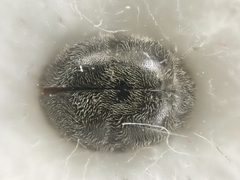
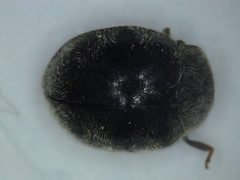
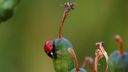
Rhyzobius forestieri is a small lady beetle native to Australia, introduced to Europe and North America in the 1980s as a agent for scale insects. The has been evaluated for its efficacy in controlling Olive (Saissetia oleae) and other scale pests, with variable success reported in different regions. It exhibits colour variation and wax production across all life stages, and displays specialized defensive and feeding behaviours. The species is now established in multiple continents outside its native range.
Pronunciation
How to pronounce Rhyzobius forestieri: /rɪˈzoʊ.bi.əs ˌfɔr.ɪˈstɪr.i.aɪ/
These audio files are automatically generated. While they are not always 100% accurate, they are a good starting point.
Images
Habitat
Native studied in the Sydney region of Australia; introduced populations established in Mediterranean climates of Europe and North America. Specific microhabitat preferences are associated with insect on plants.
Distribution
Native to Australia; introduced and established in Europe (from 1980s), North America, and Oceania. Records include São Miguel (Azores).
Diet
Scale insects (Sternorrhyncha: ), specifically including Saissetia oleae (Olive ).
Host Associations
- Saissetia oleae - preyOlive , target pest for
- scale insects - preyGeneral Sternorrhyncha:
Life Cycle
Life-cycles and voltinism described for Sydney region ; exhibits colour variation and wax production in larvae, , pupae, and .
Behavior
Displays defensive behaviour and specialized feeding behaviour associated with insect . and stages produce wax.
Ecological Role
of scale insects; evaluated as agent with variable success in different parts of the world. Role in native Australian biocoenosis described but not detailed in available sources.
Human Relevance
Introduced to Europe in the 1980s specifically as a agent for Olive (Saissetia oleae) in olive . Efficacy has been partial or failed in some regions, successful in others.
Similar Taxa
- Rhyzobius ventralisCongeneric with overlapping native range in Australia; both evaluated for insect ; distinguished by colour variation and wax production patterns described in comparative studies.