
Coccidulini
Mulsant, 1846
Genus Guides
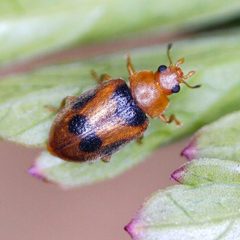
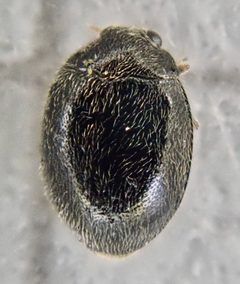
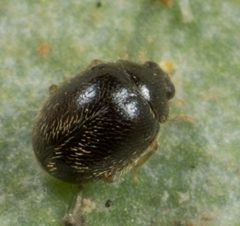
2Coccidulini is a tribe of ladybird beetles (Coccinellidae) with highest diversity in African, Australian, and Neotropical regions. The group is taxonomically problematic and has been subject to ongoing revision. Some members, such as the African Epipleuria, are wingless with and reduced hind wings. The tribe was established by Mulsant in 1846.
Pronunciation
How to pronounce Coccidulini: //kɒk.sɪˈduː.lɪ.naɪ//
These audio files are automatically generated. While they are not always 100% accurate, they are a good starting point.
Identification
Members of Coccidulini are distinguished from related tribes by combinations of genitalic characters. In the Epipleuria: small or indistinct scutellar shield; wide epipleura; modified narrow parameres; broadening toward apex with hooks or spines; spermatheca with bulbous base and curved apex. Body size ranges 1.3–2.3 mm. Some are wingless with and lack hind wings.
Images
Distribution
Highest diversity occurs in African, Australian, and Neotropical regions. The Epipleuria is known from the Republic of South Africa and Lesotho.
Behavior
Some members are wingless with along the elytral and lack hind wings. This flightless condition has been documented in the Epipleuria.
Similar Taxa
More Details
Taxonomic status
Coccidulini is considered a problematic group within Coccinellidae, with ongoing revisions clarifying generic boundaries. The African Epipleuria was re-described and validated as distinct from Rhyzobius, with two new described from South Africa and three species transferred to the newly established genus Pseudoepipleuria.