
Trichodes peninsularis
Horn, 1894
checkered beetle
Species Guides
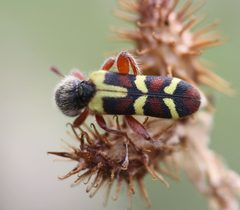
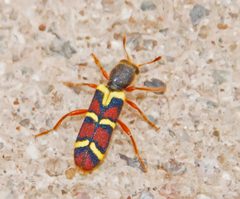
2Trichodes peninsularis is a of checkered beetle in the Cleridae, first described by Horn in 1894. The species occurs in Central America and North America, with two recognized : T. p. basalis and T. p. horni. Field observations document visiting flowers of Isocoma tenuisecta, Gutierrezia microcephala, and Hymenothrix wislizeni in the southwestern United States.
Pronunciation
How to pronounce Trichodes peninsularis: /ˈtraɪkoʊdiːz ˌpɛnɪnˈsʊlərɪs/
These audio files are automatically generated. While they are not always 100% accurate, they are a good starting point.
Images
Habitat
Associated with flowering plants in dry, open including roadsides and desert scrub. Documented at elevations from lowland areas to mountain slopes, with observed on composite flowers (Asteraceae) in Arizona and New Mexico.
Distribution
Central America and North America. Specific records from Arizona, New Mexico, and California in the United States, with occurrence in adjacent portions of Mexico.
Seasonality
active from late summer into early autumn. Field records from early September in Arizona and New Mexico indicate peak activity coinciding with blooming of composite plants.
Host Associations
- Isocoma tenuisecta - flower visitor observed on flowers in Arizona and New Mexico; plants often not fully in bloom when beetles present
- Gutierrezia microcephala - flower visitorCollected from flowers in Arizona
- Hymenothrix wislizeni - flower visitorObserved on flowers in southern Arizona
Behavior
are flower visitors, frequently found on yellow composite flowers. Often encountered in association with other clerid beetles and buprestids on shared plants. Has been observed sharing flowers with Zonitis dunniana and various Acmaeodera .
Ecological Role
function as while foraging on composite flowers. As members of Cleridae, larvae are likely , though specific prey relationships for this remain undocumented.
Similar Taxa
- Trichodes bibalteatusSimilar checkered beetle patterning; distinguished by specific elytral markings and geographic distribution
- Trichodes apivorusCongeneric flower-visiting clerid with overlapping range; requires close examination of elytral pattern and antennal structure for separation
- Enoclerus spp.Sympatric clerids frequently found on same flowers; generally smaller with different body proportions and color patterns
More Details
Subspecies
Two are recognized: Trichodes peninsularis basalis and Trichodes peninsularis horni. The nominate form occurs in the core of the range.
Taxonomic history
Originally described by George Henry Horn in 1894, a prominent American coleopterist of the late 19th century.