
Donaciinae
W. Kirby, 1837
Aquatic Leaf Beetles, Reed Beetles
Genus Guides
3- Donacia
- Neohaemonia(Pale pondweed leaf beetles)
- Plateumarini
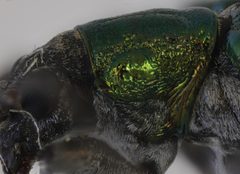
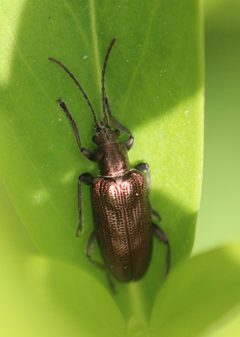
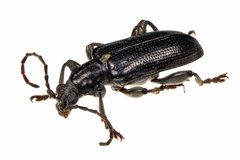
Donaciinae is a of leaf beetles (Chrysomelidae) comprising approximately 100 across six , including Donacia, Macroplea, and Plateumaris. Members are strongly associated with aquatic and semi-aquatic , with larvae developing underwater attached to plant roots. The subfamily is characterized by distinctive morphological adaptations and an obligate with bacteria that produce the silk-like material used to construct waterproof pupal cocoons. Donaciinae are primarily distributed in the Northern Hemisphere with extensions into Africa, Madagascar, and Australasia.
Pronunciation
How to pronounce Donaciinae: /dɔːˈneiʃɪniː/
These audio files are automatically generated. While they are not always 100% accurate, they are a good starting point.
Identification
can be distinguished from other Chrysomelidae by the combination of: (1) distinctly longer than typical for leaf beetles, often longer than the body; (2) densely pubescent underside; and (3) hind club-shaped with one or two teeth. Within Donaciinae, are distinguished by preference and morphological details: Donacia are associated with water lilies and floating-leaved plants; Macroplea species are fully aquatic and flightless; Plateumaris species are generally associated with emergent wetland vegetation. Larval identification requires examination of morphological characters associated with attachment and respiratory adaptations.
Images
Habitat
Primarily associated with freshwater aquatic and semi-aquatic environments including slow-moving streams, ponds, lakes, and marshes. occur in vegetation bordering water bodies. Larvae are aquatic, living underwater attached to stems and roots of plants. Some (Macroplea) are fully aquatic as adults. range from stagnant warm waters to cold temperate waters. In arid regions, restricted to northern or mountainous areas with suitable aquatic conditions; sub-desert are unsuitable.
Distribution
Essentially Holarctic in distribution with extensions into the Paleotropical African, Malagasy, and Indo-Australian zones. Found throughout the Northern Hemisphere including North America, Europe, and Asia. In Africa, occurs in North Africa (Morocco, Algeria) but absent east of Tunisia due to unsuitable sub-desert conditions. No representatives known south of Guatemala and Cuba in the New World. Present in South Korea, Japan, and other East Asian regions. Specific distribution varies by : Donacia is widespread; Macroplea has more restricted distributions in some regions.
Seasonality
Seasonal activity patterns vary by latitude and altitude, with generally active during warmer months. Exact seasonal timing varies geographically; in temperate regions, activity is concentrated in spring and summer. Specific seasonal patterns in relation to altitude and latitude require more detailed documentation.
Diet
Herbivorous; and larvae feed on aquatic and semi-aquatic plants. Larvae attach to underwater stems and roots of plants. Most are mono- or oligophagous, with host associations including diverse plants along water margins. Some species specialize on floating-leaved plants such as Potamogeton. Species of Donacia sensu stricto are found on floating leaves of water lilies (Nymphaea) and Brasenia.
Host Associations
Life Cycle
Females lay between aquatic plant stems and leaf , or on the underside of floating leaves. Larvae hatch as aquatic forms and attach themselves to underwater stems and roots of plants. Larvae pupate underwater in water-tight cocoons constructed using a secretion produced by symbiotic bacteria. The cocoon allows complete pupal development in submerged conditions. emerge from the aquatic pupal stage; most are capable of , though some (Macroplea mutica) are flightless.
Behavior
Larvae remain attached to submerged plant stems and roots, feeding and developing in place. Most can fly and disperse between water bodies. Macroplea mutica, a fully aquatic flightless , has been observed to disperse long distances using water birds; its can survive passage through avian digestive tracts. Adult Donacia crassipes exhibits male combat . Tetracycline treatment of larvae reduces rate, demonstrating dependence on bacterial for normal development.
Ecological Role
Herbivores in wetland , contributing to nutrient cycling through consumption of aquatic vegetation. Larval stages serve as food source for aquatic . The represents a case of adaptive radiation into underexploited wetland . Symbiotic bacteria (Enterobacteriaceae) housed in mycetomes produce cocoon material, representing a novel instance of bacterially-mediated construction . Some (Macroplea) function as benthic organisms with low metabolic rates, inhabiting waters with variable oxygen content.
Human Relevance
Generally of minor direct economic importance. Some may be indicators of wetland quality. Fish ponds have been identified as important artificial habitats for rare species such as Macroplea appendiculata in Europe. No significant agricultural pest status documented. Scientific interest focuses on their unique bacterial and aquatic adaptations.
Similar Taxa
- SagrinaeShares similar bacterial in related mycetomes and constructs pupal cocoons using bacterial secretions; both harbor closely related Enterobacteriaceae symbionts supporting close phylogenetic relationship
- Other Chrysomelidae subfamiliesDonaciinae distinguished by combination of long , pubescent underside, club-shaped hind with teeth, and obligate aquatic larval stage; other lack this suite of aquatic adaptations
More Details
Bacterial Symbiosis
Donaciinae harbor intracellular symbiotic bacteria belonging to Enterobacteriaceae in four blind sacs at the larval . In female , bacteria colonize two of six . These bacteria produce the secretion used to construct waterproof pupal cocoons, enabling underwater . are transmitted externally to offspring via bacteria attached to . Experimental removal of bacteria results in symbiont-free larvae, confirming external transmission. This is considered key to the and diversification of wetland .
Taxonomic Composition
Six are recognized: Donacia (widespread, associated with water lilies), Macroplea (fully aquatic, some flightless), Plateumaris (associated with emergent vegetation), Neohaemonia, Donaciella, and Poecilocera. The Palaearctic Plateumaris fauna comprises 10 of 27 globally, with extensive synonymy due to intraspecific variation. The Donacia clavareaui-fukiensis complex in East Asia has been subject to recent revision clarifying species boundaries.
Sources and further reading
- BugGuide
- Wikipedia
- iNaturalist taxon
- NCBI Taxonomy
- Catalogue of Life
- Les Donaciinae de l'Afrique du Nord (Col. Chrysomelidae)
- Morphology, systematics and host plants of Palaearctic Donaciinae larvae
- NEW RECORDS OF DONACIA FABRICIUS, 1775 (COLEOPTERA: CHRYSOMELIDAE: DONACIINAE) FROM KRASNOYARSKII KRAI (RUSSIA)
- Revision of the Palaearctic species of the genus Plateumaris C. G. Thomson, 1859 (Coleoptera, Chrysomelidae, Donaciinae)
- To be or not to be a synonym – revision of the Donacia clavareaui-fukiensis complex (Coleoptera, Chrysomelidae, Donaciinae)
- Notes on leaf beetles of the Kampinos National Park in Poland – Donaciinae (Coleoptera: Chrysomelidae)
- Shared Ancestry of Symbionts? Sagrinae and Donaciinae (Coleoptera, Chrysomelidae) Harbor Similar Bacteria
- Male combat and mating behavior of Donacia crassipes Fabricius and other chrysomelids (Coleoptera, Chrysomelidae, Donaciinae)
- Morphology Of The Adult And Immature Stages, Biology, And Phylogenetic Placement Of Donaciasta Goeckei Monrós, 1958 (Chrysomelidae: Donaciinae: Donaciini)
- Adopting Bacteria in Order to Adapt to Water—How Reed Beetles Colonized the Wetlands (Coleoptera, Chrysomelidae, Donaciinae)
- Morphology Of The Adult And Immature Stages, Biology, And Phylogenetic Placement Of Donaciasta Goeckei Monrós, 1958 (Chrysomelidae: Donaciinae: Donaciini)
- Rediscovery of a second species of Reed Beetle in Israel (Coleoptera, Chrysomelidae, Donaciinae)
- A new species of the genus Donacia Fabricius (Coleoptera, Chrysomelidae, Donaciinae) from South Korea: morphology, ecology, and COI gene analysis
- Rare European donacid beetle Macroplea appendiculata PANZER, 1794 (Coleoptera: Chrysomelidae: Donaciinae) common in Polish fish ponds
- Taxonomic studies on Donacia Fabricius, 1775 (Coleoptera, Chrysomelidae, Donaciinae) of Southwestern Turkey with notes on their geographic distributions, habitats and host plant associations