
Pachybrachis nigricornis
(Say, 1824)
Species Guides
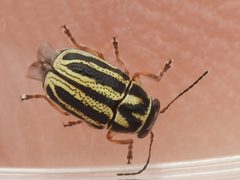
2Pachybrachis nigricornis is a of case-bearing leaf beetle in the Chrysomelidae, originally described by Thomas Say in 1824 as Cryptocephalus nigricornis. The species is distributed across North America and Central America, with records from Canada (Alberta) through the United States. It belongs to a large of small, often colorful leaf beetles commonly known as 'scriptured leaf beetles' due to their intricate elytral patterns. Four are currently recognized.
Pronunciation
How to pronounce Pachybrachis nigricornis: //ˌpækiˈbrækɪs ˌnaɪɡɪˈkɔːrnɪs//
These audio files are automatically generated. While they are not always 100% accurate, they are a good starting point.
Identification
Accurate identification to level requires examination of genitalia and comparison with type material. The four recognized (autolycus, carbonarius, difficilis, and the nominate nigricornis) differ in subtle morphological features, primarily elytral coloration and pattern. Subspecies boundaries and diagnostic characters are not well summarized in readily available literature. Separation from other Pachybrachis species depends on male genitalia structure and fine details of elytral punctuation and color pattern.
Images
Habitat
Specific associations are not well documented. Based on -level patterns, likely associated with herbaceous vegetation and woody plants in open habitats. The nominate and subspecies carbonarius have been collected in prairie and grassland environments; subspecies autolycus and difficilis appear more restricted in distribution.
Distribution
North America and Central America. Documented from Canada (Alberta), United States (widespread), and southward through Central America. The four show geographic partitioning: P. n. nigricornis in eastern North America, P. n. carbonarius in central regions, P. n. autolycus and P. n. difficilis in western North America.
Seasonality
activity period varies by region and . In temperate North America, likely active from late spring through summer (May–August), with peak abundance during summer months. Specific phenological data are sparse.
Life Cycle
As with other Cryptocephalinae, larvae are case-bearers that construct portable protective cases from fecal material and . Larvae feed exposed on foliage while carrying their cases. Detailed for this is not documented; presumably includes , larval (with case-bearing habit), pupal, and stages.
Ecological Role
Herbivorous member of leaf beetle ; contributes to herbivore diversity in prairie, grassland, and open woodland . Specific ecological functions (pollination, nutrient cycling, position) are not quantified.
Human Relevance
No documented economic importance. Not known as agricultural pest. Occasionally collected by entomologists and appears in biodiversity surveys and museum collections.
Similar Taxa
- Pachybrachis speciesNumerous share small size, rounded body form, and colorful elytral patterns. Definitive separation requires examination of male genitalia and detailed elytral .
- Cryptocephalus speciesSister with similar case-bearing larvae and ; historically congeneric. Pachybrachis distinguished by antennal structure, tarsal formula, and male genitalia.
- Other Cryptocephalinae generaClytrini and other tribes contain similar small, rounded leaf beetles. placement requires examination of larval case structure and antennal insertions.
More Details
Subspecies
Four recognized: P. n. nigricornis (Say, 1824) — nominate form; P. n. carbonarius Haldeman, 1849; P. n. autolycus Fall, 1915; and P. n. difficilis Fall, 1915. Subspecies validity and geographic limits require modern systematic revision.
Taxonomic History
Originally described in Cryptocephalus by Thomas Say in 1824, later transferred to Pachybrachis. The genus Pachybrachis contains over 200 in North America and is in need of comprehensive revision.
Collection Records
Specimens documented in GBIF, iNaturalist, and major entomological collections. Only 13 observations in iNaturalist as of data compilation, suggesting it is infrequently encountered or underreported relative to more conspicuous .