
Lema
Fabricius, 1798
Species Guides
11- Lema balteata
- Lema confusa
- Lema conjuncta
- Lema cyanella(Californian Thistle Leaf Beetle)
- Lema daturaphila(Three-lined Potato Beetle)
- Lema nigrovittata
- Lema opulenta(Opulent Lema Leaf Beetle)
- Lema pubipes
- Lema solani(Blue-banded Lema Leaf Beetle)
Lema is a of leaf beetles in the Chrysomelidae, Criocerinae, established by Fabricius in 1798. The genus includes that feed on plants in the nightshade family (Solanaceae), with some species such as Lema daturaphila (three-lined potato beetle) known as agricultural pests. Members of this genus have evolved physiological adaptations to tolerate toxic alkaloids present in their plants.
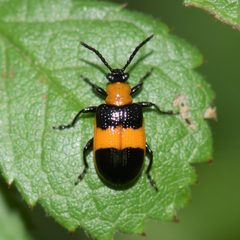
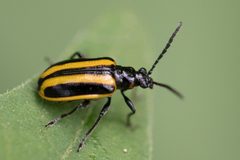
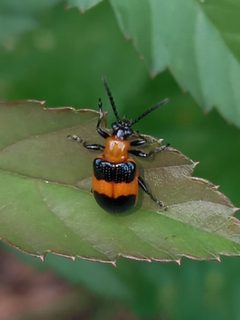
Pronunciation
How to pronounce Lema: /ˈlɛ.mə/
These audio files are automatically generated. While they are not always 100% accurate, they are a good starting point.
Identification
Lema can be distinguished from other Criocerinae by their association with Solanaceae plants and often striking aposematic coloration. typically display yellow and black striping with bright orange and legs. Larvae are recognized by their habit of carrying excrement on their backs, a trait shared with some related leaf beetles but used here as a defensive mechanism. The is distinguished from the related genus Crioceris by subtle morphological characters of the and .
Images
Habitat
Found in association with plants in the nightshade , including agricultural settings (potato fields) and natural areas with jimsonweed, bittersweet nightshade, and related Solanaceae .
Distribution
Records from Colombia, Denmark, Norway, Sweden; broader distribution likely across temperate and tropical regions where Solanaceae occur.
Diet
Specialized herbivores feeding on Solanaceae (nightshade ), including potato (Solanum tuberosum), jimsonweed (Datura stramonium), and bittersweet nightshade (Solanum dulcamara).
Host Associations
- Solanum tuberosum - plantpotato
- Datura stramonium - plantjimsonweed
- Solanum dulcamara - plantbittersweet nightshade
Behavior
Larvae exhibit a distinctive of piling excrement on their backs, which serves as a chemical defense against . and larvae feed openly on toxic plants, their bright coloration serving as aposematic warning signals.
Ecological Role
Herbivore; some act as agents of weedy Solanaceae, while others are minor agricultural pests.
Human Relevance
Lema daturaphila (three-lined potato beetle) occasionally damages potato crops, though it is less economically significant than the Colorado potato beetle. The demonstrates biochemical for alkaloid that have scientific interest.
Similar Taxa
- CriocerisRelated in Criocerinae; distinguished by antennal and tarsal . Crioceris such as C. asparagi (asparagus beetle) feed on different plants (Asparagaceae).
- Leptinotarsa decemlineataColorado potato beetle, a chrysomelid in different (Chrysomelinae); larvae have more humped-back appearance and richer orange hue than Lema larvae.
More Details
Toxic Host Adaptation
Lema have evolved physiological to sequester or tolerate tropane alkaloids from their Solanaceae —chemicals lethal to most other herbivores and to humans if ingested.
Historical Taxonomy
The Lema was established by Johan Christian Fabricius in 1798 and is the type genus of tribe Lemini within Criocerinae.
Sources and further reading
- BugGuide
- Wikipedia
- GBIF taxonomy match
- iNaturalist taxon
- NCBI Taxonomy
- Catalogue of Life
- Deadly dining: Three-lined potato beetle, Lema daturaphila — Bug of the Week
- Evidence for Biodiversity Insurance Hypothesis: More Species Are Indeed Beneficial
- new crab species | Blog
- Apostolepis christineae Lema, 2002 (Serpentes: Xenodontinae: Elapomorphini): first record for Bolivia