
Lema balteata
J.L.LeConte, 1884
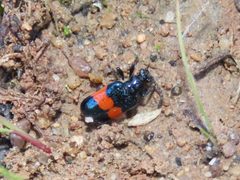
Lema balteata is a of leaf beetle in the Chrysomelidae, first described by J.L. LeConte in 1884. The species occurs in Central and North America. Like other members of the Lema, it is a herbivorous associated with vegetation. The specific epithet 'balteata' refers to a banded or belted appearance, suggesting distinctive color patterning on the .
Pronunciation
How to pronounce Lema balteata: //ˈliː.mə bɔlˈtiː.ə.tə//
These audio files are automatically generated. While they are not always 100% accurate, they are a good starting point.
Identification
Distinguished from similar Lema by the specific banded color pattern referenced in its epithet. Accurate identification requires comparison with and reference to original description (LeConte 1884). May be confused with other striped Lema species such as Lema trilineata; examination of genitalia and precise elytral pattern may be necessary for definitive identification.
Images
Appearance
have hardened forewings () characteristic of Coleoptera. The specific epithet 'balteata' (Latin for 'belted' or 'banded') indicates transverse bands or stripes on the elytra, a common pattern in the Lema. Body form is typical of Criocerinae: elongated, somewhat parallel-sided, with of moderate length. Exact coloration and body dimensions require specimen examination.
Habitat
Associated with herbaceous vegetation typical of leaf beetle . Specific plants undocumented in provided sources.
Distribution
Recorded from Central America and North America. GBIF distribution records confirm presence in Middle America and North America.
Similar Taxa
- Lema trilineataSimilar striped/banded elytral pattern; both in Lema with overlapping geographic range
- Lema daturaphilaCongeneric leaf beetle with similar body form and potential geographic overlap
More Details
Nomenclature
The was described by John Lawrence LeConte in 1884. The epithet 'balteata' derives from Latin 'balteus' meaning belt or girdle, referring to the transverse banding pattern on the .
Sources and further reading
- BugGuide
- Wikipedia
- GBIF taxonomy match
- iNaturalist taxon
- Soybean Insects: Early-to-Late Season Pests (Emergence to R7) - AgriLife Extension Entomology
- Deadly dining: Three-lined potato beetle, Lema daturaphila — Bug of the Week
- Evidence for Biodiversity Insurance Hypothesis: More Species Are Indeed Beneficial
- crab diversity | Blog