
Labidomera
Chevrolat, 1836
milkweed leaf beetle
Species Guides
1- Labidomera clivicollis(Swamp Milkweed Leaf Beetle)
Labidomera is a of leaf beetles (Chrysomelidae) in the tribe Chrysomelini. The genus includes several , with L. clivicollis being the most studied and widely distributed. Members are strongly associated with milkweed plants (Asclepias) and related genera. The genus exhibits unusual larval locomotion and participates in Müllerian mimicry rings with other orange-and-black milkweed insects.


Pronunciation
How to pronounce Labidomera: //læbɪˈdɒmɪrə//
These audio files are automatically generated. While they are not always 100% accurate, they are a good starting point.
Identification
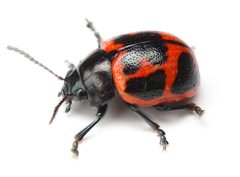
are relatively large for leaf beetles and display conspicuous orange and black coloration. The is distinguished from related chrysomeline beetles by association with milkweed and participation in the milkweed mimicry complex. Larvae have been noted for unusual locomotion compared to other leaf beetle larvae.
Images
Habitat
Associated with milkweed plants, particularly swamp milkweed (Asclepias incarnata) and common milkweed (A. syriaca). Swamp milkweed with water around the plant base may provide protection from ground-dispersed through a 'moat effect'.
Distribution
Native to North America. Labidomera clivicollis ranges from southern Canada to the central United States. Other occur farther south.
Seasonality
active from mid-summer through autumn. controls reproductive timing, with critical photoperiod around 12.5:11.5 in central Texas . Longer photoperiods induce ; shorter photoperiods induce . Autumn may initiate a third generation in favorable years.
Diet
Larvae and feed on milkweed leaves. Documented include Asclepias incarnata (swamp milkweed), A. syriaca (common milkweed), and related Cynanchum (swallow-wort) and Funastrum (twinevine).
Host Associations
- Asclepias incarnata - primary plantswamp milkweed
- Asclepias syriaca - plantcommon milkweed
- Cynanchum - plantswallow-wort
- Funastrum - planttwinevine
- Chrysomelobia labidomerae - subelytral mite transmitted sexually between beetles
Life Cycle
laid on undersides of milkweed leaves. Larvae hatch and feed on foliage, dropping to soil to pupate. affects size-related : short-day conditions permit at lower larval weights than long-day conditions, potentially enhancing autumn survival when food is scarce. emerge and may overwinter in protected .
Behavior
larvae exhibit , consuming unhatched . influences both and timing. Parasitized males show increased contact with unparasitized males and increased displacement of rival males from females, possibly compensating for loss.
Ecological Role
Herbivore on milkweeds. Participates in Müllerian mimicry ring with , milkweed bugs, and other milkweed , sharing aposematic orange-and-black coloration that warns of accumulated cardiac glycosides.
Human Relevance
L. clivicollis has been considered a pest of ornamental milkweeds. Competes with monarch butterfly caterpillars for milkweed foliage.
Similar Taxa
- Leptinotarsa decemlineataColorado potato beetle, related chrysomeline in tribe Doryphorini; differs in association (Solanaceae) and economic pest status
- Tetraopes spp.Red milkweed beetles; share milkweed and orange-black aposematic coloration but belong to Cerambycidae with elongated
- Oncopeltus fasciatusLarge milkweed bug; shares milkweed and Müllerian mimicry coloration but is a true (Hemiptera) with different body plan
Sources and further reading
- BugGuide
- Wikipedia
- GBIF taxonomy match
- iNaturalist taxon
- NCBI Taxonomy
- Hey beetles, leave some milkweed for the monarchs: Milkweed leaf beetle, Labidomera clivicollis — Bug of the Week
- Orange and Black II: Milkweed leaf beetle, Labidomera clivicollis; Oleander aphid, Aphis nerii; Milkweed Bug, Oncopeltus fasciatus; Monarch, Danaus plexippus — Bug of the Week
- Orange and Black Bugs- Milkweed leaf beetle, Labidomera clivicollis; Oleander aphid, Aphis nerii; Milkweed Bug - Oncopeltus fasciatus; Monarch butterfly, Danaus plexippus — Bug of the Week
- Kentucky | Beetles In The Bush
- Population Dynamics of a Relatively Rare Species of Milkweed Beetle (Labidomera)
- Photoperiodic effect on size‐related metamorphosis in the milkweed leaf beetle, Labidomera clivicollis
- Sexually transmitted parasites and sexual selection in the milkweed leaf beetle, Labidomera clivicollis
- Photoperiodic control of reproduction in the milkweed leaf beetle, Labidomera clivicollis
- Effects of parasitism by the miteChrysomelobia labidomerae(Acari: podapolipidae) on the longevity and fecundity of its host beetle,labidomera clivicollis(coleoptera: chrysomelidae)