
Bruchus brachialis
Fåhraeus, 1839
Vetch Bruchid
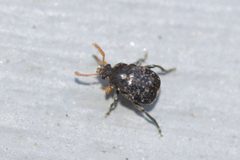
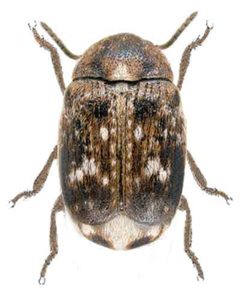
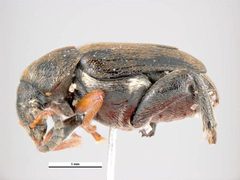
Bruchus brachialis, the vetch bruchid, is a seed beetle specialized on vetch (Vicia spp.). emerge from sites in spring, feed on vetch flowers and pollen, and oviposit on developing pods. Larvae complete development within seeds, with new adults emerging to briefly feed before entering summer . The shows tight phenological synchronization with plant flowering and seed development. It occurs across Europe, Northern Asia (excluding China), and North America, and is recognized as an agricultural pest of pulse crops.
Pronunciation
How to pronounce Bruchus brachialis: //ˈbruː.kʊs brəˈkiː.ə.lɪs//
These audio files are automatically generated. While they are not always 100% accurate, they are a good starting point.
Images
Habitat
Agricultural fields and wild where vetch (Vicia spp.) grows. overwinter and aestivate in protected sites including under bark, in grass clumps, field debris, soil crevices, and hedgerows.
Distribution
Europe; Northern Asia (excluding China); North America. Documented presence in Belgium and Oregon, USA. Associated with regions where vetch is cultivated.
Seasonality
active in spring (April–May in Oregon), coinciding with vetch flowering and pod development. Summer period follows brief post- feeding. Adults remain inactive until the following spring.
Diet
feed on vetch flowers and pollen; larvae feed exclusively on developing vetch seeds within pods. Adult pre-oviposition feeding on pollen is required for maturation.
Host Associations
- Vicia spp. - Primary plant for larval development and feeding; oviposition occurs on developing pods, with larval development completed internally within seeds.Tight phenological synchronization with flowering and seed development.
Life Cycle
(one per year): emerge in spring, feed and mate on plants, females oviposit on developing vetch pods. hatch and larvae burrow into seeds where they feed and complete development. occurs within seeds in spring. New adults emerge, feed briefly, then enter summer in protected sites until the following spring.
Behavior
exhibit summer (dormancy) in protected sites and do not feed during this period. Close phenological synchronization with plant flowering and seed development.
Ecological Role
Seed of vetch; reduces seed viability and crop quality in agricultural settings.
Human Relevance
Recognized agricultural pest of pulse crops, particularly affecting vetch seed production. Subject of research for pulse crop protection.
Similar Taxa
- Bruchus pisorumBoth are Bruchus and agricultural pests of pulse crops; B. pisorum specifically attacks pea (Pisum sativum) rather than vetch, and shows differences in plant association and phenological timing.
- Bruchus rufimanusAnother Bruchus associated with legume crops; differs in preferences and geographic distribution patterns.
Sources and further reading
- BugGuide
- Wikipedia
- GBIF taxonomy match
- iNaturalist taxon
- NCBI Taxonomy
- Arachnida | Beetles In The Bush | Page 6
- New Research Collection Targets Insect Pests of Pulse Crops
- Notes on the Biology of Bruchus brachialis Fahr.1
- The Biology and Seasonal Development of the Vetch Bruchid, Bruchus brachialis Fahraeus, in Oregon1