
Saphanini
Genus Guides
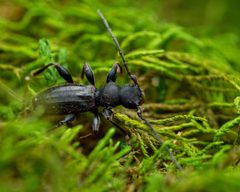
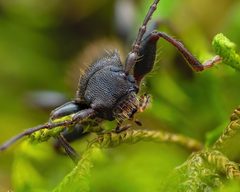
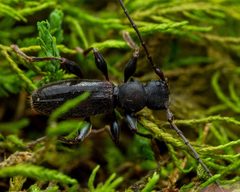
1Saphanini is a tribe of longhorn beetles (Cerambycidae) in the Spondylidinae. The tribe contains at least ten , including the notable genus Michthisoma. Taxonomic treatment of this tribe varies between sources, with some authorities recognizing a broader circumscription including multiple genera while others have historically treated it as more narrowly defined. Members of this tribe are wood-boring beetles, consistent with the of the Spondylidinae subfamily.
Pronunciation
How to pronounce Saphanini: /səˈfænɪniː/
These audio files are automatically generated. While they are not always 100% accurate, they are a good starting point.
Images
Misconceptions
Some sources (including iNaturalist at one point) have incorrectly stated that Saphanini contains only the single Michthisoma and single Michthisoma heterodoxum. This is erroneous; the tribe includes at least ten genera: Blabinotus, Derolophodes, Drymochares, Masatopes, Metalocerus, Michthisoma, Opsamates, Oxypleurus, Saphanus, and Zamium.
More Details
Taxonomic composition
The tribe comprises the following : Blabinotus (1854), Derolophodes (1898), Drymochares (1847), Masatopes (1959), Metalocerus (1913), Michthisoma (1850), Opsamates (1879), Oxypleurus (1839), Saphanus (1834), and Zamium (1864). The genus Saphanus gives the tribe its name.
Data quality note
Published biological information specific to Saphanini as a tribe is sparse. Most available literature treats constituent individually. The 91 iNaturalist observations attributed to this tribe likely represent a small subset of actual diversity and geographic range.