
Trichocnemis spiculatus
LeConte, 1851
Spined Woodborer, Pine Sawyer, Western Pine Sawyer, Ponderosa Pine Borer
Species Guides
1- Trichocnemis spiculatus neomexicanus(New Mexican ponderous borer)
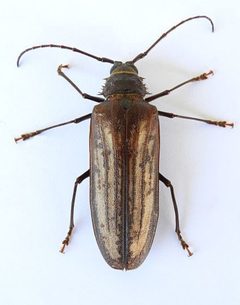
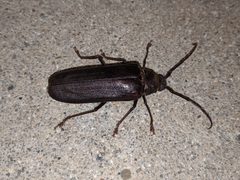
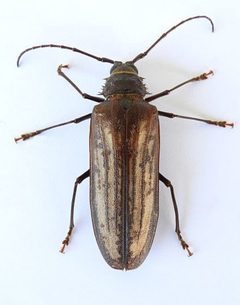
Trichocnemis spiculatus is a large wood-boring in the Cerambycidae, native to western North America. It is notable as the largest wood-boring beetle in Colorado and has served as inspiration for technological innovation—its opposable inspired the design of modern chainsaw chains with alternating right and left cutting teeth. The species develops in dead and dying conifers, primarily ponderosa pine and Douglas fir, with a multi-year . Larvae create extensive tunnel systems through sapwood and heartwood.
Pronunciation
How to pronounce Trichocnemis spiculatus: //ˌtraɪkoʊˈnɛmɪs ˌspɪkjʊˈleɪtəs//
These audio files are automatically generated. While they are not always 100% accurate, they are a good starting point.
Identification
This can be distinguished from other large cerambycids by its size and association. It is the largest wood-boring in Colorado. The larva is notably large with distinct legs, allowing separation from other wood-boring larvae of similar size. are robust with long typical of the Prioninae. The 'spined woodborer' refers to morphological features, though specific diagnostic characters for field identification require examination.
Images
Habitat
Develops in dead and dying coniferous trees, specifically fallen ponderosa pines and Douglas firs. Larval galleries extend through both sapwood and heartwood. The requires substantial wood mass for larval development, explaining its association with large-diameter trees.
Distribution
Western North America, including the western United States (Colorado, Arizona, Utah, and surrounding regions) and Mexico. Distribution records include California, Arizona, New Mexico, Utah, Colorado, and Hawaii (the latter likely introduced).
Seasonality
activity period not explicitly documented in sources, though related prionine cerambycids typically show or activity patterns. Larval development spans several years.
Diet
Larvae feed on wood of dead and dying pines, primarily ponderosa pine and Douglas fir. do not feed on wood; feeding habits of adult stage not explicitly documented.
Host Associations
- Pinus ponderosa - larval Primary ; fallen trees used for larval development
- Pseudotsuga menziesii - larval Douglas fir; secondary
Life Cycle
Multi-year . lay in bark crevices of trees. Larvae bore tunnels through sapwood and heartwood, creating extensive galleries. occurs within the wood. The extended developmental period reflects the time required to process sufficient wood material for the large adult size.
Behavior
Larvae possess opposable that operate with a gnawing motion highly effective at excavating wood. This was directly observed by inventor Joe Cox, who used it as the basis for chainsaw chain design. are likely attracted to recently dead or dying material for oviposition.
Ecological Role
Decomposer of dead coniferous wood; contributes to nutrient cycling in forest by breaking down fallen trees. Creates for other organisms through gallery systems.
Human Relevance
Directly inspired the invention of modern chainsaw chains with alternating right and left cutting teeth. Joe Cox observed the larval mandibular action in 1947 and developed the 'Cox Chipper Chain,' manufactured by Oregon Sawchain Corporation (later Omark Industries). The is not considered an economic pest despite its wood-boring habit, as it targets already dead or dying trees rather than living timber.
Similar Taxa
- Ergates faberFormerly placed in same (Ergates); T. spiculatus was historically treated as Ergates spiculatus. Both are large prionine cerambycids with wood-boring larvae, but differ in geographic distribution and associations.
- Monochamus spp.Other large cerambycids associated with conifers; Monochamus larvae lack the distinctive opposable action that characterizes Trichocnemis and are generally smaller in maximum size.
More Details
Subspecies
Two recognized: Trichocnemis spiculatus spiculatus and Trichocnemis spiculatus neomexicanus.
Biomimicry significance
One of the clearest examples of direct technological inspiration from insect . The observation of larval mandibular action led to a fundamental innovation in forestry equipment design that remains in use today.
Taxonomic history
Originally described by LeConte in 1851; transferred from Ergates to Trichocnemis based on subsequent taxonomic revision.