
Ulochaetes
LeConte, 1854
Lion Beetle
Species Guides
1- Ulochaetes leoninus(Lion Beetle)
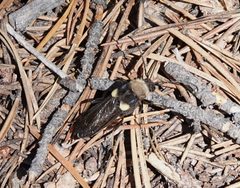
Ulochaetes is a of longhorn beetles (Cerambycidae) in the Necydalinae. The genus contains at least two described : Ulochaetes leoninus, distributed in North America, and Ulochaetes vacca, found in Bhutan and China. Ulochaetes leoninus is notable for its striking -mimicry, featuring yellow and black coloration and a slender body form that causes it to be frequently mistaken for a wasp or . The genus is relatively small and poorly studied, with most ecological information derived from observations of the North American species.
Pronunciation
How to pronounce Ulochaetes: //ˌjuːləˈkiːtiːz//
These audio files are automatically generated. While they are not always 100% accurate, they are a good starting point.
Identification
Ulochaetes leoninus can be distinguished from similar cerambycids by its pronounced -mimicry: a slender, elongate body with yellow and black banding, narrow waist-like constriction, and relatively short that expose part of the . The are long but not exceptionally so for the . The overall appearance is strikingly similar to vespid wasps, which serves as the primary identification challenge. Unlike true wasps, Ulochaetes possesses hardened forewings (elytra) and the characteristic antennae with segmented clubs. The Asian U. vacca is much less documented but appears to share the slender body form.
Images
Distribution
Ulochaetes leoninus: North America (United States and Canada). Ulochaetes vacca: Bhutan and China.
Host Associations
- Amorpha fruticosa - have been observed crawling on stems of this plant in western Missouri prairies; association requires further confirmation as definitive host relationship
Behavior
of Ulochaetes leoninus have been observed crawling on plant stems and are attracted to goldenrod (Solidago) flowers in autumn. The exhibits -mimicry, which likely serves as a defense against . The and precise activity patterns remain poorly documented.
Human Relevance
Ulochaetes leoninus is occasionally encountered by collectors and naturalists due to its conspicuous -like appearance, which frequently causes initial misidentification and caution during field collection. The has been discussed in entomological blogs as an example of effective hymenopteran mimicry in beetles.
Similar Taxa
- ClytusClytine cerambycids also exhibit -mimicry with yellow and black patterns; distinguished by generally more robust body form, different antennal proportions, and elytral pattern details
- NeoclytusShares -mimicry and yellow-black coloration; Neoclytus typically have different body proportions and more extensive elytral markings
- Vespidae (wasps)Ulochaetes leoninus is frequently mistaken for true due to convergent coloration and body form; distinguished by characteristics including , structure, and wing folding
More Details
Taxonomic note
Some sources (including Wikipedia as of the provided context) incorrectly state that Ulochaetes leoninus is the only in the ; however, Ulochaetes vacca was described by Holzschuh in 1982 from Bhutan and China, making this information outdated.
Collection history
The type U. leoninus was described by John Lawrence LeConte in 1854, a foundational figure in North American coleopterology.