
Judolia gaurotoides
(Casey, 1893)
Black-banded Long-horned Beetle
Judolia gaurotoides is a of longhorned beetle in the Cerambycidae, described by Casey in 1893. It belongs to the Lepturinae, a group commonly known as flower longhorns. The species is known from North America, with records from both Canada and the United States. As a member of the Judolia, it shares characteristics with other small to medium-sized lepturines that are often associated with flowers and decaying wood.
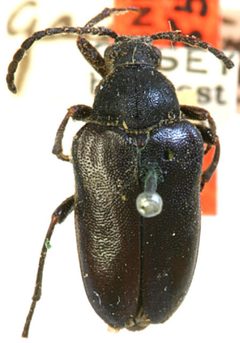
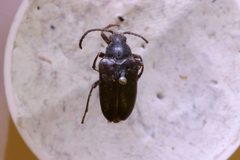

Pronunciation
How to pronounce Judolia gaurotoides: //dʒuˈdoʊ.li.ə ɡɔˌroʊˈtoʊ.ɪdiːz//
These audio files are automatically generated. While they are not always 100% accurate, they are a good starting point.
Identification
Judolia gaurotoides can be distinguished from similar Judolia by its characteristic black-banded elytral pattern, which gives rise to its . The specific epithet 'gaurotoides' suggests resemblance to the Gaurotes, indicating similar coloration or body form. Accurate identification typically requires examination of antennal structure, pronotal shape, and detailed elytral patterning. Specimens may be confused with other Lepturini, particularly those with banded or patterned .
Images
Distribution
North America. Present in Canada (CA) and United States (US). Specific provincial and state records are not detailed in available sources.
Similar Taxa
- Judolia cordiferaAnother member of the Judolia with similar flower-visiting and lepturine ; distinguished by different elytral patterning and distribution
- Judolia instabilis with overlapping range; differs in body proportions and elytral maculation pattern
- Gaurotes speciesThe specific epithet 'gaurotoides' indicates morphological resemblance; Gaurotes share similar coloration but differ in antennal and pronotal characters
More Details
Taxonomic history
The was described by Thomas Lincoln Casey, Jr. in 1893, a prolific American entomologist who described numerous cerambycid species. The epithet 'gaurotoides' reflects Casey's observation of similarity to the Gaurotes, a group of metallic-colored lepturines.
Observation frequency
As of available records, there are approximately 20 iNaturalist observations, suggesting it is encountered with moderate frequency by naturalists but is not among the most commonly recorded cerambycids.