
Analeptura lineola
(Say, 1824)
Lined Longhorn Beetle, lined longhorn
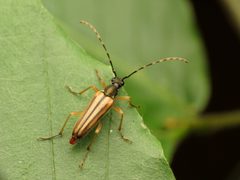
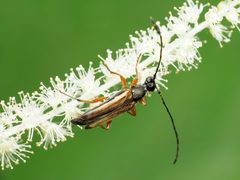
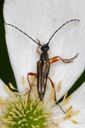
Analeptura lineola is a small longhorn beetle in the Lepturinae, commonly known as the lined longhorn beetle. are anthophilous, feeding on flower nectar. Larvae develop in decaying wood, boring into the bases of various hardwood . The species occurs in eastern North America and parts of Europe.
Pronunciation
How to pronounce Analeptura lineola: /ˌænəˈlɛptjʊrə lɪˈniːoʊlə/
These audio files are automatically generated. While they are not always 100% accurate, they are a good starting point.
Identification
are brown with four distinct black stripes on the pronotum. Males average 9.6 mm in length; females average 8.8 mm. The striped pronotum pattern distinguishes this from similar Lepturinae in its range.
Images
Habitat
Deciduous forests and wooded areas with decaying hardwood vegetation. frequent flowering plants.
Distribution
Eastern United States and Canada (New Brunswick, Nova Scotia, Ontario, Prince Edward Island). Also recorded in Europe: Baltic states, Austria, Belarus, Czech Republic, France, Germany, Liechtenstein, Norway, Poland, Russia, Slovakia, Switzerland, and Ukraine.
Diet
feed on flower nectar. Larvae bore into and feed on decaying woody plant bases, including red maple, chestnut, hazelnut, cherry, basswood, viburnum, and laurel.
Life Cycle
Complete with , larval, pupal, and stages. Larval development occurs within decaying wood at the base of plants. Specific duration of stages has not been documented.
Behavior
have been observed visiting flowers for nectar. Larvae tunnel into decaying wood at plant bases.
Ecological Role
may contribute to pollination while feeding on nectar. Larvae contribute to wood decomposition in forest .
Sources and further reading
- BugGuide
- Wikipedia
- GBIF taxonomy match
- iNaturalist taxon
- NCBI Taxonomy
- Catalogue of Life
- Stalk-boring insect pests - AgriLife Extension Entomology
- Bug Eric: Spider Sunday: Striped Lynx Spider
- Bug Eric: Wasp Wednesday: Anacrabro ocellatus
- Sulfoxaflor Found to Be Less Harmful to Beneficial Predators of Soybean Aphids
- Glyphosate and Acetamiprid Have Relatively Low Toxicity for Honey Bees