
Ataxia spinicauda
Schaeffer, 1904
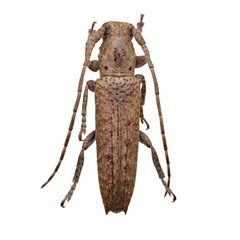
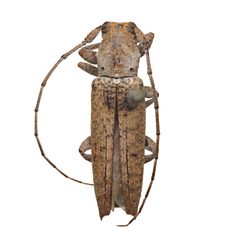
Ataxia spinicauda is a longhorned beetle ( Cerambycidae) described by Schaeffer in 1904. It belongs to the Lamiinae and tribe Pteropliini. The has been documented from the Bahamas, Cuba, Jamaica, and the United States, indicating a Caribbean-North American distribution pattern. Like other members of the Ataxia, it likely develops in living plant tissues, though specific associations for this species remain undocumented.
Pronunciation
How to pronounce Ataxia spinicauda: //əˈtæksiə ˌspɪnɪˈkɔːdə//
These audio files are automatically generated. While they are not always 100% accurate, they are a good starting point.
Identification
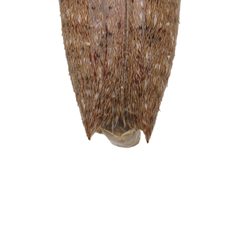
Ataxia spinicauda can be distinguished from other Ataxia by the specific epithet "spinicauda," which refers to a spined or spinose caudal structure (likely the elytral apex or terminal abdominal segments). Definitive identification requires examination of genitalic characters and comparison with . Within the Ataxia, species boundaries are often subtle and may require dissection and reference to original descriptions.
Images
Distribution
Known from the Bahamas, Cuba, Jamaica, and the United States. Distribution records suggest presence in the Caribbean region and southeastern United States.
Similar Taxa
- Ataxia hubbardiCongeneric with similar and ; A. hubbardi is better known and develops in living tissues of Asteraceae (sunflower, prairie dock, ragweed, cocklebur), but differs in distribution and likely associations.
- Other Ataxia speciesThe Ataxia contains multiple with subtle morphological differences; accurate identification of A. spinicauda requires comparison with type material and attention to caudal spine characteristics implied by the species epithet.
More Details
Taxonomic note
The Ataxia is classified in the tribe Pteropliini within the Lamiinae. -level in this group can be challenging due to morphological similarity among .