
Lypsimena
Haldeman, 1847
Species Guides
1Lypsimena is a of longhorn beetles in the Lamiinae, tribe Pogonocherini. The genus was established by Haldeman in 1847 and contains five described distributed in the Americas. Members of this genus are characterized by their elongated body form typical of cerambycids, with antennal features and pronotal structure distinguishing them from related genera.
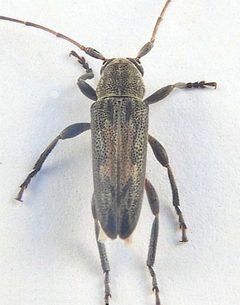
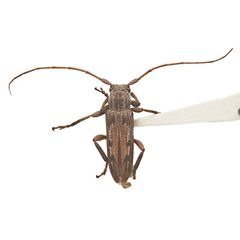
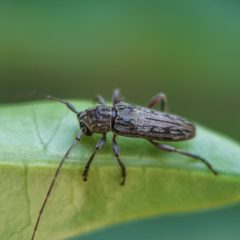
Pronunciation
How to pronounce Lypsimena: //lɪpˈsɪmɪnə//
These audio files are automatically generated. While they are not always 100% accurate, they are a good starting point.
Identification
Distinguished from other Pogonocherini by combination of antennal and pronotal characteristics; specific diagnostic features require examination of and reference to original descriptions for each .
Images
Distribution
Recorded from Colombia (CO) based on GBIF distribution data; -level distributions include North and South American regions based on type localities of constituent species.
Similar Taxa
- PogonocherusBoth belong to tribe Pogonocherini and share general body plan; Lypsimena distinguished by antennal and pronotal features per -level .
- EcyrusRelated lamiine with overlapping distribution; separation requires detailed examination of antennal segment proportions and elytral .
More Details
Species composition
The comprises five described : Lypsimena fuscata (Haldeman, 1847), Lypsimena nodipennis (Burmeister, 1865), Lypsimena proletaria (Melzer, 1931), Lypsimena strandiella Breuning, 1943, and Lypsimena tomentosa Chemsak & Linsley, 1978.
Taxonomic history
Original description by Haldeman in 1847; subsequent added through 1978. Placement in Pogonocherini confirmed by modern cerambycid classifications.