
Parmenosoma griseum
Schaeffer, 1908
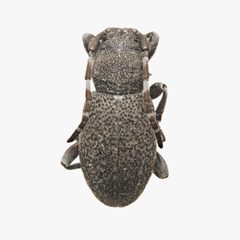
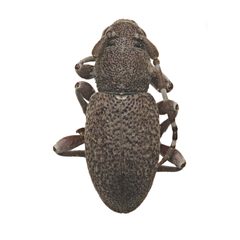
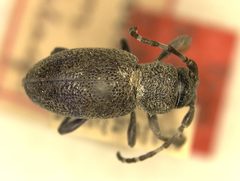
Parmenosoma griseum is a longhorn beetle described by Schaeffer in 1908. It belongs to the Lamiinae within the Cerambycidae. The species is known from the United States and Mexico, with very few documented observations. As a member of the Parmenini tribe, it shares characteristics with other Parmenosoma species, though specific biological details remain poorly documented.
Pronunciation
How to pronounce Parmenosoma griseum: //ˌpɑr.məˈnoʊ.sə.mə ˈɡrɪ.si.əm//
These audio files are automatically generated. While they are not always 100% accurate, they are a good starting point.
Identification
Belongs to the Parmenosoma, which can be distinguished from related lamiine genera by characteristics of the pronotum and elytral . The specific epithet "griseum" (Latin for gray) likely refers to coloration, though original description details are not provided in available sources. Positive identification requires comparison with the and reference to Schaeffer's 1908 description.
Images
Distribution
Recorded from the United States and Mexico. GBIF distribution records indicate presence in North America with specific country codes for Mexico (MX) and the United States (US). Precise locality data within these countries is not specified in available sources.
Similar Taxa
- Other Parmenosoma speciesCongeneric share the same -level diagnostic features and require careful examination of specific morphological characters to distinguish from P. griseum.
- Other Parmenini tribe membersTribe-level characteristics in pronotal structure and antennal create superficial similarity; -level differences in elytral punctation and body proportions separate them.
More Details
Taxonomic History
The was established by Schaeffer in 1908 based on specimens from the United States. It has remained within Parmenosoma without recorded synonymy or subgeneric placement.
Data Deficiency
With only 3 observations in iNaturalist and minimal literature coverage, this represents a data-deficient within Cerambycidae. Most aspects of its , including plants, larval development, and precise distribution, remain undocumented.