
Onciderini
twig girdlers
Genus Guides
3- Cacostola
- Lochmaeocles
- Oncideres(Twig Girdling Beetles)
Onciderini is a tribe of longhorn beetles (Cerambycidae: Lamiinae) commonly known as twig girdlers. The tribe originated approximately 49 million years ago and comprises two subtribes: Hypsiomatina and Onciderina. Some exhibit a distinctive girdling where females chew around twigs to sever them, creating fallen branches that serve as larval . Girdling behavior has evolved independently at least five times within the tribe and has influenced morphological evolution, particularly size. The tribe shows notable diversity in plant associations and microhabitat specialization across tropical and temperate regions.

Pronunciation
How to pronounce Onciderini: //ɒŋˈkɪdɛrɪnaɪ//
These audio files are automatically generated. While they are not always 100% accurate, they are a good starting point.
Identification
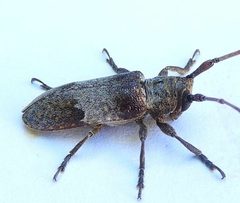
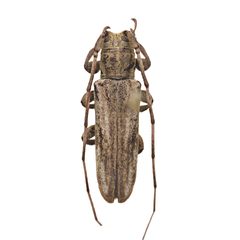
Members of Onciderini can be distinguished from other Lamiinae tribes by a combination of morphological and behavioral traits. Girdling possess enlarged adapted for chewing through woody twigs, with head size positively correlated with girdling in both sexes. The tribe is divided into two subtribes: Hypsiomatina and Onciderina. Species within Oncideres and related that exhibit girdling behavior may show in head size, though this pattern is not consistent across all girdling lineages. Non-girdling species lack these head modifications. Accurate identification to genus and species requires examination of genitalia and other taxonomic characters detailed in specialized keys.
Images
Habitat
Onciderini occupies diverse forest including tropical rainforests, Atlantic rainforests, and temperate woodlands. Girdling specifically utilize live tree twigs and branches as reproductive habitat; females select twigs of particular diameters that correlate with their body size. Larvae develop within fallen, girdled twigs on the forest floor. Microhabitat specialization has been documented in Atlantic rainforest , where different species partition plants by twig size and forest stratum.
Distribution
The tribe occurs across the Americas from the United States (including Florida) through Central America ( Rica) to South America (Brazil, particularly Rio de Janeiro and Paraná states). Records indicate presence in Atlantic rainforest, Iguaçu National Park, and various Neotropical forest . The Wikipedia claim of across Europe in Turkey and Finland is inconsistent with the established Neotropical distribution of this tribe and should be regarded as erroneous.
Diet
Larvae feed on wood within girdled twigs and branches. feed on bark and other plant tissues; specific adult dietary habits vary among and require further documentation.
Life Cycle
Females of girdling chew completely around twigs to sever them, causing branches to break and fall to the ground. are deposited in the girdled twigs, and larvae complete development within the fallen wood. Girdling effort varies with female body size: smaller species girdle shorter, slender branches while larger species invest more effort in girdling larger twigs, resulting in fewer twigs girdled per lifetime. The timing () varies by species and geographic location.
Behavior
The defining of many Onciderini is girdling: females chew a complete ring around live twigs to sever vascular tissues, causing branch death and structural failure. This behavior has evolved independently five times within the tribe. Females may interrupt girdling for up to 20 days when encountering toxic plant compounds or mutualistic ants on plants. Microhabitat selection by females is essential for locating suitable food sources for larvae. Competition and low host-plant availability may lead to oviposition on suboptimal hosts. are attracted to light traps, indicating or activity.
Ecological Role
Onciderini function as "stem engineers" in forest . Girdling activity creates and resources that enhance diversity by providing fallen wood and modified plant substrates for other organisms. In desert environments, resource regulation by twig girdlers has implications for desertification processes. As herbivores, they influence plant architecture, twig availability, and nutrient cycling through branch pruning.
Human Relevance
Some Onciderini , particularly Oncideres cingulata, are economically significant as pests of pecan orchards, requiring management interventions by growers. The damage signature of fallen, cleanly girdled twigs is distinctive and aids in identification of . However, the insects are generally not considered serious threats to ornamental trees. The tribe serves as a model system for studying the evolution of novel adaptive traits and their morphological consequences.
Sources and further reading
- BugGuide
- Wikipedia
- iNaturalist taxon
- NCBI Taxonomy
- Catalogue of Life
- Twig Girdler Oncideres spp. (Insecta: Coleoptera: Cerambycidae: Onciderini)
- Notes on Onciderini (Coleoptera, Cerambycidae, Lamiinae): description of a new species of Lesbates Dillon & Dillon and new distribution records
- Specialization of Atlantic rain forest twig-girdler beetles (Cerambycidae: Lamiinae: Onciderini): variation in host–plant use by microhabitat specialists
- A new species of Periergates Lacordaire, 1872 (Coleoptera: Cerambycidae: Lamiinae: Onciderini) from Costa Rica, with description of immature life stages and notes on its biology
- The host-plant range of twig-girdling beetles (Coleoptera: Cerambycidae: Lamiinae: Onciderini) of the Atlantic rainforest in southeastern Brazil
- Cerambycidae and other Coleoptera Associated with Branches Girdled byOncideres sagaDalman (Coleoptera: Cerambycidae: Lamiinae: Onciderini)
- Cutting the sap: First molecular phylogeny of twig‐girdler longhorn beetles (Coleoptera: Cerambycidae: Lamiinae: Onciderini) suggests shifts in host plant attack behaviours contributed to morphological evolution